Blog

Useful articles about digital marketing, growth marketing and mobile app development

Digital Marketing

How to Effectively Promote Mobile Apps in 2026

The modern mobile app market is extremely competitive. For your app to take a worthy place among millions of others, you need to use a comprehensive approach to promotion.

One of the most important tools is App Store Optimization (ASO). Proper optimization of the name, description, and keywords can significantly increase your app's visibility in app stores.

It's also important to use social networks to attract users. Creating quality content, engaging with the audience, and using targeted advertising will help increase the number of downloads.

Don't forget about the importance of user feedback. Positive reviews and high ratings significantly improve the app's search positions and contribute to organic growth.

Growth Hacking

Growth Hacking for Startups: Practical Tips

Growth hacking is a marketing approach that focuses on rapid growth through creative and cost-effective strategies. For startups, this is especially important as they often have limited budgets.

The key to successful growth hacking is constant testing and analysis. It's necessary to experiment with different user acquisition channels and measure the results of each approach.

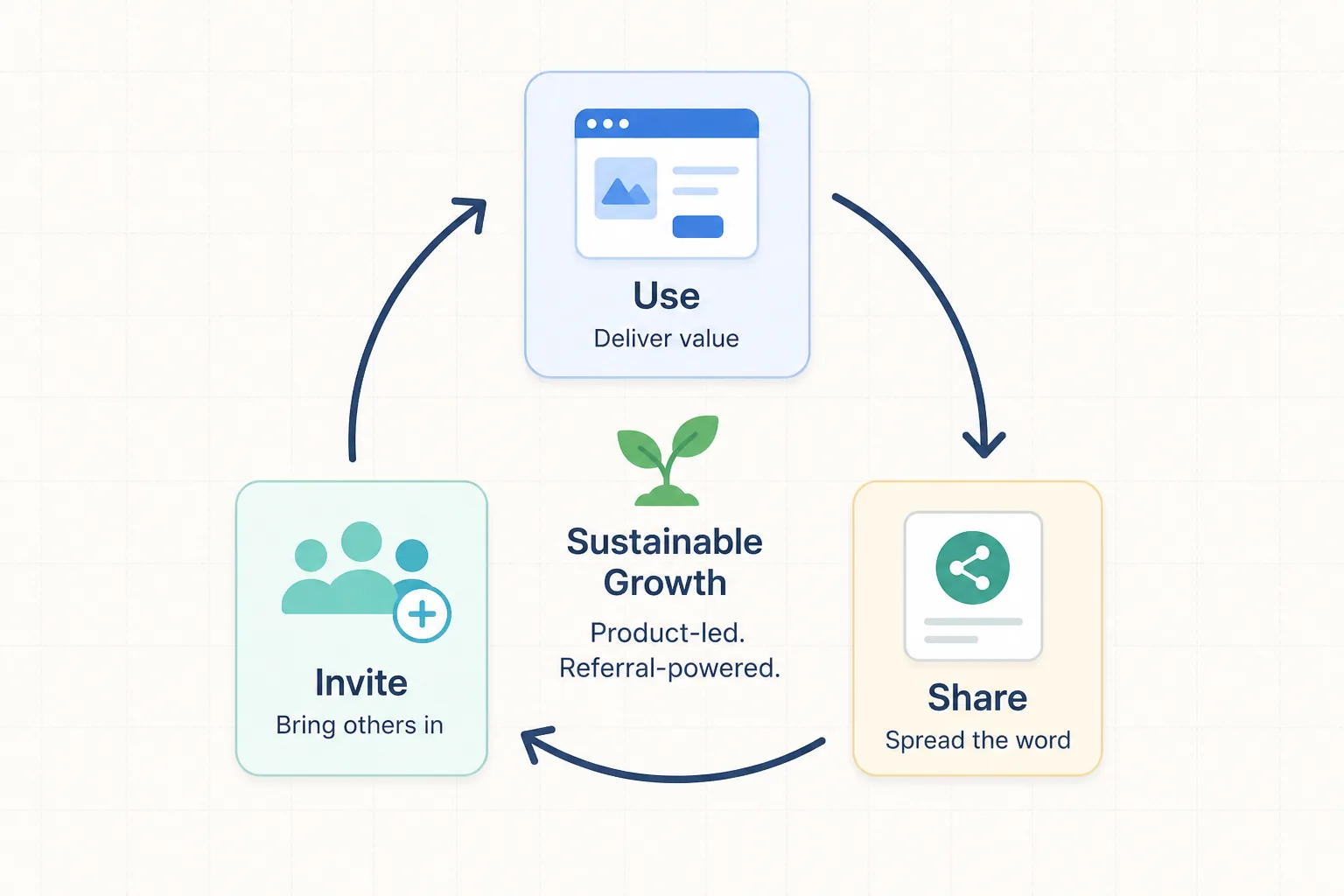
One of the most effective tools is viral marketing. Creating a product or feature that motivates users to share it with others can lead to exponential growth.

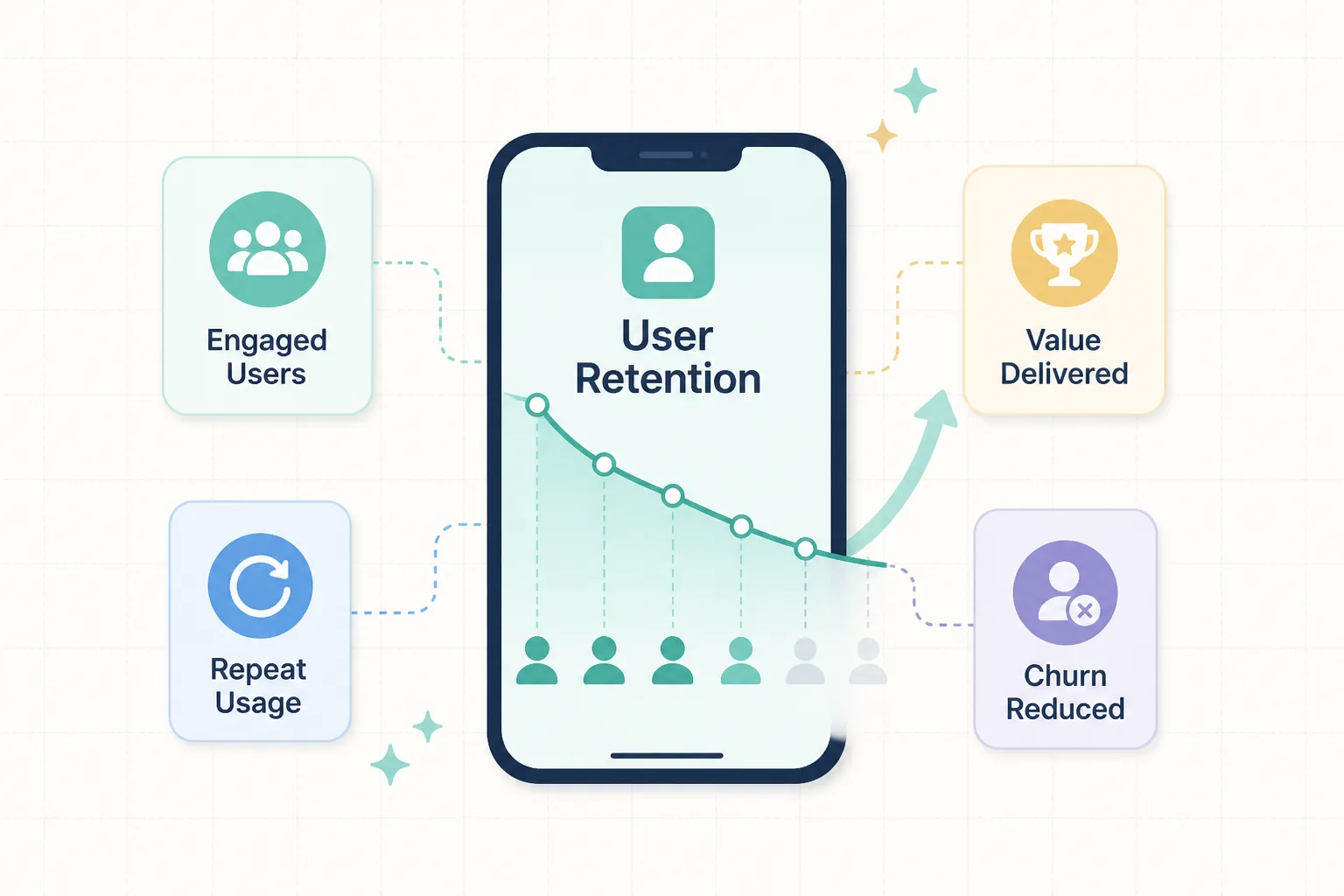
It's also important to focus on user retention. It's much cheaper to retain an existing user than to acquire a new one. Therefore, invest in product improvements and increased user satisfaction.

Monetization

Mobile App Monetization Models

Choosing the right monetization model is critical to the success of a mobile app. There are several main approaches, each with its own advantages and disadvantages.

The Freemium model is when basic functionality is free, but additional features require payment. This model works well for apps with a wide audience and the ability to add premium features.

Advertising is one of the most common monetization methods. It's important to find a balance between advertising revenue and user experience. Excessive advertising can drive users away.

Subscriptions are becoming increasingly popular, especially for service apps. Regular subscription revenue provides stability and predictability of finances.

User Retention

User Retention Strategies for Mobile Apps

User retention is one of the most important indicators of a mobile app's success. Even if you attract many new users, without retaining them your business will not be sustainable.

The first days after installing the app are critical. This is when the user decides whether to stay with your product. So it's important to provide a great first experience.

Content personalization and recommendations help increase user engagement. Use user behavior data to create a personalized experience.

Push notifications can be an effective tool for bringing users back, but it's important not to overdo it. Excessive notifications can lead to app uninstalls.

Analytics

How to Use Analytics to Improve Your Mobile App

Analytics is the foundation for data-driven decisions in mobile app development. Using data correctly can significantly improve your product and increase revenue.

Tracking key metrics such as DAU (Daily Active Users), MAU (Monthly Active Users), retention rate, and LTV (Lifetime Value) helps you understand the state of your product.

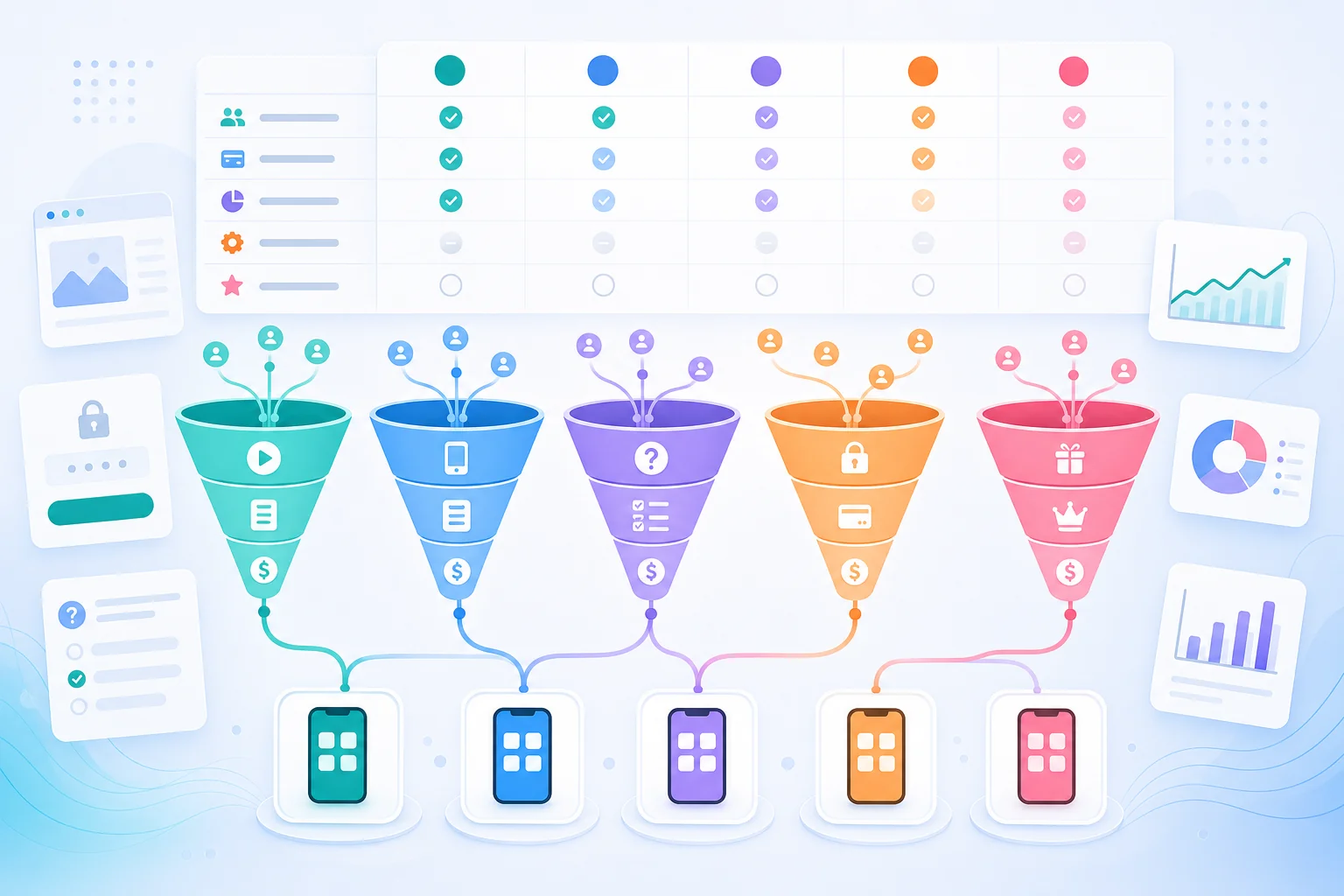
The conversion funnel shows at which stage users leave your app. Identifying problem areas lets you focus on fixing them.

A/B testing is a powerful optimization tool. Testing different versions of the interface, features, or marketing messages helps find the best solutions.

Social Impact

How Mobile Apps Can Improve People's Lives

Mobile apps have enormous potential for positive impact on society. From educational platforms to medical applications—technology can change the lives of millions of people.

Educational apps make learning more accessible and convenient. They allow people to learn new skills anytime and anywhere, which is especially important for people with disabilities.

Medical apps help people take better care of their health. From tracking symptoms to medication reminders—these tools can save lives.

Social apps foster connection between people and community building. This is especially important during crises, when people need support and mutual aid.

Accessibility

Mobile App Accessibility: Why It Matters

Creating accessible mobile apps is not only a moral obligation but also a business necessity. Accessible interfaces improve the experience for all users, not just people with disabilities.

Following accessibility principles expands your audience. Millions of people worldwide have various forms of disability, and creating accessible apps allows them to use your product.

Technical standards such as WCAG (Web Content Accessibility Guidelines) provide clear recommendations for creating accessible interfaces. Following these standards improves SEO and overall product quality.

Testing with real users, including people with disabilities, helps identify accessibility issues and improve the product.

Privacy

Protecting User Data in Mobile Apps

Protecting user personal data is a critically important aspect of mobile app development. Compliance with GDPR and other regulations is not only mandatory but also builds user trust.

Data minimization is the first step toward protecting privacy. Collect only the data that is truly necessary for the app to function.

Encrypting data both in transit and at rest protects against unauthorized access. Use modern encryption methods and secure protocols.

Transparency about data use builds user trust. Clearly explain what data you collect, how you use it, and give users control over their data.

Education

The Role of Education in Developing Digital Skills

Rapid technological development requires constant learning and skill updates. This is especially true in digital marketing and mobile app development.

Professional education helps specialists stay competitive in the job market. Regularly learning new tools and methodologies is a necessity, not an option.

Communities and professional networks play an important role in knowledge sharing. Meetups, conferences, and online communities create opportunities for learning and development.

Mentorship and coaching help young professionals develop faster and avoid common mistakes. Experienced professionals can share their knowledge and help the next generation.

Startup

How to Launch a Successful Mobile Startup

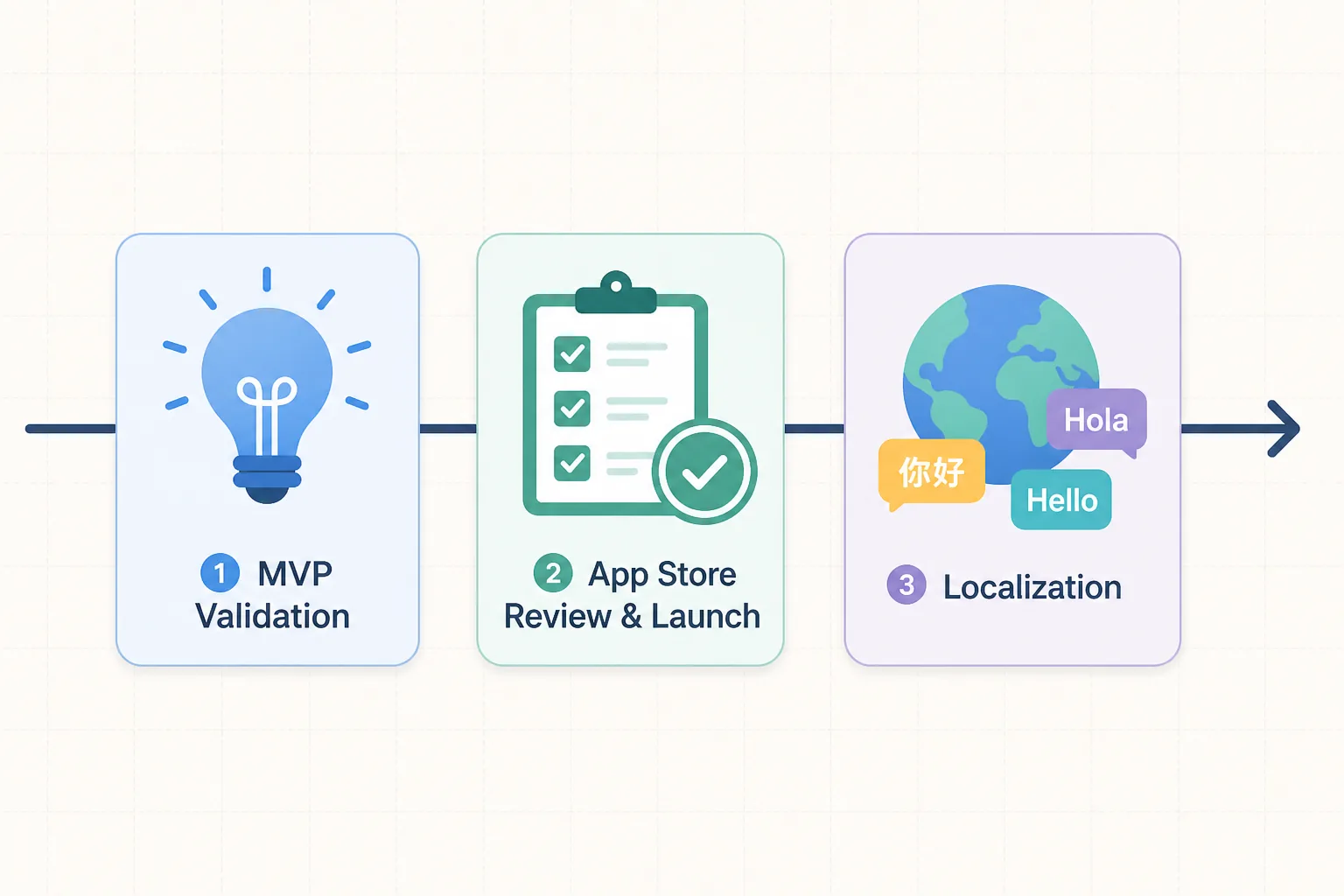
Launching a mobile startup requires careful planning and execution. From idea to launch—every stage is important for success.

Idea validation is the first step. Make sure your idea solves a real problem and has scaling potential. Conduct market research and talk to potential users.

An MVP (Minimum Viable Product) lets you test the idea quickly with minimal cost. Build a basic version of the product and get user feedback before investing in full development.

Funding is a critical aspect. Consider different funding sources: from bootstrapping to investment. It's important to have a clear business plan and an understanding of how you will become profitable.

UI UX

User Interface Design Principles for Mobile Apps

Quality interface design is a key success factor for mobile apps. Users expect intuitive and pleasant interfaces.

Simplicity is the key to success. Avoid cluttering the interface with elements. Every element should have a clear purpose and help users achieve their goals.

Consistency in design improves usability. Use the same patterns and interface elements throughout the app so users can learn to use it easily.

User testing helps uncover design issues early. Real users can reveal problems that developers might miss.

Performance

Mobile App Performance Optimization

Mobile app performance directly affects user experience and retention. Slow apps quickly lose users.

Optimizing app size is important for fast loading. Use techniques such as lazy loading and resource compression to reduce app size.

Efficient use of memory and battery improves performance and user experience. Monitor resource usage and optimize problem areas.

Testing on different devices and operating system versions helps ensure stable app performance for all users.

Community

Building a Community Around Your Mobile App

A strong community can become the most powerful growth tool for a mobile app. Users who feel a sense of belonging are more loyal and active.

Creating opportunities for user interaction fosters community. This can be a forum, chat, or social features within the app.

Engaging with users through social networks and other channels helps maintain connection with the community. Regular updates, answering questions, and considering user feedback show that you value their input.

Recognizing active community members and giving them opportunities to participate in product development creates a sense of ownership and increases engagement.

Innovation

Innovations in Mobile Technology: 2026 Trends

The technological landscape of mobile apps is constantly changing. Understanding new trends helps you stay ahead and create innovative products.

Artificial intelligence and machine learning are being integrated into mobile apps for experience personalization and improved functionality. From recommendation systems to voice assistants—AI is changing how we interact with apps.

Augmented reality (AR) and virtual reality (VR) are opening new possibilities for interactivity. From games to educational applications—these technologies create new experiences.

Integration with IoT devices is expanding the functionality of mobile apps. From smart home to wearables—mobile apps are becoming the central hub for managing various devices.

Success

Success Stories: How Ukrainian Startups Succeed

Ukraine has many talented developers and entrepreneurs building successful mobile apps. Learning from their stories can inspire and teach new entrepreneurs.

One of the key success factors is user focus. Understanding user needs and problems allows you to create products that truly solve real problems.

Constant iteration and product improvement based on user feedback is critically important. Successful startups are not afraid to change their product to better meet market needs.

International expansion can significantly increase audience and revenue. Many Ukrainian startups successfully enter international markets with a quality product and effective marketing.

Breaking Down Barriers: Making Mobile App Growth Knowledge Accessible to All

Breaking Down Barriers: Making Mobile App Growth Knowledge Accessible to All

Introduction

The mobile app industry has exploded into a multi-trillion dollar ecosystem, yet knowledge about growth strategies remains concentrated among well-funded companies and expensive consultancies. This knowledge gap creates an uneven playing field where talented developers and entrepreneurs from underrepresented communities struggle to compete—not due to lack of skill, but lack of access to education.

Our mission is to democratize mobile growth knowledge, ensuring that every professional, regardless of background or budget, can access the tools and insights needed to succeed in the digital economy.

The Current State of Mobile Growth Education

The Knowledge Divide

Today's mobile app growth landscape presents a paradox. While there are more educational resources available than ever before, quality information remains scattered, inconsistent, and often hidden behind expensive paywalls. Industry conferences charge thousands of dollars for tickets, premium courses cost $2,000-$5,000, and specialized consultancies bill $200-$500 per hour.

This pricing structure effectively locks out independent developers, small business owners, and professionals from developing economies who could benefit most from this knowledge. The result is a self-perpetuating cycle where those with resources gain more advantages, while talented individuals without access struggle to compete.

Who Gets Left Behind

The impact of this knowledge gap extends far beyond individual careers:

Independent developers in regions like Southeast Asia, Africa, and Eastern Europe often possess exceptional technical skills but lack understanding of user acquisition strategies, making their apps invisible in crowded marketplaces.

Small business owners who've invested their savings into mobile apps frequently fail not because their products are inferior, but because they don't understand retention metrics, funnel optimization, or monetization best practices.

Career changers from non-technical backgrounds face steep learning curves without structured, affordable pathways to develop mobile growth expertise.

Recent graduates enter the workforce with theoretical knowledge but little practical understanding of real-world growth challenges, leading to skill-employment mismatches.

Why Accessible Education Matters

Economic Impact

When we make mobile growth knowledge accessible, we create economic opportunity. A developer in Lagos who learns effective user acquisition strategies can compete globally. A entrepreneur in Manila who understands monetization optimization can build a sustainable business. A student in Kyiv who masters retention techniques can secure a career in digital marketing.

The digital economy is inherently borderless—skills translate across markets, and quality work finds recognition regardless of geography. By lowering educational barriers, we enable talent to flourish wherever it exists.

Innovation Through Diversity

Accessible education doesn't just create opportunity; it drives innovation. When diverse perspectives enter the mobile growth field, they bring fresh approaches to longstanding problems. A professional from a developing market might identify retention strategies that work better for emerging economies. A career changer from behavioral psychology might introduce user engagement frameworks that established practitioners overlook.

The mobile industry needs this diversity. Homogeneous thinking leads to homogeneous solutions, which fail to serve global, diverse user bases effectively.

Our Approach to Democratizing Knowledge

1. Free, High-Quality Educational Content

We believe that foundational mobile growth knowledge should be freely accessible. Our approach includes:

Comprehensive guides that break down complex topics like attribution, funnel optimization, and monetization strategies into digestible, actionable content.

Case studies from real implementations, showing both successes and failures to provide honest, practical learning experiences.

Video tutorials that demonstrate tools and techniques step-by-step, accommodating different learning styles.

Templates and frameworks that professionals can adapt to their specific contexts, reducing the time from learning to implementation.

2. Community-Driven Learning

Individual education is valuable, but community learning multiplies impact. We facilitate:

Peer learning groups where professionals at similar experience levels share challenges, solutions, and support each other's growth.

Mentorship programs connecting experienced practitioners with those early in their careers, transferring knowledge that isn't captured in written materials.

Open discussion forums where questions receive thoughtful answers from multiple perspectives, building collective knowledge bases.

Collaborative problem-solving sessions where community members work together on real growth challenges, learning through practical application.

3. Professional Events with Purpose

While we organize professional events, they serve educational and community-building purposes rather than commercial objectives:

Workshops that provide hands-on experience with growth tools and techniques, ensuring participants leave with applicable skills.

Experience exchange sessions where practitioners share lessons learned, both successes and failures, creating honest learning environments.

Networking opportunities designed to build supportive professional relationships, not just collect business cards.

Expert presentations focused on education and skill development rather than product promotion.

Practical Steps for Making Knowledge Accessible

For Organizations

If you're building educational programs in mobile growth, consider these approaches:

Remove financial barriers: Offer free tiers, sliding scale pricing, or scholarship programs to ensure economic circumstances don't block access.

Accommodate different learning styles: Provide content in multiple formats—written guides, videos, interactive tools, and hands-on workshops.

Build for non-native speakers: Use clear, simple language; provide translations where possible; ensure examples are globally relevant.

Create progression pathways: Structure content from beginner to advanced, allowing learners to build skills systematically.

Foster community: Knowledge sharing accelerates when learners can connect, question, and support each other.

For Experienced Professionals

You can contribute to democratizing mobile growth knowledge:

Share openly: Write blog posts, create videos, or speak at community events sharing your experiences and lessons learned.

Mentor others: Dedicate time to guiding less experienced professionals, particularly those from underrepresented backgrounds.

Review educational content: Help improve community resources by providing feedback on guides, tutorials, and documentation.

Participate in forums: Answer questions in public forums where your expertise can help multiple people simultaneously.

Support community initiatives: Contribute to open-source tools, attend community events, or volunteer with educational programs.

Measuring Impact Beyond Revenue

Traditional business metrics don't capture the full value of accessible education. We measure success through:

Career advancement: How many community members have secured new positions, received promotions, or launched successful products after engaging with our educational resources?

Skill development: Are participants demonstrably improving their capabilities in user acquisition, retention, and monetization?

Community health: Is the community supportive, inclusive, and actively sharing knowledge? Are experienced members helping newcomers?

Global reach: Are we successfully serving professionals across different geographies, languages, and economic contexts?

Long-term industry impact: As more professionals access quality education, does the overall level of mobile growth expertise rise? Do we see more innovative, user-friendly approaches emerging?

The Road Ahead

Democratizing mobile growth knowledge is an ongoing mission, not a completed project. As the industry evolves, so must our educational approaches:

Emerging technologies: As new channels, platforms, and tools emerge, we must rapidly create accessible educational content so all professionals can adopt innovations, not just those with insider access.

Evolving privacy regulations: As frameworks like iOS ATT, GDPR, and regional privacy laws reshape mobile growth strategies, we must help professionals from all backgrounds navigate these changes effectively.

Changing monetization models: As subscription economics, in-app advertising, and alternative revenue streams evolve, we must ensure knowledge about these models remains accessible.

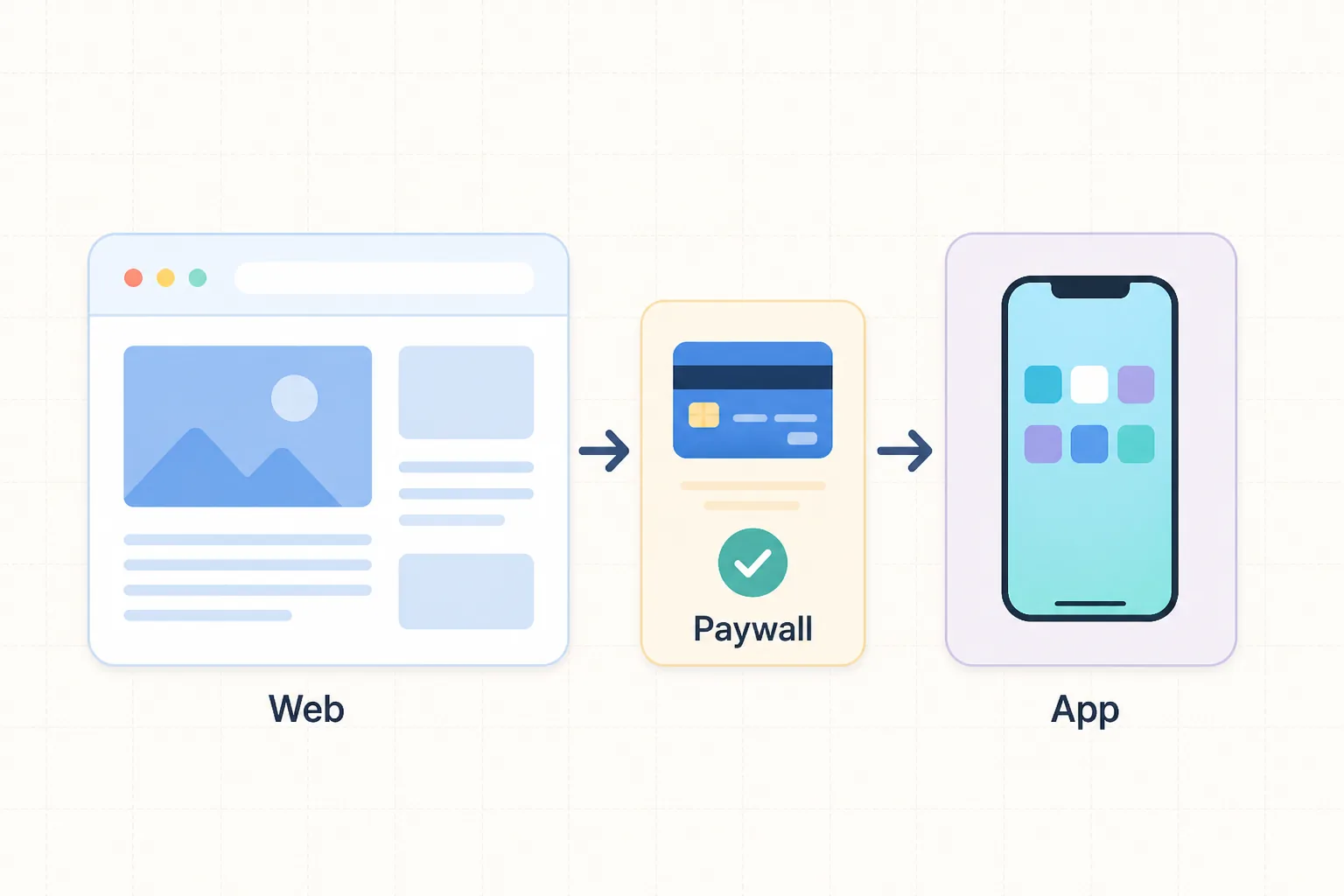
New growth channels: As platforms like web-to-app conversion, progressive web apps, and cross-platform strategies gain importance, we must provide education that keeps pace.

Conclusion

The mobile app economy represents unprecedented opportunity for economic advancement and innovation. But this opportunity remains theoretical if knowledge remains inaccessible. By democratizing mobile growth education, we don't just help individual careers—we strengthen entire communities, drive industry innovation, and contribute to more equitable digital economic development.

Every professional who gains mobile growth skills through accessible education becomes capable of competing globally, building sustainable businesses, and contributing to their communities' economic development. This is why our work matters, and why we remain committed to ensuring that knowledge, not capital, determines who succeeds in the mobile app industry.

The future of mobile growth should be shaped by the best ideas and most effective strategies—regardless of who develops them or where they come from. That future requires accessible education, supportive communities, and a commitment to sharing knowledge openly. Together, we can build it.

About This Initiative

This article represents our commitment to making mobile app growth knowledge accessible to all professionals, regardless of background or resources. We invite you to join our community, contribute your experiences, and help us build a more inclusive digital economy where talent and dedication, not just capital and connections, determine success.

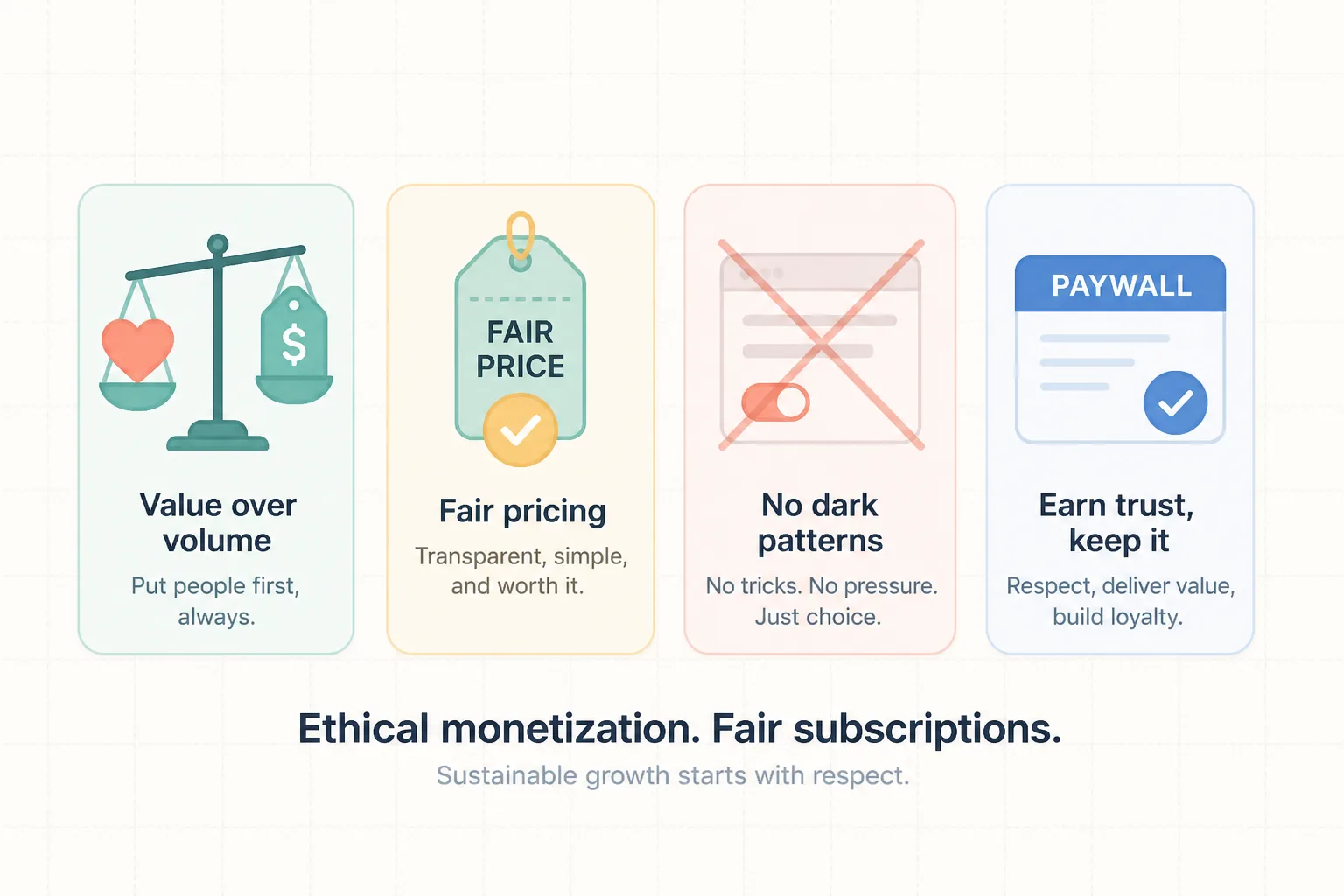
Ethical Monetization: Building Sustainable Mobile Apps Without Exploiting Users

Ethical Monetization: Building Sustainable Mobile Apps Without Exploiting Users

Introduction

The mobile app industry faces a crisis of trust. Users have grown increasingly wary of apps that employ dark patterns, aggressive monetization tactics, and manipulative engagement techniques. While these strategies may generate short-term revenue, they create long-term damage—both to individual businesses and to the industry's reputation as a whole.

As mobile growth specialists, we have a responsibility that extends beyond hitting revenue targets. We must build monetization strategies that respect users, provide genuine value, and contribute to sustainable business models. This article explores how to achieve profitability while maintaining ethical standards that benefit users, businesses, and the broader digital ecosystem.

Understanding Ethical Monetization

What Makes Monetization "Ethical"?

Ethical monetization isn't about choosing between profit and principles—it's about recognizing that sustainable long-term success requires both. At its core, ethical monetization means:

Transparency: Users clearly understand what they're paying for, when charges will occur, and how to cancel or modify their commitment.

Fair value exchange: The price users pay reflects genuine value received, not artificially inflated perceived necessity created through manipulation.

Respect for autonomy: Users make informed decisions without psychological manipulation, dark patterns, or deceptive practices.

Consent-based engagement: Users opt into experiences voluntarily rather than being tricked or coerced into actions they don't understand.

Data responsibility: User information is collected, stored, and used only with explicit consent and clear benefit to the user.

Why Ethics Matter in Mobile Monetization

Beyond moral imperatives, ethical monetization makes business sense:

Long-term retention: Users who feel respected and fairly treated remain engaged longer, providing more lifetime value than those who feel exploited.

Positive word-of-mouth: Ethical apps earn organic recommendations, reducing customer acquisition costs significantly.

Regulatory compliance: As governments worldwide implement stricter consumer protection regulations, ethical practices ensure compliance and avoid legal risks.

Brand reputation: In an era of social media transparency, unethical practices spread quickly and damage brands permanently.

Investor confidence: Sustainable, ethical revenue models attract better investment terms than high-churn, manipulation-based strategies.

Common Unethical Practices to Avoid

Dark Patterns in Monetization

Understanding what to avoid is as important as knowing what to implement. These practices may generate short-term revenue but damage user relationships and business sustainability:

Roach motel subscriptions: Making it easy to subscribe but deliberately difficult to cancel. This includes hiding cancellation options deep in settings, requiring phone calls or emails to cancel, or making users navigate through multiple "are you sure?" screens designed to exhaust their will to cancel.

Bait and switch pricing: Advertising one price prominently while actual charges include hidden fees, automatic price increases after trial periods, or charges that weren't clearly disclosed.

Forced continuity: Automatically charging users after free trials without clear advance notice or easy opt-out mechanisms.

Confirmshaming: Using guilt, shame, or social pressure in cancellation flows ("No thanks, I don't want to save money" or "I don't care about my productivity").

Price discrimination: Charging different users radically different prices based on their perceived willingness to pay, determined through data analysis without their knowledge or consent.

Fake urgency: Creating artificial scarcity or time pressure ("Only 2 spots left!" when spots are unlimited, or countdown timers that reset) to manipulate purchase decisions.

Manipulative Engagement Tactics

These techniques prioritize engagement over user wellbeing:

Variable reward schedules: Employing slot-machine-like mechanics that exploit psychological vulnerabilities to create addictive behavior patterns.

Notification manipulation: Sending fake urgency notifications ("Someone viewed your profile!" when no one has) to drive meaningless engagement.

Social manipulation: Creating artificial social pressure through fake competitive elements or manipulated social proof.

Attention exploitation: Designing interfaces that make it deliberately difficult to stop using the app, even when users want to disengage.

Building Ethical Monetization Strategies

1. Transparent Subscription Models

Well-designed subscription models can ethically serve both users and businesses:

Clear value proposition: Before asking for payment, clearly articulate what users receive, how it benefits them, and what differentiates paid tiers from free options.

Honest trial periods: If offering free trials, clearly state when they end, how much users will be charged, and send reminders before charges occur.

Easy cancellation: Place cancellation options in obvious, accessible locations. Make the process simple—ideally one or two clicks maximum. Respect users' decisions without guilt-tripping.

Fair pricing tiers: Create pricing that reflects actual value delivered. Users at different budget points should feel they're receiving fair value for their investment level.

Grace periods: Consider offering grace periods after payment method failures rather than immediately restricting access, acknowledging that technical issues occur.

2. Value-First Freemium Models

Freemium models work ethically when free tiers provide genuine utility:

Functional free tier: Ensure free users can accomplish meaningful tasks and derive real value from your app. The free version should be useful, not just a frustrating advertisement for the paid version.

Natural upgrade paths: Premium features should represent logical extensions of the core value proposition, not arbitrary restrictions designed to annoy free users into upgrading.

No exploitation of FOMO: Avoid artificially limiting free users in ways that create anxiety or fear of missing out rather than representing actual value differences.

Clear feature differentiation: Help users understand exactly what they gain by upgrading, without making them feel inferior for using free tiers.

3. Ethical In-App Purchases

When implemented thoughtfully, in-app purchases can fairly monetize without exploitation:

No pay-to-win in competitive contexts: In games or competitive apps, ensure paying users don't gain unfair advantages that make free users' participation meaningless.

Clear purchase outcomes: Users should know exactly what they're buying before committing. No surprise mechanics or randomized rewards that resemble gambling.

No targeting vulnerable populations: Be especially cautious with mechanics that might exploit children, people with addictive tendencies, or other vulnerable groups.

Reasonable pricing: Price virtual items based on reasonable value assessments, not on exploiting users' investment in sunk costs or social pressure.

Refund policies: Implement fair refund policies that acknowledge genuine mistakes and technical issues, even if not legally required.

4. Advertising with Integrity

Mobile advertising can be implemented ethically:

Relevant ads: Use targeting to show genuinely relevant ads rather than intrusive, irrelevant interruptions.

Clear ad identification: Never disguise ads as content or trick users into clicking advertisements.

Reasonable frequency: Limit ad frequency to avoid creating frustrating, unusable experiences for non-paying users.

Privacy respect: Collect only the data necessary for relevant advertising, with clear user consent and easy opt-out mechanisms.

Quality standards: Partner with ad networks that maintain quality and safety standards, protecting users from malicious or inappropriate content.

Case Studies: Ethical Monetization in Practice

Case Study 1: Headspace (Mental Health & Meditation)

Approach: Headspace offers a comprehensive free tier with enough content to develop a meaningful meditation practice, then provides a premium subscription for expanded content libraries and features.

Ethical elements:

- Free tier genuinely helps users develop meditation habits

- Clear, transparent pricing with no hidden fees

- Easy cancellation process

- Educational content helps users make informed decisions about value

- Premium features represent logical extensions rather than artificial restrictions

Results: High user satisfaction, strong retention rates, sustainable revenue growth, and positive brand reputation leading to organic growth.

Case Study 2: Notion (Productivity)

Approach: Notion provides a fully functional free tier for individual users, with team and enterprise features available through paid plans.

Ethical elements:

- Free tier is genuinely useful, not artificially limited to frustrate users

- Pricing tiers clearly correlate with different use cases (individual vs. team vs. enterprise)

- Transparent about what each tier includes

- Easy to upgrade or downgrade based on needs

- Educational resources help users maximize value regardless of tier

Results: Rapid organic growth through genuine user advocacy, successful enterprise expansion, strong community engagement, and sustainable business model.

Case Study 3: Duolingo (Language Learning)

Approach: Core language learning available free with ads, premium subscription removes ads and adds convenience features.

Ethical elements:

- Free tier provides complete educational value—users can fully learn languages without paying

- Premium features add convenience but aren't necessary for core value

- Gamification motivates without exploiting addictive patterns

- Clear educational mission maintains focus on user outcomes

- Child-safe practices protect young learners

Results: Massive user base with high engagement, profitable premium conversions, strong educational outcomes, and industry-leading brand reputation.

Implementing Ethical Practices: A Framework

Step 1: Assess Current Practices

Honestly evaluate your current monetization strategies:

User feedback analysis: What do users say about your monetization? Are there recurring complaints about fairness, transparency, or manipulation?

Metrics review: Look beyond revenue to examine retention, churn reasons, customer service contacts, and refund rates. High revenue with poor retention often indicates exploitation.

Competitive analysis: How do ethical competitors in your space approach monetization? Are you lagging in user respect while competitors build stronger relationships?

Team perspective: Do your team members feel proud of your monetization practices? Would they recommend the app to family and friends?

Step 2: Identify Areas for Improvement

Based on your assessment, prioritize changes:

Quick wins: What dark patterns could you remove immediately that would improve user experience without significantly impacting revenue?

Medium-term adjustments: What pricing structures, trial processes, or cancellation flows could be improved over the next quarter?

Strategic shifts: What fundamental monetization model changes might be necessary for long-term sustainability and ethical alignment?

Step 3: Test and Iterate

Implement changes systematically:

A/B testing with ethics in mind: Test ethical alternatives against current practices. Often, more ethical approaches perform better than expected because they build trust.

User feedback loops: Actively solicit feedback on monetization changes. Users appreciate when companies genuinely listen and adjust.

Metric redefinition: Expand success metrics beyond immediate revenue to include retention, satisfaction, referral rates, and long-term lifetime value.

Addressing Common Concerns

"But Competitors Use These Tactics"

If competitors succeed through unethical practices, it creates pressure to follow suit. However:

First-mover advantage is temporary: Users eventually recognize manipulation, and early ethical competitors gain long-term advantages as the industry matures.

Regulatory trends: Governments worldwide are increasingly restricting dark patterns and manipulative practices. Ethical approaches ensure you're ahead of regulations rather than scrambling to comply.

Differentiation opportunity: In markets where manipulation is common, ethical practices become powerful differentiators that attract quality users.

Talent attraction: Building ethically helps attract and retain talented team members who want to feel proud of their work.

"Ethical Monetization Won't Generate Enough Revenue"

This concern often reflects short-term thinking:

Lifetime value: Ethical approaches may show lower initial revenue but higher lifetime value as retention improves and acquisition costs decrease through referrals.

Acquisition efficiency: Organic growth through positive word-of-mouth is far more cost-effective than paid acquisition to replace churned users.

Pricing power: Apps with strong user trust can often maintain higher prices than competitors because users understand the value and trust the company.

Investment appeal: Sustainable, ethical business models attract better investment terms and strategic partnerships.

The Role of Community in Ethical Monetization

Peer Accountability

Professional communities play crucial roles in maintaining ethical standards:

Knowledge sharing: Experienced practitioners sharing what works ethically helps newer entrants avoid manipulative tactics.

Standard setting: Community consensus on ethical practices creates industry norms that benefit everyone.

Support networks: Professionals facing pressure to implement unethical tactics need community support to resist and find alternatives.

Industry Self-Regulation

Before external regulation becomes necessary, the industry can self-regulate:

Best practice development: Communities can establish and promote ethical monetization frameworks.

Certification programs: Professional certifications that include ethical training raise industry standards.

Public accountability: Industry leaders speaking openly about ethics encourage others to prioritize ethical practices.

Conclusion: The Business Case for Ethics

Ethical monetization isn't a trade-off between profit and principles—it's a recognition that sustainable, long-term business success requires both. Apps that respect users, provide fair value, and maintain transparency build loyal user bases, strong reputations, and defensible competitive positions.

As mobile growth specialists, we shape how millions of people interact with digital products. The choices we make about monetization strategies influence not just our own business outcomes but the broader health of the mobile ecosystem. By committing to ethical practices, we contribute to an industry that users can trust, regulators don't need to restrict, and professionals can feel proud to build.

The future of mobile monetization should be characterized by mutual respect between businesses and users, transparency in all transactions, and genuine value exchange. This future is achievable—but only if we, as professionals and communities, commit to building it together.

Join the Conversation

How does your app approach ethical monetization? What challenges have you faced in balancing revenue goals with user respect? Share your experiences and learn from others in our community forums, where we discuss practical approaches to building sustainable, ethical mobile businesses.

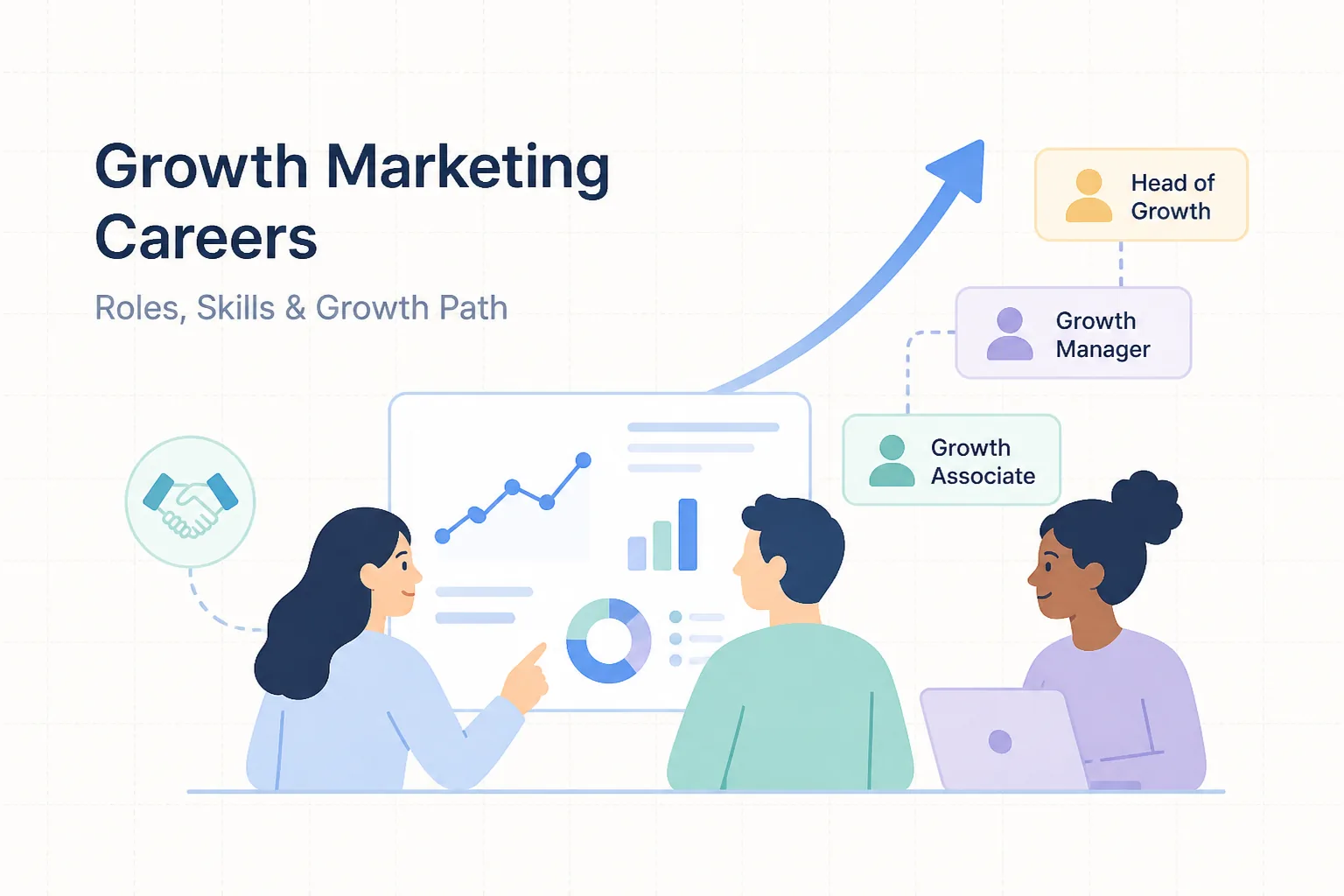
Career Pathways in Mobile Growth: A Guide for Aspiring Digital Specialists

Career Pathways in Mobile Growth: A Guide for Aspiring Digital Specialists

Introduction

The mobile growth industry offers exceptional career opportunities for professionals who combine analytical thinking with creative problem-solving. As mobile applications continue to dominate digital commerce and communication, demand for specialists who understand user acquisition, retention, and monetization has never been higher.

Yet many talented individuals struggle to enter this field. They lack clear guidance on what skills to develop, what roles to pursue, or how to gain the experience that employers require. This article provides a roadmap for building a successful career in mobile growth, regardless of your starting point or background.

Our mission is to help professionals develop the competencies they need to thrive in this dynamic industry. Whether you're transitioning from another field, starting your career journey, or looking to advance in mobile growth, this guide offers practical pathways forward.

Understanding Mobile Growth as a Career Field

What Do Mobile Growth Professionals Actually Do?

Mobile growth encompasses several interconnected disciplines, each requiring distinct skill sets:

User Acquisition Specialists focus on bringing new users to mobile applications through various channels—paid advertising, app store optimization, content marketing, partnerships, and referral programs. They analyze channel performance, optimize campaigns, and manage acquisition budgets to maximize return on investment.

Retention Specialists work to keep users engaged with applications after initial download. They develop onboarding experiences, design engagement features, implement push notification strategies, and analyze user behavior to identify and prevent churn.

Monetization Analysts optimize how applications generate revenue, whether through subscriptions, in-app purchases, advertising, or hybrid models. They balance maximizing revenue with maintaining positive user experiences.

Product Growth Managers take holistic views of the growth funnel, working cross-functionally with product, engineering, marketing, and analytics teams to identify and execute growth opportunities.

Growth Analysts support growth teams with data analysis, experimentation design, metric definition, and insight generation. They translate complex data into actionable recommendations.

ASO (App Store Optimization) Specialists focus specifically on improving app visibility and conversion within app stores through keyword optimization, creative testing, and review management.

The Industry Landscape

Mobile growth professionals work across various contexts:

Tech companies building consumer apps (social networks, productivity tools, entertainment platforms) employ large growth teams with specialized roles.

Mobile gaming companies have particularly sophisticated growth operations, often representing the cutting edge of acquisition and retention strategies.

E-commerce businesses increasingly rely on mobile apps for customer relationships and transactions, creating growth opportunities.

Agencies and consultancies serve multiple clients, offering broad exposure to different industries and challenges.

Startups provide opportunities to own end-to-end growth processes, though often with limited resources and higher risk.

Essential Skills for Mobile Growth Careers

Core Competencies

Regardless of specific role, certain skills prove valuable across mobile growth positions:

Data analysis: Understanding metrics, interpreting user behavior data, designing and analyzing experiments, and translating insights into action plans.

Technical literacy: While not necessarily coding, understanding technical concepts like attribution, APIs, data infrastructure, and how technical constraints affect growth strategies.

User psychology: Knowing why users behave as they do, what motivates engagement, and how to design experiences that align with user needs and business goals.

Communication: Clearly articulating strategies, presenting data-driven recommendations, and collaborating effectively across teams with different priorities and languages.

Experimentation mindset: Approaching problems systematically, forming hypotheses, testing them rigorously, and learning from both successes and failures.

Role-Specific Skills

Different specializations require additional expertise:

For User Acquisition:

- Paid advertising platform expertise (Facebook Ads, Google Ads, TikTok Ads, Apple Search Ads)

- Attribution and measurement understanding

- Creative development and testing

- Budget management and forecasting

- Channel diversification strategies

For Retention:

- Behavioral analytics and cohort analysis

- Lifecycle marketing and segmentation

- Product feature analysis

- A/B testing and experimentation

- Communication strategy (push, email, in-app messaging)

For Monetization:

- Subscription and payment system understanding

- Pricing strategy and elasticity analysis

- Revenue forecasting and modeling

- Conversion funnel optimization

- Value metric identification

For Growth Analytics:

- Statistical analysis and significance testing

- SQL and data querying

- Data visualization

- Experiment design and analysis

- Metric definition and tracking implementation

Soft Skills That Set You Apart

Technical skills get you interviews, but soft skills determine career success:

Business acumen: Understanding how growth activities connect to overall business objectives and being able to articulate ROI for growth initiatives.

Adaptability: The mobile landscape changes rapidly—iOS updates, new platforms, evolving user preferences. Successful professionals continuously learn and adjust.

Collaboration: Growth requires coordination across teams. The ability to build relationships, navigate organizational dynamics, and align diverse stakeholders proves invaluable.

Strategic thinking: Moving beyond tactical execution to identify leverage points, anticipate trends, and shape strategic direction.

Empathy: Understanding users as humans, not just data points, leads to more effective and ethical growth strategies.

Career Entry Points

For Recent Graduates

If you're completing or recently completed university, several pathways exist:

Entry-level growth positions: Many companies offer junior growth analyst, growth marketing associate, or user acquisition coordinator roles designed for recent graduates. These provide structured learning opportunities.

Analytics programs: Data analyst positions in companies with mobile apps often transition into growth-focused roles as you develop product and user understanding.

Marketing rotational programs: Some larger companies offer rotational programs where you gain exposure to various marketing functions, including mobile growth.

Internships: Growth team internships provide valuable experience and often convert to full-time positions. Apply broadly and use internships to explore different aspects of growth.

Preparation strategies:

- Take relevant coursework in statistics, marketing, data analysis, and consumer psychology

- Develop practical skills through personal projects (build a simple mobile app, run a small advertising campaign, optimize a blog for organic traffic)

- Build a portfolio demonstrating analytical thinking and growth mindset

- Network with professionals through LinkedIn, industry events, and informational interviews

- Consider certifications in Google Analytics, Google Ads, or Facebook Blueprint to demonstrate commitment

For Career Changers

Transitioning into mobile growth from another field brings valuable perspectives:

From traditional marketing: Your brand strategy, campaign management, and customer insight skills translate directly. Focus on developing technical and data analysis competencies that mobile growth emphasizes.

From data science/analytics: Your analytical foundation is highly valuable. Develop business context around mobile applications and user behavior to complement your technical skills.

From product management: Your user empathy and cross-functional experience are assets. Deepen expertise in growth-specific channels, metrics, and strategies.

From software engineering: Technical depth distinguishes you from other growth candidates. Develop business acumen and user psychology understanding to complement technical skills.

Transition strategies:

- Identify aspects of your current role that overlap with growth responsibilities and emphasize those in your narrative

- Take online courses specifically in mobile growth topics to fill knowledge gaps

- Start a side project that demonstrates growth skills (optimize a personal app, run paid acquisition campaigns, write growth-focused content)

- Network within growth communities to understand how others successfully transitioned

- Consider roles that blend your existing expertise with growth (e.g., a data scientist moving to growth analytics, or a traditional marketer moving to mobile marketing)

For Self-Taught Professionals

You don't need formal education to build a mobile growth career:

Building your foundation:

- Follow structured learning paths through platforms like Reforge, GrowthHackers, or free resources from growth communities

- Practice skills hands-on through personal projects, freelance work, or volunteer opportunities

- Document your learning journey and projects to demonstrate commitment and capability

Gaining experience:

- Offer to help small businesses or startups with their mobile growth challenges, even unpaid initially to build experience

- Participate in growth communities, contribute insights, and build reputation

- Create case studies from your projects showing analytical thinking and results achieved

Landing your first role:

- Target smaller companies or startups where proven capability matters more than credentials

- Emphasize concrete skills and results over educational background

- Build a strong portfolio demonstrating practical abilities

- Network persistently to access opportunities not publicly posted

Building Your Growth Skill Set

Learning Resources

High-quality education doesn't require expensive programs:

Free/Low-Cost Resources:

- Platform documentation: Facebook Business, Google Ads, Apple Developer documentation provide deep expertise on specific channels

- Growth blogs: Reforge Blog, Andrew Chen's blog, Brian Balfour's content, Lenny's Newsletter offer industry insights

- YouTube channels: Numerous creators share practical mobile growth tutorials and case studies

- Community forums: GrowthHackers, Indie Hackers, Reddit's r/marketing and r/startups communities facilitate peer learning

- Open data sets: Practice analysis skills with publicly available app data and analytics

Professional Development Programs:

- Certifications: Google Analytics, Google Ads, Facebook Blueprint demonstrate platform expertise

- Specialized courses: Reforge programs, Udemy courses, Coursera specializations provide structured learning paths

- Conference workshops: Industry conferences often offer hands-on workshops teaching specific skills

- Company training: Once employed, take advantage of any internal training, external course budgets, or conference attendance opportunities

Practical Skill Building

Theoretical knowledge matters, but practical application cements learning:

Personal Projects:

- Build and launch a simple mobile app, even a basic utility, to understand the full growth cycle

- Run small-scale paid advertising campaigns ($50-100 budget) to learn campaign structure, targeting, and optimization

- Optimize a blog or website for SEO to understand organic acquisition principles

- Analyze publicly available app data to practice metric definition and insight generation

Freelance and Volunteer Work:

- Offer growth services to local small businesses or nonprofits to gain real-world experience

- Help early-stage startups with growth challenges through accelerator office hours or mentorship programs

- Contribute to open-source projects related to analytics or growth tools

Simulation and Practice:

- Use demo accounts and sandbox environments to practice campaign setup and optimization

- Analyze successful apps' growth strategies to understand what works and why

- Participate in growth hackathons or competitions to practice under constraints

- Create detailed case study analyses of notable app growth stories

Staying Current

The mobile growth field evolves rapidly, requiring continuous learning:

Following Industry Developments:

- Subscribe to key newsletters (MobileDevMemo, App Growth Summit, Eric Seufert's Mobile Dev Memo)

- Follow thought leaders on Twitter/X and LinkedIn

- Join Slack communities focused on mobile growth

- Attend virtual or in-person industry events regularly

Experimenting with New Platforms:

- As new social platforms or advertising channels emerge, experiment early to develop expertise

- Test new attribution solutions, analytics tools, and growth platforms as they launch

- Share your findings with the community to build reputation and learn from others' experiences

Deepening Expertise:

- Choose areas to develop specialized expertise (e.g., subscription optimization, app store creative testing, cohort analysis)

- Read research papers and whitepapers on user behavior, behavioral economics, and growth psychology

- Take advanced courses or certifications to formalize deepening expertise

Advancing Your Mobile Growth Career

Junior to Mid-Level Transition

Moving beyond entry-level positions requires demonstrating expanded capabilities:

Taking ownership: Move from executing defined tasks to proposing initiatives, seeing them through, and measuring impact independently.

Cross-functional collaboration: Work effectively with product, engineering, and business teams to identify and execute growth opportunities.

Strategic thinking: Understand not just what to do but why, and begin identifying strategic opportunities beyond assigned responsibilities.

Mentoring: Help onboard and develop more junior team members, solidifying your own knowledge while adding leadership experience.

Mid-Level to Senior Transition

Senior roles require leadership beyond individual contribution:

Strategic vision: Define multi-quarter growth strategies aligned with business objectives, not just optimize existing initiatives.

Team leadership: Manage other growth professionals, develop team capabilities, and build high-performing growth organizations.

Organizational influence: Shape how companies think about growth, influencing product roadmaps and business strategy based on growth insights.

External presence: Contribute to industry knowledge through writing, speaking, or community leadership, building personal brand alongside company brand.

Alternative Career Paths

Mobile growth expertise opens diverse opportunities:

Consulting: Help multiple companies with growth challenges, gaining broad industry exposure and building a specialized practice.

Entrepreneurship: Apply growth expertise to your own product or service, combining business building with growth execution.

Investment: Join venture capital or private equity firms, using growth expertise to evaluate potential investments and support portfolio companies.

Product management: Transition to product leadership roles where growth expertise informs product strategy and development.

Education and training: Build programs that teach others mobile growth skills, contributing to industry development while building a speaking and consulting practice.

Common Career Challenges and How to Navigate Them

Challenge 1: Breaking Into the Field Without Experience

The Problem: Entry-level positions often require 1-2 years of experience, creating a catch-22 for newcomers.

Solutions:

- Create your own experience through personal projects, volunteer work, or freelance engagements

- Target smaller companies or startups more willing to take chances on promising candidates

- Network persistently to access unadvertised opportunities where hiring managers can assess you directly

- Consider adjacent roles (marketing coordinator, data analyst) in companies with mobile apps as stepping stones

Challenge 2: Keeping Up with Rapid Industry Changes

The Problem: The mobile landscape evolves so quickly that today's best practices become tomorrow's outdated approaches.

Solutions:

- Build learning into your routine through regular reading, course-taking, and experimentation

- Join peer learning groups where professionals share updates and insights

- Maintain a growth mindset, viewing change as opportunity rather than threat

- Develop fundamental skills (data analysis, user psychology, experimentation) that remain valuable despite platform changes

Challenge 3: Balancing Specialization and Breadth

The Problem: Deep expertise in one area creates hiring opportunities but limits flexibility; breadth provides adaptability but less differentiation.

Solutions:

- Develop T-shaped skills: deep expertise in 1-2 areas with working knowledge across growth disciplines

- Choose specializations based on genuine interest and market demand

- Build complementary skills that enhance your primary expertise (e.g., data analysis enhances any growth specialization)

- Remain open to pivoting specialization as your interests and market needs evolve

Challenge 4: Navigating Company Culture and Politics

The Problem: Growth teams often must negotiate competing priorities, resource constraints, and organizational dynamics.

Solutions:

- Develop stakeholder management skills through practice and observation

- Build alliances across teams through genuine collaboration and shared success

- Communicate growth impact clearly in business terms executives understand

- Choose companies whose cultures align with your working style when possible

The Importance of Community in Career Development

Why Community Matters

Professional communities accelerate career development in ways individual effort cannot:

Knowledge sharing: Learn from others' successes and failures without repeating every mistake yourself.

Networking: Access opportunities through personal connections that never reach public job boards.

Support: Navigate challenges with peers who understand industry-specific difficulties.

Mentorship: Benefit from experienced professionals' guidance in developing your career strategy.

Accountability: Stay motivated and committed to growth goals through community engagement.

Engaging with Growth Communities

Online Communities:

- Join Slack groups focused on mobile growth and participate actively

- Contribute to forums like GrowthHackers by answering questions and sharing insights

- Follow and engage with growth professionals on LinkedIn and Twitter

In-Person Events:

- Attend local mobile marketing meetups to build face-to-face relationships

- Participate in industry conferences, focusing on learning and networking rather than just attending sessions

- Join workshops and hands-on sessions to develop skills while meeting peers

Contributing Back:

- As you develop expertise, share learnings through blog posts, presentations, or mentoring

- Help organize community events or maintain community resources

- Provide feedback and support to others earlier in their career journeys

Conclusion: Your Growth Career Starts Now

Building a successful career in mobile growth doesn't require following a single prescribed path. Whether you're a recent graduate, career changer, or self-taught professional, opportunities exist to develop the skills and experience this industry values.

The most successful mobile growth professionals share common characteristics:

- Genuine curiosity about why users behave as they do

- Analytical mindsets that combine data with intuition

- Willingness to experiment and learn from failures

- Commitment to continuous learning in a rapidly evolving field

- Collaborative spirits that help teams achieve more together

Your career development journey begins with single steps: taking that first course, launching that side project, attending that networking event, or applying for that stretch position. The mobile growth community is welcoming to newcomers who demonstrate genuine interest and commitment.

We're here to support your journey. Our programs, resources, and community exist to help professionals at every career stage develop the competencies they need to thrive. Whether you're just starting out or looking to reach the next level, we invite you to engage with our educational offerings and connect with fellow professionals building careers in this dynamic field.

The mobile industry's future success depends on developing talented, ethical, analytically rigorous growth professionals. By investing in your own development and contributing to the community's collective knowledge, you help build that future while advancing your own career.

Your growth career begins now. What will your first step be?

Connect and Grow

Join our community of mobile growth professionals to access mentorship, peer learning, and career development resources. Whether you're exploring the field or advancing toward senior leadership, we're here to support your journey.

Privacy-First Mobile Growth: Adapting to a Post-ATT World

Privacy-First Mobile Growth: Adapting to a Post-ATT World

Introduction

The mobile industry has undergone seismic shifts in recent years as privacy regulations and platform policies reshape how growth professionals can track, target, and engage users. Apple's App Tracking Transparency (ATT) framework, GDPR in Europe, and increasing privacy awareness among users have fundamentally changed mobile growth strategies.

These changes created panic across the industry. Many businesses built on precise user-level tracking and attribution faced sudden existential challenges. Yet this transformation also presents opportunities—for companies willing to build growth strategies that respect user privacy while still achieving business objectives.

This article explores how mobile growth professionals can adapt to privacy-first requirements, implementing strategies that balance effective user acquisition and retention with ethical data practices. Rather than viewing privacy as merely a constraint, we examine how privacy-respecting approaches can strengthen user trust, improve long-term retention, and create competitive advantages.

Understanding the Privacy Landscape

The Privacy Revolution: What Changed and Why

For years, mobile growth relied on detailed user-level tracking. Advertisers could follow individuals across apps and websites, building comprehensive profiles of interests and behaviors. Attribution providers could definitively state which specific ad impression led to which specific conversion.

This era effectively ended with several regulatory and platform changes:

GDPR (2018): European Union regulations requiring explicit user consent for data collection and processing, with significant penalties for violations.

CCPA (2020): California Consumer Privacy Act granting users rights over their personal data, including the right to know what's collected and opt out of its sale.

iOS 14 ATT (2021): Apple's App Tracking Transparency framework requiring apps to ask permission before tracking users across other companies' apps and websites. Opt-in rates averaged only 15-25%, compared to the previous default opt-in environment.

Google Privacy Sandbox: Google's ongoing efforts to balance advertising effectiveness with user privacy in Android ecosystem, scheduled for full implementation in the coming years.

These changes reflect growing societal recognition that unfettered data collection carries real costs—to individual privacy, to data security, and to user autonomy. The question for growth professionals is not whether to adapt, but how to do so effectively.

Why Privacy-First Approaches Matter

Beyond regulatory compliance, privacy-first strategies offer business advantages:

User trust: Companies demonstrating genuine respect for privacy build stronger user relationships. In a post-Cambridge Analytica world, privacy practices significantly influence brand perception.

Regulatory resilience: As privacy regulations continue expanding globally, privacy-first approaches ensure compliance without constant reactive adjustments.

Competitive differentiation: While many companies struggle with privacy requirements, those who adapt effectively gain advantages in both user acquisition and retention.

Sustainable practices: Building on aggregated, privacy-preserving data creates more sustainable growth models than those dependent on invasive tracking that faces increasing restrictions.

Data quality: Consent-based data collection often yields higher quality data from genuinely engaged users versus comprehensive but noisy tracking data.

Core Principles of Privacy-First Mobile Growth

1. Transparency and Consent

Users should clearly understand what data you collect, why you collect it, and how you use it:

Clear communication: Explain data practices in plain language, not just legal terms. Users should understand what they're consenting to without needing law degrees.

Genuine choice: Provide meaningful control over data collection and use. "Agree or lose all functionality" isn't genuine consent.

Ongoing transparency: Make data practices easily accessible at any time, not just during initial onboarding. Users should be able to review and modify their choices.

Respect for decisions: When users decline tracking or data collection, respect those choices without punishment through degraded experiences.

2. Data Minimization

Collect only data necessary for specific, legitimate purposes:

Purpose limitation: Define clear purposes for data collection before collecting. Don't gather data "just in case" it proves useful later.

Retention limits: Delete or anonymize data once its purpose is fulfilled. Don't indefinitely retain user information.

Minimal viable data: Continuously question whether each data point you collect is truly necessary for user value or business operations.

3. Security by Design

Protecting collected data is as important as limiting collection:

Encryption: Encrypt data in transit and at rest, protecting user information even if systems are compromised.

Access controls: Limit internal access to user data based on legitimate need. Most employees shouldn't access user-level data.

Breach preparedness: Have clear procedures for detecting, responding to, and communicating about data breaches.

Vendor management: Ensure third-party services handling user data maintain similar security standards.

4. User Empowerment

Give users meaningful control over their data:

Data access: Allow users to view what data you hold about them.

Data portability: Enable users to export their data in usable formats.

Deletion rights: Provide clear, accessible mechanisms for users to delete their data and accounts.

Preference management: Let users adjust privacy and communication preferences easily, not just during onboarding.

Practical Privacy-First Growth Strategies

Acquisition: Targeting Without Invasive Tracking

Privacy constraints force evolution in acquisition approaches:

Contextual targeting: Rather than targeting individuals based on cross-app behavior, target based on content context. A cooking app advertises within recipe content, regardless of who's viewing.

First-party data strategies: Build rich user understanding within your own properties rather than relying on third-party data. This requires creating value that encourages users to share information directly.

Probabilistic attribution: Accept directional understanding of what's working rather than requiring user-level attribution. Aggregated data can still guide optimization effectively.

Incrementality testing: Use experiments that compare exposed vs. control groups to understand true marketing impact without requiring user-level tracking.

Broader targeting: Shift from hyper-specific micro-targeting to broader audience segments, relying more on creative effectiveness and messaging than precise targeting.

Creative emphasis: With less targeting precision, creative quality matters more. Invest in compelling messaging that resonates broadly rather than depending on narrow targeting to find receptive audiences.

Attribution: Understanding Impact Without User-Level Tracking

Attribution has perhaps faced the largest disruption from privacy changes:

Marketing mix modeling (MMM): Use statistical analysis of historical performance data to understand channel effectiveness at an aggregated level. While less granular than previous attribution, MMM provides actionable insights for budget allocation.

Aggregated conversion values (SKAdNetwork): Apple's privacy-preserving attribution framework provides campaign-level data without exposing individual users. Learn to optimize within these constraints.

Incrementality studies: Conduct regular experiments where you intentionally pause certain channels or tactics to measure their true incremental impact on conversions.

Multi-touch attribution alternatives: Shift from deterministic, user-level multi-touch attribution to probabilistic models that respect privacy while providing directional guidance.

Focus on effectiveness metrics: Rather than obsessing over last-click attribution, evaluate channels based on overall business impact, brand lift, and incremental value.

Retention: Building Engagement Without Surveillance

Retention strategies can be highly effective while respecting privacy:

In-app behavior analysis: Analyze user behavior within your app where you have clear consent and legitimate interest. This first-party data remains highly actionable.

Cohort analysis: Understand user segments based on shared characteristics without tracking individuals across properties. Cohort-level insights guide product and engagement decisions.

Progressive disclosure: Ask for permissions when users understand the value exchange, not immediately upon app install. Request notification permissions after users see value; request location only when using location-based features.

Value-first communication: Ensure every notification, email, or message provides genuine value rather than just serving business objectives. Users opt into communications they find valuable.

Predictive analytics with aggregated data: Build churn prediction and engagement models using aggregated patterns without requiring user-level surveillance.

Monetization: Subscription and Purchase Strategies

Privacy-first monetization focuses on transparent value exchange:

Clear value propositions: Help users understand exactly what they get for their money, making informed decisions without needing behavioral manipulation.

Fair trial designs: Provide genuine trial value rather than relying on friction-filled cancellation flows to retain unwanted subscriptions.

Pricing transparency: Show clear pricing, explain what users pay and when, and make changes to subscriptions simple and transparent.

Privacy as a feature: Consider offering privacy as a premium feature (ad-free experiences, minimal data collection) as part of value proposition.

Case Studies: Success in Privacy-First Growth

Case Study 1: DuckDuckGo

Privacy-first positioning: DuckDuckGo built its entire search engine value proposition around privacy, demonstrating that privacy can be a competitive advantage rather than merely a constraint.

Growth approach:

- Zero user tracking as core feature

- Contextual advertising only

- Transparent about business model

- Education-focused content explaining privacy importance

Results: Grown to over 100 million daily searches, proving users value privacy enough to choose alternative services. Established strong brand loyalty based on trust.

Case Study 2: Signal

Privacy-first messaging: Signal provides end-to-end encrypted messaging without collecting user data, building growth through genuine privacy protection rather than surveillance-based engagement optimization.

Growth approach:

- Product excellence as primary growth driver

- Word-of-mouth and press coverage from privacy positioning

- Transparent open-source code building technical trust

- No paid acquisition or tracking-based optimization

Results: Explosive growth during privacy concerns about other messaging apps, demonstrating users actively seek privacy-respecting alternatives when aware of options.

Case Study 3: Apple's App Store Privacy Labels

Transparency initiative: Apple's nutrition-label-style privacy disclosures help users understand app data practices before downloading.

Impact on ecosystem:

- Apps with better privacy practices see competitive advantages

- Users increasingly consider privacy in app selection

- Developers forced to justify data collection practices

- Industry moving toward privacy as differentiator

Lessons: Transparency drives accountability and competition on privacy, benefiting users and privacy-respecting developers.

Implementing Privacy-First Practices: A Roadmap

Phase 1: Audit and Assessment

Before changing strategies, understand your current state:

Data inventory: Document all data you collect—what, why, where it's stored, who accesses it, and how long you retain it.

Vendor assessment: Review all third-party services handling user data. Do they meet privacy standards? Are there privacy-respecting alternatives?

Compliance check: Ensure current practices comply with relevant regulations (GDPR, CCPA, ATT, etc.). Identify gaps requiring immediate attention.

User communication review: Evaluate how you communicate about privacy. Is it clear, honest, and accessible? Or buried in legal language?

Team knowledge assessment: Does your team understand privacy requirements and why they matter? Identify training needs.

Phase 2: Quick Wins

Implement high-impact, relatively simple improvements:

Improve consent flows: Make privacy choices clear, genuine, and well-explained. Remove dark patterns that manipulate users into consenting.

Clean up data collection: Remove unnecessary data collection that doesn't serve clear purposes. Less data means less liability.

Update privacy policies: Rewrite policies in clear language that users actually understand. Consider visual aids or FAQs.

Implement data retention policies: Set and enforce limits on how long you retain user data. Delete old data systematically.

Test privacy-respecting alternatives: For any tracking or targeting, experiment with privacy-preserving alternatives to understand actual performance impact.

Phase 3: Strategic Shifts

Make deeper changes to growth approaches:

Invest in first-party data: Build mechanisms to collect and utilize first-party data effectively, providing value that encourages users to share information directly.

Develop contextual targeting: Shift acquisition strategies toward contextual rather than behavioral targeting, testing and optimizing within this framework.

Build MMM capabilities: Implement marketing mix modeling to guide budget allocation without user-level attribution.

Redesign engagement strategies: Create retention approaches based on providing value and building habits rather than surveillance and manipulation.

Privacy-first product development: Incorporate privacy considerations into product development from the start, not as afterthoughts.

Phase 4: Cultural Integration

Make privacy a core value, not just compliance requirement:

Leadership commitment: Ensure executives genuinely prioritize privacy, allocating resources and making it a business priority.

Team education: Provide ongoing privacy training so everyone understands principles and can make informed decisions.

Privacy by design: Integrate privacy considerations into all planning processes—product, marketing, engineering, and data.

Metrics evolution: Expand success metrics beyond short-term revenue to include user trust, privacy compliance, and long-term sustainability.

External communication: Share your privacy commitment publicly, building brand reputation and accountability.

Addressing Common Concerns

"Privacy Requirements Hurt Our Growth"

This concern often reflects short-term thinking or over-reliance on specific tactics:

Reality check: Many companies successfully grow with privacy-first approaches. Initial performance dips as you transition typically recover as you optimize new strategies.

Attribution != performance: Losing user-level attribution doesn't mean losing understanding of what works. Aggregated data, experimentation, and modeling provide actionable insights.

User trust value: While hard to measure immediately, user trust built through privacy respect creates long-term competitive advantages.

Regulatory trajectory: Privacy requirements will only increase. Early adaptation positions you ahead of competitors scrambling to comply.

"Our Competitors Aren't Following These Practices"

Industry-wide transitions take time, but trends are clear:

First-mover advantages: Early adopters of privacy-respecting practices gain reputation benefits as awareness increases.

Regulatory enforcement: Privacy regulations are increasingly enforced, with significant penalties for violations. Non-compliant competitors face growing risks.

Platform evolution: Major platforms (Apple, Google) continue strengthening privacy protections, making privacy-hostile practices increasingly difficult.

User preferences: Growing user awareness of and concern about privacy creates market pressure toward better practices.

"We're Too Small to Worry About Privacy Regulations"

Size doesn't exempt companies from privacy obligations:

Regulatory scope: GDPR, CCPA, and similar regulations apply to companies of all sizes operating in relevant jurisdictions.

Reputational risk: Small companies can't afford negative privacy publicity that damages trust and retention.

Future growth: Building privacy-first from the start is easier than retrofitting as you scale.

User expectations: Users expect privacy respect regardless of company size.

The Future of Privacy-First Mobile Growth

Emerging Trends

The privacy landscape continues evolving:

Differential privacy: Techniques that allow data analysis while mathematically protecting individual privacy will become more accessible and widely adopted.

On-device processing: More analytics and personalization will occur on user devices rather than sending data to servers, preserving privacy while enabling functionality.

Privacy-preserving attribution: New technologies for measuring advertising effectiveness without compromising individual privacy are in development.

Regulatory expansion: More jurisdictions will implement privacy regulations, creating increasingly global standards that guide industry practices.

User control interfaces: Platforms will provide increasingly sophisticated user controls over data sharing and usage, empowering user choice.

Skills for the Future

Growth professionals need evolving capabilities:

Statistical literacy: Understanding aggregated data analysis, confidence intervals, and statistical significance becomes more important as user-level data decreases.

Privacy technology knowledge: Familiarity with privacy-preserving technologies, from differential privacy to federated learning, will differentiate sophisticated practitioners.

First-party data strategy: Expertise in collecting, managing, and activating first-party data ethically and effectively.

Experimentation design: As attribution becomes more challenging, rigorous experimentation becomes more important for understanding what works.

Regulatory awareness: Understanding evolving privacy regulations and their implications for growth strategies.

Conclusion: Privacy as Opportunity

The privacy revolution in mobile growth initially felt like crisis to an industry built on granular tracking and targeting. But this transformation represents opportunity—to build more sustainable, ethical, and ultimately more effective growth strategies.

Privacy-first approaches force growth professionals to focus on fundamental value propositions, product excellence, and genuine user relationships rather than sophisticated tracking and behavioral manipulation. Companies that adapt successfully will build stronger user trust, more defensible competitive positions, and more sustainable growth models.

The future of mobile growth is privacy-first. Those who embrace this future now—developing capabilities, adjusting strategies, and building cultures that respect user privacy—will be best positioned for long-term success.

Our community exists to help professionals navigate this transition, sharing knowledge about what works, supporting each other through challenges, and collectively building better practices for our industry. Privacy-first mobile growth isn't just about compliance—it's about building a more ethical, sustainable, and ultimately more successful mobile ecosystem.

The question isn't whether to adapt to privacy-first mobile growth, but how quickly and effectively you'll make the transition. The tools, strategies, and community support you need exist. The opportunity to lead rather than follow awaits.

Learn and Share

Join our community discussions on privacy-first mobile growth strategies. Share your experiences navigating privacy transitions, learn from others' successes and challenges, and contribute to building industry best practices that balance growth objectives with user privacy respect.

Building Inclusive Mobile Experiences: Where Accessibility Meets Growth

Building Inclusive Mobile Experiences: Where Accessibility Meets Growth

Introduction

When discussing mobile app growth, conversations typically focus on acquisition channels, retention mechanics, and monetization strategies. Rarely do they center on accessibility and inclusion—yet these elements profoundly impact your potential user base, engagement quality, and long-term success.

Over 1 billion people worldwide live with disabilities. Add users with temporary impairments (broken arms, eye strain, noisy environments), situational limitations (bright sunlight, one-handed phone use while carrying groceries), and aging populations experiencing declining vision or dexterity, and the number of users who benefit from accessible design approaches a majority of all mobile users.

Despite this reality, most mobile apps remain difficult or impossible for many users to access. This isn't just an ethical failure—it's a massive growth opportunity being ignored. When you build inclusively, you expand your addressable market, improve experiences for all users, demonstrate social responsibility, and often discover innovations that benefit your entire user base.

This article explores the intersection of accessibility and mobile growth, showing how inclusive design practices create both social impact and business value.

Understanding Mobile Accessibility

What Is Mobile Accessibility?

Mobile accessibility means ensuring people with diverse abilities can perceive, understand, navigate, and interact with mobile applications effectively. This includes users with:

Visual disabilities: Blindness, low vision, color blindness, light sensitivity

Hearing disabilities: Deafness, hard of hearing

Motor disabilities: Limited dexterity, tremors, paralysis, missing limbs

Cognitive disabilities: Learning disabilities, attention disorders, memory impairments

Temporary impairments: Injuries, illnesses, environmental factors

Situational limitations: Bright light, noise, one-handed use, attention constraints

Why Accessibility Matters for Growth

Beyond moral imperatives, accessibility drives business results:

Expanded market: 1 billion+ users with disabilities represent enormous untapped market potential. Accessible apps capture this audience; inaccessible apps exclude them entirely.

Better experiences for everyone: Accessibility improvements often enhance usability for all users. Large tap targets help users with motor impairments and anyone using phones one-handed. Clear contrast benefits low vision users and anyone using phones in bright sunlight.

Reduced friction: Many accessibility barriers create friction that frustrates all users. Removing these barriers smooths experiences universally.

Regulatory compliance: Many jurisdictions require digital accessibility, with legal consequences for non-compliance. Proactive accessibility avoids legal risks.

Brand reputation: Companies demonstrating genuine commitment to inclusion build stronger brands, particularly among younger consumers who value social responsibility.

Innovation driver: Solving accessibility challenges often leads to innovations benefiting broader user bases. Voice interfaces, originally for blind users, are now mainstream features everyone uses.

The Business Case for Inclusive Design

Market Size and Opportunity

The economic opportunity in accessible design is substantial:

Global market: The global disability market represents over $13 trillion in annual disposable income—larger than the GDP of most countries.

Aging populations: In developed countries, populations are rapidly aging. By 2050, the global 60+ population will double to 2 billion. Age-related impairments create growing demand for accessible technology.

Assistive technology adoption: Screen reader usage alone represents millions of users. Voice control, magnification, and other assistive technologies are increasingly mainstream.

Family and caregiver influence: People with disabilities often influence purchasing decisions for family members, creating multiplier effects for brands perceived as inclusive.

Enterprise accessibility: Organizations increasingly require accessible software for employees and customers, making accessibility a competitive advantage in B2B sales.

Competitive Differentiation

In many categories, accessibility remains poor, creating differentiation opportunities:

First-mover advantages: Early accessible apps in categories capture loyal users frustrated by inaccessible alternatives.

Positive publicity: Accessibility leadership generates press coverage, social media praise, and word-of-mouth referrals.

Community advocacy: Disability communities actively promote and recommend accessible apps, providing organic growth channels.

Enterprise sales: Companies with accessibility requirements prefer vendors demonstrating commitment and competence in inclusive design.

Core Principles of Accessible Mobile Design

1. Perceivable Information

All users must be able to perceive interface elements and content:

Text alternatives: Provide text descriptions for images, icons, and non-text content so screen readers can convey information to blind users.

Adaptable content: Ensure content can be presented in different ways (simplified layouts, larger text, different color schemes) without losing information or structure.

Distinguishable elements: Make it easy to see and hear content through sufficient color contrast, resizable text, and visual separation between elements.

Captions and transcripts: Provide captions for audio content and transcripts for video content, serving deaf users and anyone in sound-sensitive environments.

2. Operable Interfaces

All users must be able to operate interface controls:

Keyboard accessibility: Ensure all functionality is accessible via keyboard or switch control, not just touch, serving users who cannot use touchscreens.

Sufficient time: Provide adequate time for users to read and complete tasks. Avoid time limits or allow users to extend them.

Safe navigation: Help users avoid mistakes through clear navigation, confirmations for destructive actions, and ability to undo operations.

Large touch targets: Ensure interactive elements are large enough (minimum 44x44 points) for users with limited dexterity or using devices with shaky hands.

Gesture alternatives: Provide alternatives to complex gestures like multi-finger swipes or precise drags, which many users cannot perform.

3. Understandable Content

Users must be able to understand information and interface operation:

Readable text: Use clear language appropriate to your audience. Avoid jargon or explain technical terms.

Predictable behavior: Make interfaces behave consistently and predictably. Similar elements should behave similarly.

Input assistance: Help users avoid and correct mistakes through clear labels, error identification, suggestions, and easy correction mechanisms.

Focus indicators: Show clearly which element currently has focus, essential for keyboard and screen reader navigation.

Consistent navigation: Use consistent navigation patterns throughout your app, reducing cognitive load and making apps easier to learn.

4. Robust Implementation

Content must be robust enough to work with diverse assistive technologies:

Standard controls: Use platform-standard UI components that work well with screen readers and other assistive technologies. Custom controls often break accessibility.

Semantic markup: Properly label interface elements so assistive technologies can convey their purpose and state.

Testing with assistive technologies: Regularly test with screen readers (VoiceOver on iOS, TalkBack on Android), voice control, and other assistive technologies.

Platform guidelines: Follow iOS and Android accessibility guidelines, which codify best practices developed through extensive user research.

Practical Implementation Guide

Getting Started with Accessibility

If accessibility is new to your team, begin systematically:

Awareness building: Help your team understand why accessibility matters through user stories, videos of people with disabilities using technology, and hands-on experience with assistive technologies.

Current state assessment: Audit your existing app with accessibility in mind:

- Can you navigate entirely with screen reader?

- Does content have sufficient color contrast?

- Are touch targets large enough?

- Can users complete critical flows using only keyboard/switch control?

- Are error messages clear and actionable?

Quick wins: Identify and fix obvious issues:

- Add missing text alternatives for images

- Increase color contrast where insufficient

- Enlarge small touch targets

- Add labels to unlabeled form fields

- Fix navigation order issues

Establish standards: Document accessibility standards for your app, ensuring team alignment on requirements.

Building Accessibility into Your Process

Sustainable accessibility requires process integration, not one-time fixes:

Design phase:

- Consider diverse users during design exploration

- Use accessibility-focused design tools and plugins

- Test designs with sufficient contrast and appropriate text sizes

- Plan keyboard navigation flows

- Design clear focus indicators

Development phase:

- Use platform-standard components when possible

- Implement semantic markup and labels

- Test regularly with screen readers during development

- Validate color contrast programmatically

- Ensure touch targets meet minimum sizes

Testing phase:

- Include accessibility testing in QA processes

- Test with actual assistive technologies, not just automated tools

- Involve users with disabilities in beta testing when possible

- Use accessibility testing tools (Accessibility Scanner, Xcode Accessibility Inspector)

Launch and monitoring:

- Document accessibility features in app descriptions

- Provide accessibility feedback mechanisms

- Monitor accessibility-related support requests

- Plan regular accessibility audits and improvements

Common Accessibility Issues and Solutions

Issue: Images without text alternatives

- Problem: Screen reader users can't access information conveyed through images

- Solution: Add descriptive alt text to all meaningful images. Decorative images should be marked as decorative.

Issue: Insufficient color contrast

- Problem: Users with low vision or color blindness can't read text or distinguish elements

- Solution: Ensure 4.5:1 contrast ratio for normal text, 3:1 for large text. Use contrast checking tools during design.

Issue: Small or crowded touch targets

- Problem: Users with motor impairments, tremors, or large fingers accidentally tap wrong elements

- Solution: Maintain minimum 44x44 point touch targets with adequate spacing between interactive elements.

Issue: Auto-playing content

- Problem: Unexpected audio or video interferes with screen readers and startles users

- Solution: Don't auto-play media. Provide clear controls for starting, pausing, and stopping.

Issue: Time limits on actions

- Problem: Users with cognitive or motor disabilities need more time to complete tasks

- Solution: Avoid time limits, or allow users to extend/disable them before time expires.

Accessibility and User Acquisition

Marketing Accessible Features

Accessibility features represent genuine value propositions for substantial user segments:

Highlighting accessibility in ASO:

- Mention key accessibility features in app descriptions

- Use accessibility keywords where relevant

- Showcase accessibility in screenshots and preview videos

- Respond to accessibility feedback in reviews

Targeted accessibility messaging:

- Create content specifically for disability communities

- Partner with disability advocacy organizations

- Sponsor or participate in accessibility-focused events

- Engage with assistive technology communities

Inclusive representation:

- Show diverse users, including people with disabilities, in marketing materials

- Demonstrate actual accessibility features in action

- Share user stories from people with disabilities

Organic Growth through Inclusion

Accessible apps earn powerful word-of-mouth promotion:

Community amplification: Disability communities actively share and recommend accessible apps, providing organic reach to millions.

Media coverage: Accessibility leadership often attracts positive press coverage, generating awareness and credibility.

Social proof: Users praising accessibility in reviews and social media provide compelling social proof that attracts broader audiences.

Platform featuring: Apple and Google increasingly feature accessibility-leading apps in editorial selections and recommendations.

Accessibility and User Retention

How Accessibility Improves Retention

Accessible design creates better experiences that drive retention:

Reduced friction: Removing accessibility barriers removes friction affecting all users, improving overall experience quality.

Expanded use cases: Accessible features enable app use in more situations (voice control while driving, high contrast in bright sun), increasing engagement opportunities.

Inclusive community: Users appreciate being in communities that value inclusion, strengthening emotional connections to your brand.

Life stage resilience: As users age and acquire new accessibility needs, accessible apps continue serving them rather than forcing app switching.

Designing Inclusive Onboarding

First impressions matter for retention. Accessible onboarding helps diverse users succeed:

Progressive disclosure: Don't overwhelm users with information. Introduce features contextually as users need them.

Clear value communication: Help all users understand app value quickly, using multiple modalities (text, images, video with captions).

Accessible tutorials: Ensure onboarding tutorials work with assistive technologies. Test with screen readers and voice control.

Personalization options: Allow users to customize experiences to their needs from the start—text size, contrast, reduced motion, simplified interfaces.

Success indicators: Provide clear feedback when users complete actions, especially important for users with cognitive disabilities or those using assistive technologies.

Case Studies: Accessibility Driving Growth

Case Study 1: Seeing AI (Microsoft)

Overview: Free app using AI to describe surroundings, read text, and identify objects for blind users.

Accessibility approach:

- Built specifically for blind users

- Extensively tested with blind community throughout development

- Leverages latest AI capabilities for maximum functionality

- Completely free, prioritizing social impact

Growth impact:

- Over 1 million downloads

- Extensive press coverage and industry recognition

- Strengthened Microsoft's reputation for inclusive innovation

- Created loyal user community actively promoting app and brand

Case Study 2: Be My Eyes

Overview: Connects blind users with sighted volunteers for visual assistance.

Accessibility approach:

- Solves real problem through community-powered assistance

- Simple, accessible interface for blind users

- Engages broader community as volunteers, building awareness

Growth impact:

- Over 6 million volunteers worldwide

- Featured extensively in media

- Created powerful sense of community and purpose

- Demonstrated business model where accessibility is core value proposition

Case Study 3: Uber's Accessibility Features

Overview: Ride-sharing app implementing extensive accessibility features.

Accessibility approach:

- Screen reader optimization

- Wheelchair-accessible vehicle options

- Driver training on assisting riders with disabilities

- Multiple communication options for deaf users

- Audible trip updates

Growth impact:

- Captured ridership from users underserved by traditional taxis

- Differentiation vs. less accessible competitors

- Positive brand perception and press coverage

- Compliance with accessibility regulations in multiple markets

Measuring Accessibility Impact

Key Metrics

Track accessibility improvements through specific metrics:

Adoption metrics:

- Assistive technology user adoption rates

- Accessibility feature usage rates

- Download rates from users with stated accessibility needs

Engagement metrics:

- Session length for assistive technology users vs. average

- Task completion rates across user groups

- Feature adoption rates by accessibility status

Satisfaction metrics:

- App Store ratings from users mentioning accessibility

- Support ticket volume related to accessibility barriers

- NPS scores segmented by accessibility needs

Business metrics:

- Customer acquisition cost for accessibility-focused marketing

- Lifetime value of users acquired through accessibility positioning

- Revenue impact of expanded addressable market

The Role of Community in Advancing Accessibility

Learning from Users

The disability community possesses expertise that development teams often lack:

User testing: Involve people with disabilities in testing early and often. Their perspectives reveal issues that able-bodied teams miss.

Feedback channels: Maintain clear, accessible channels for accessibility feedback. Respond promptly and take feedback seriously.

Advisory relationships: Consider establishing advisory relationships with disability organizations or individual advisors.

Compensating participants: Pay users with disabilities fairly for testing, consultation, and expertise—don't expect free labor.

Contributing to Ecosystem

Share your accessibility learnings to advance the industry:

Open source: Open source accessible components and patterns so others can build on your work.

Documentation: Document your accessibility approach, challenges encountered, and solutions developed.

Speaking and writing: Share accessibility experiences at conferences, in blogs, and through industry publications.

Mentoring: Help other developers and designers learn accessible design practices.

Advocating: Support improved platform accessibility features, tooling, and documentation through feedback to Apple and Google.

Conclusion: Accessibility as Competitive Advantage

For too long, accessibility has been treated as optional compliance burden rather than growth opportunity. This perspective misses both the ethical imperative and the business case for inclusive design.

When you build accessibly, you:

- Expand your addressable market to include 1+ billion users with disabilities

- Improve experiences for all users, not just those with disabilities

- Demonstrate social responsibility that strengthens brand reputation

- Future-proof your app as populations age and accessibility requirements increase

- Differentiate in markets where accessibility remains poor

- Build loyal user communities that actively promote your app

The growth strategies that matter most aren't just about acquisition channels and retention mechanics—they're about building products that genuinely serve diverse user needs. Accessibility isn't separate from growth; it's central to sustainable, ethical, and ultimately more successful growth strategies.

Our commitment is to help mobile growth professionals understand and implement accessible design practices. Through education, community support, and shared learning, we can build a mobile ecosystem that includes rather than excludes, that serves all users rather than just some, that demonstrates the best of what technology can be.

The opportunity to lead in accessibility awaits. The users who will benefit are already here, currently struggling with or entirely excluded from using mobile apps. The business case is clear. The tools and knowledge needed are available. The question is simply: will you commit to building inclusively?

Learn More and Share

Join our accessibility working group to learn practical implementation strategies, share experiences, and contribute to building more inclusive mobile experiences. Accessibility expertise is built through practice and community learning—and we're here to support your journey.

Sustainable Growth vs. Growth at All Costs: Building for Long-Term Success

Sustainable Growth vs. Growth at All Costs: Building for Long-Term Success

Introduction

The mobile app industry celebrates growth above nearly all else. Metrics like monthly active users, download rates, and revenue growth dominate conversations and determine company valuations. Investors reward rapid user acquisition. Media profiles companies experiencing "hockey stick" growth curves. Professional success is often measured by how quickly you scaled user bases.

This growth-obsessed culture has created an environment where "growth at all costs" became the default playbook. Companies burn through massive budgets acquiring users who quickly churn. They employ dark patterns to artificially inflate engagement. They sacrifice product quality for feature velocity. They exploit users through manipulative monetization. And they celebrate these approaches as "growth hacking" rather than recognizing them as fundamentally unsustainable.

But another approach exists: sustainable growth. This model prioritizes building genuine value, earning user loyalty, and creating businesses that thrive long-term rather than flaming out spectacularly. While sustainable growth may appear slower initially, it creates more defensible competitive positions, healthier unit economics, and ultimately more successful businesses.

This article explores the distinction between sustainable and unsustainable growth, examining why growth at all costs often fails and how to build genuinely sustainable mobile businesses.

Understanding Growth Models

Growth at All Costs: The Unsustainable Playbook

The "growth at all costs" model follows a familiar pattern:

Maximize user acquisition: Spend aggressively on paid channels regardless of unit economics, prioritizing volume over quality.

Inflate engagement metrics: Use dark patterns, manipulative notifications, and addictive mechanics to drive engagement numbers, regardless of actual user value.

Monetize aggressively: Extract maximum revenue from users through aggressive monetization, accepting high churn as cost of doing business.

Raise more capital: When unit economics don't work, raise more funding to extend runway while theoretically reaching scale where things improve.

Exit before collapse: Hope to sell the company or go public before unsustainable practices catch up, transferring problems to new owners or public investors.

This model sometimes produces impressive short-term metrics. User counts spike. Revenue accelerates. Valuations soar. But it's fundamentally unsustainable because:

Unit economics never improve: Spending $50 to acquire users with $30 lifetime value doesn't become profitable at scale—it just loses more money.

Quality deteriorates: Prioritizing growth over everything else means cutting corners on product quality, customer support, and user experience.

User trust erodes: Manipulative tactics may work initially, but users eventually recognize exploitation and abandon apps or warn others.

Team burnout increases: Constant pressure for unsustainable growth without regard for product quality or user value demoralizes teams.

Competitive vulnerability: Companies built on unsustainability are vulnerable to competitors who build genuine value and sustainable economics.

Sustainable Growth: The Long-Term Playbook

Sustainable growth follows different principles:

Build genuine value: Create products that solve real problems and meaningfully improve users' lives.

Earn user loyalty: Treat users with respect, building relationships that last rather than exploiting psychological vulnerabilities.

Maintain healthy unit economics: Ensure customer lifetime value exceeds acquisition costs by reasonable margins, creating self-sustaining growth.

Invest in quality: Prioritize product excellence, user experience, and customer support—investments that compound over time.

Grow organically: Leverage word-of-mouth, organic discovery, and user retention rather than depending entirely on paid acquisition.

Build defensible moats: Create competitive advantages through brand, community, network effects, or superior product that protect against competition.

This model may grow more slowly initially. But it creates:

Profitable unit economics: Acquiring users who stay, engage, and generate returns exceeding acquisition costs creates sustainable businesses.

Improving metrics over time: As brand strengthens and word-of-mouth increases, acquisition becomes more efficient and retention improves.

Team motivation: Teams feel proud building products they'd recommend to family and friends, reducing turnover and attracting talent.

Competitive resilience: Genuine value and user loyalty create defensible positions competitors can't easily disrupt.

Long-term success: Sustainable businesses survive market changes, competitive pressures, and funding challenges that destroy unsustainable competitors.

The Hidden Costs of Growth at All Costs

Financial Costs

The most obvious costs are financial, though they're often obscured:

Unprofitable user acquisition: When lifetime value (LTV) doesn't exceed customer acquisition cost (CAC) by adequate margin (typically 3:1 minimum), every new user loses money.

High churn burning capital: Acquiring users who quickly churn means constantly filling a leaky bucket—spending continuously to replace departed users.

Decreasing efficiency: As you exhaust high-quality acquisition channels, costs rise while user quality declines, worsening unit economics over time.

Opportunity costs: Money spent on unsustainable acquisition can't be invested in product improvements, team development, or building sustainable advantages.

Funding dependency: Companies with unsustainable economics depend on continuous funding. When funding markets tighten, they face existential crises.

Product Quality Costs

Prioritizing growth over everything else sacrifices product quality:

Technical debt accumulation: Moving fast without caring about quality creates technical debt that eventually slows development and increases maintenance costs.

User experience degradation: Growth-optimizing every interaction creates cluttered, confusing experiences that frustrate users.

Feature bloat: Adding features to drive engagement rather than solve problems creates complexity without proportional value.

Stability issues: Rapid development without adequate testing leads to bugs, crashes, and poor performance that drive churn.

Support burden: Poor product quality increases support tickets, straining resources and frustrating both users and support teams.

User Trust Costs

Perhaps the most damaging costs involve eroding user trust:

Manipulative reputation: Users recognize and resent dark patterns, notification spam, and exploitative monetization, damaging brand reputation permanently.

Negative word-of-mouth: Exploited users warn others, creating negative organic marketing that undermines acquisition efforts.

Community toxicity: When companies prioritize metrics over user wellbeing, communities become toxic as exploitation becomes cultural norm.

Regulatory attention: Aggressive, exploitative practices attract regulatory scrutiny, leading to restrictions, fines, or platform removals.

Talent challenges: Talented professionals often avoid companies known for exploitative practices, limiting hiring and increasing turnover.

Team Costs

Growth-at-all-costs culture harms the people building products:

Burnout: Constant pressure for unsustainable targets without caring about means creates burnout, reducing productivity and increasing turnover.

Moral distress: Many team members feel uncomfortable with manipulative or exploitative practices, causing stress and disengagement.

Short-term thinking: When only immediate metrics matter, teams lose ability to think strategically or invest in long-term improvements.

Blame culture: When unsustainable targets aren't met, teams face blame rather than honest assessment of whether targets were realistic.

Lost craftsmanship: Pride in building excellent products is replaced by cynicism about shipping whatever drives metrics.

Building Sustainable Growth Strategies

Foundation: Genuine Value Creation

Sustainable growth begins with creating genuine value:

Solve real problems: Understand actual user needs and build solutions that meaningfully address them, not just features you think would be cool.

Deliver excellent experiences: Invest in user experience, performance, reliability, and polish—qualities that users notice and appreciate.

Respect users: Treat users as people deserving respect, not resources to extract value from.

Build for retention: Focus on creating value that keeps users engaged long-term rather than tricks that artificially inflate short-term metrics.

Measure true value: Define success as genuine user benefit and satisfaction, not just engagement or monetization metrics.

Acquisition: Quality Over Volume

Sustainable acquisition prioritizes user quality and efficient economics:

Target right users: Focus acquisition on users likely to find genuine value in your product rather than maximizing volume.

Maintain healthy CAC:LTV: Ensure acquisition costs allow for profitable unit economics. As a rule of thumb, target LTV at least 3x CAC.

Diversify channels: Build multiple acquisition channels to reduce dependency and improve overall economics through mix optimization.

Invest in organic: Create value and experiences that drive word-of-mouth, organic search, and other low-cost acquisition channels.

Test and optimize: Continuously test and optimize acquisition to improve efficiency, but within constraints of maintaining quality and economics.

Onboarding: Set Up for Success

How users experience your app initially largely determines retention:

Clear value proposition: Help users understand value proposition and core functionality quickly.

Progressive disclosure: Don't overwhelm users with everything at once. Introduce features as users need them.

Early success: Ensure users accomplish something valuable in their first session, creating positive association and motivation to return.

Remove friction: Eliminate unnecessary steps, confusing interfaces, and barriers between users and value.

Personalization: Adapt onboarding to different user types, recognizing people come with different needs and contexts.

Retention: Build Lasting Relationships

Sustainable businesses depend on keeping users, not just acquiring them:

Provide ongoing value: Ensure your app continues solving problems and providing value over time, not just initially.

Develop habits: Help users integrate your app into routines through consistent value delivery and gentle reminders.

Engage appropriately: Communicate with users in ways that add value rather than just trying to inflate engagement metrics.

Listen and adapt: Pay attention to user feedback and behavior, continuously improving based on what you learn.

Build community: Create environments where users connect with each other, not just with your app, increasing switching costs.

Monetization: Fair Value Exchange

Sustainable monetization respects users while generating revenue:

Transparent pricing: Ensure users understand what they're paying for and when charges occur.

Fair value exchange: Price products based on value delivered, not maximum willingness to pay extracted through dark patterns.

Multiple options: Provide monetization options suiting different user preferences and budgets.

Align incentives: Structure monetization so that company success depends on user success and satisfaction.

Respect non-payers: Ensure free or low-tier users receive genuine value, not just frustration designed to force upgrades.

Case Studies: Sustainable vs. Unsustainable Growth

Unsustainable Growth: MoviePass

The Approach: MoviePass offered unlimited movie theater visits for $9.95/month, far below the cost of even one movie ticket in most markets. The company prioritized explosive user growth, believing scale would give them leverage to force theaters to share revenue.

Growth Metrics: Skyrocketed from 20,000 to over 3 million subscribers in months. Media celebrated the "disruption" of movie theaters.

The Reality:

- Unit economics were catastrophically negative—company lost money on every subscriber

- Scale didn't improve economics; it just increased losses

- Burned through hundreds of millions in funding

- Resorted to increasingly desperate tactics to reduce usage

- Ultimately collapsed, leaving subscribers and investors with nothing

Lesson: No amount of growth compensates for fundamentally broken unit economics.

Sustainable Growth: Notion

The Approach: Notion built exceptional product solving genuine needs (note-taking, documentation, collaboration), focused on user experience, and grew primarily through word-of-mouth.

Growth Metrics: Slower initial growth than well-funded competitors, but consistent acceleration as product improved and reputation spread.

The Reality:

- Profitable unit economics from early stages

- Minimal marketing spend relative to competitors

- Strong organic growth through user advocacy

- Improving retention and engagement over time

- Sustainable business reaching billions in valuation

Lesson: Building genuine value creates sustainable competitive advantages that compound over time.

Sustainable Growth: Duolingo

The Approach: Duolingo focused relentlessly on educational effectiveness, making language learning genuinely enjoyable and effective rather than just addictive.

Growth Metrics: Steady growth over years, reaching hundreds of millions of users while maintaining educational integrity.

The Reality:

- Strong retention because users genuinely benefit from the service

- Effective freemium model where premium adds convenience without compromising educational mission

- Extensive word-of-mouth from satisfied users

- Profitable at scale while serving educational mission

- Industry leader in mobile learning

Lesson: Aligning business model with genuine user benefit creates sustainable success.

Making the Transition to Sustainable Growth

Assessing Current State

If you're currently pursuing growth at all costs, start by honestly assessing:

Unit economics: Do you have path to profitability at current CAC and LTV? Be honest about whether scale will actually improve economics or just lose more money.

User satisfaction: Are users genuinely happy with your product? Check reviews, support tickets, and retention cohorts for honest signals.

Team health: Is your team sustainable? Check for burnout, turnover, and moral distress about practices.

Product quality: Is your product improving or deteriorating? Assess technical debt, user experience, and feature quality.

Competitive position: Are you building defensible advantages or depending on temporarily cheap acquisition?

Shifting Strategies

Transitioning to sustainability requires strategic changes:

Revisit metrics: Define success beyond just growth. Add retention, user satisfaction, unit economics, and product quality to dashboards.

Adjust targets: Set targets that are ambitious but achievable without unsustainable practices. Accept that growth may slow initially.

Invest in product: Shift resources from acquisition to product improvements that drive retention and word-of-mouth.

Remove exploitation: Eliminate dark patterns, manipulative monetization, and other practices that sacrifice user trust for short-term metrics.

Improve onboarding: Help users find value faster, improving conversion of acquired users into retained users.

Build organic channels: Invest in content, community, app store optimization, and referral programs that create efficient long-term acquisition.

Managing Stakeholder Expectations

Shifting to sustainability often requires managing expectations:

Be transparent: Explain why unsustainable practices create long-term risks and why sustainable approach will ultimately succeed.

Show data: Use cohort analysis, unit economics, and competitive examples to demonstrate sustainable approach's advantages.

Set realistic timelines: Sustainable growth may require patience. Set expectations about temporary growth slowdowns during transition.

Celebrate right metrics: Highlight improvements in retention, unit economics, product quality, and user satisfaction alongside growth metrics.

Demonstrate commitment: Show stakeholders you're serious through consistent decisions prioritizing sustainability over short-term metrics.

The Role of Leadership and Culture

Leadership Responsibility

Leaders determine whether organizations pursue sustainable or unsustainable growth:

Set example: Leaders' actions matter more than words. Personally demonstrate prioritizing user value and sustainable practices.

Define success: Choose metrics and targets that reward sustainable practices rather than just maximizing short-term growth.

Protect long-term thinking: Defend investments in product quality, user experience, and sustainable practices against short-term pressure.

Support saying no: Empower teams to refuse implementing dark patterns, cutting quality corners, or pursuing unsustainable practices.

Build psychological safety: Create environments where teams can honestly discuss concerns about sustainability without fear.

Cultural Transformation

Sustainable growth requires supportive organizational culture:

User-centricity: Make genuine user benefit the North Star guiding all decisions.

Quality pride: Celebrate building excellent products, not just shipping quickly.

Long-term perspective: Reward thinking about long-term sustainability, not just quarterly targets.

Ethical standards: Maintain clear ethical boundaries and take pride in building responsibly.

Learning orientation: Treat challenges as learning opportunities rather than assigning blame for missed unsustainable targets.

Addressing Common Objections

"But Competitors Are Growing Faster"

Competitor growth rates often don't tell full story:

Growth quality matters: Competitors may be growing faster by burning money unsustainably or exploiting users unsustainably.

Long-term wins: Slower sustainable growth ultimately beats faster unsustainable growth when competitors flame out or face user backlash.

Different metrics: While competitors optimize for vanity metrics, you build genuine user loyalty and profitable economics.

Market maturity: As markets mature, users become more sophisticated and favor sustainable, user-respecting companies.

"Investors Won't Accept Slower Growth"

Many investors actually prefer sustainable growth:

Smart investors recognize sustainability: Sophisticated investors understand unit economics and long-term value creation matter more than vanity metrics.

Right investor alignment: If investors don't value sustainability, they're wrong investors for your business. Seek investors aligned with your approach.

Demonstrate advantages: Show investors the competitive advantages and economics sustainable growth creates.

Long-term value creation: Sustainable businesses ultimately create more value for investors than unsustainable ones that collapse or require constant dilutive funding.

"We Need to Reach Scale First"

The "growth now, fix later" mentality rarely works:

Scale amplifies: Scale amplifies both strengths and weaknesses. If your unit economics don't work at 1,000 users, they likely won't work at 1 million.

Harder to change: Fixing problems becomes harder at scale. Technical debt, poor user experiences, and unsustainable practices entrench more deeply.

Window closes: Markets don't wait. By the time you "fix things later," competitors may have captured your opportunity.

Foundation matters: Building sustainable foundations early creates platforms for healthy scaling rather than amplifying problems.

Conclusion: Choosing Sustainable Success

The mobile app industry's growth obsession has created cultures that prioritize metrics over users, volume over quality, and short-term success over long-term sustainability. While this approach sometimes produces impressive vanity metrics, it more often leads to burnout, user exploitation, and eventual business failure.

Sustainable growth offers better path forward. By prioritizing genuine value creation, treating users with respect, maintaining healthy unit economics, and building defensible competitive advantages, sustainable approaches create businesses that thrive long-term rather than flaming out spectacularly.

This isn't just ethical—it's practical. Sustainable businesses enjoy better retention, more efficient acquisition through word-of-mouth, stronger brand reputations, healthier teams, and more defensible competitive positions. They're more likely to survive market changes, attract quality talent, and create lasting value for users, teams, and investors.

As mobile growth professionals, we can choose which model to pursue. We can continue celebrating growth at all costs, accepting the exploitation, burnout, and eventual collapse this entails. Or we can commit to building sustainably—creating genuine value, respecting users, and building businesses that succeed not despite prioritizing sustainability, but because of it.

The choice isn't between growth and sustainability—it's between short-term vanity metrics and long-term success. We believe the path forward is clear. By sharing knowledge, supporting each other, and building communities that value sustainable practices, we can help shift industry culture toward approaches that benefit everyone: users who receive genuine value, teams who feel proud of their work, and businesses that thrive long-term.

The question isn't whether sustainable growth is possible—it's demonstrably the better approach. The question is whether you'll commit to building sustainably, even when short-term pressures push toward unsustainable practices. We're here to support professionals making that commitment, providing education, community, and shared learning that makes sustainable growth achievable and rewarding.

Your users, your team, and your long-term success will thank you.

Join the Conversation

How does your organization balance growth and sustainability? What challenges do you face in maintaining sustainable practices? Share your experiences and learn from others navigating these same challenges in our community forums dedicated to building healthy, sustainable mobile businesses.

Building Strong Professional Communities: The Foundation of Mobile Growth Excellence

Building Strong Professional Communities: The Foundation of Mobile Growth Excellence

Introduction

Mobile growth is often portrayed as an individual discipline—a growth hacker working solo to find that one trick that unlocks explosive user acquisition, or a data analyst discovering the insight that revolutionizes retention. This narrative, while appealing, misses a fundamental truth: the most successful mobile growth professionals succeed not in isolation, but through communities.

Professional communities accelerate learning, provide support during challenges, facilitate knowledge sharing, create opportunities, and establish standards that elevate entire industries. Yet many growth professionals work in silos, missing the multiplier effects that strong communities provide.

This article explores why professional communities matter for mobile growth, how to build and participate in effective communities, and how community engagement accelerates both individual careers and industry-wide progress. Our organizational mission centers on community development precisely because we've witnessed how collective learning and mutual support create outcomes no individual could achieve alone.

Why Professional Communities Matter

The Unique Challenges of Mobile Growth

Mobile growth presents challenges that make community support particularly valuable:

Rapid change: Platforms, policies, and best practices evolve constantly. What worked last quarter may fail this quarter. Communities help professionals stay current through collective knowledge sharing.

Fragmented knowledge: Effective mobile growth requires expertise across disciplines—user psychology, data analysis, creative development, platform policies, technical implementation. No individual masters everything; communities pool diverse expertise.

Experiential learning: Much mobile growth knowledge comes from hands-on experience rather than formal education. Communities provide platforms for sharing hard-won lessons, allowing others to learn from both successes and failures.

Limited public resources: Unlike established fields with extensive educational infrastructure, mobile growth education remains relatively sparse. Communities fill this gap through peer learning and knowledge sharing.

Isolated practitioners: Many companies employ small growth teams or single growth professionals who lack internal peers for consultation. Professional communities provide essential peer networks.

Benefits of Community Participation

Strong professional communities provide multifaceted benefits:

Accelerated learning: Learn from others' experiences without repeating every mistake yourself. A community member sharing their failed experiment saves you time and budget.

Problem-solving support: When facing challenges, tap into collective intelligence of community members who've likely encountered similar issues.

Opportunity discovery: Many opportunities—job openings, collaborations, speaking engagements, consulting work—circulate through professional networks before reaching public channels.

Skill validation: Discussing your work with knowledgeable peers helps validate your approaches and identify blind spots in your thinking.

Motivation and accountability: Community connections provide motivation during difficult periods and accountability for professional development goals.

Industry influence: Communities collectively shape industry standards, best practices, and evolving norms in ways individuals cannot.

Characteristics of Healthy Professional Communities

1. Psychological Safety

The most effective communities create environments where members feel safe:

Non-judgmental atmosphere: Questions aren't dismissed as "too basic." Failures are shared as learning opportunities, not sources of shame.

Respectful disagreement: Members can challenge ideas without attacking people, maintaining respectful discourse even when perspectives differ.

Confidentiality norms: Members respect confidentiality about sensitive information shared, enabling honest discussions about challenges.

Inclusion and diversity: Everyone feels welcome regardless of background, experience level, or identity, benefiting from diverse perspectives.

Support over competition: Members genuinely celebrate others' successes rather than viewing peers primarily as competitors.

2. Active Knowledge Sharing

Healthy communities facilitate continuous knowledge exchange:

Regular contributions: Members actively share insights, experiences, and resources rather than just consuming content.

Diverse formats: Knowledge sharing happens through various formats—written posts, presentations, workshops, casual conversations—accommodating different learning styles.

Practical focus: Discussions emphasize actionable insights and real experiences over theoretical discussions or self-promotion.

Documentation: Valuable knowledge gets captured and organized for future reference, not lost in ephemeral conversations.

Reciprocity: Culture of reciprocity where members both contribute and benefit, avoiding exploitative dynamics where few give and many take.

3. Structured Yet Flexible

Effective communities balance structure with organic interaction:

Clear purpose: Community purpose and focus areas are clearly defined, helping members understand whether the community fits their needs.

Organized resources: Key resources, past discussions, and reference materials are organized for easy discovery rather than lost in noise.

Regular rhythms: Predictable events, discussions, or touchpoints create consistency while allowing for spontaneous interaction.

Moderation: Light-touch moderation maintains quality and safety without stifling organic conversation or creative expression.

Accessibility: Participation mechanisms accommodate different schedules, time zones, and interaction preferences.

4. Multiple Engagement Levels

Not everyone can or should participate equally, and healthy communities accommodate varying engagement:

Core contributors: Members who actively lead discussions, organize events, and drive community development.

Regular participants: Members who consistently engage through discussions, event attendance, and knowledge sharing.

Periodic contributors: Members who participate occasionally when topics particularly interest them or they have specific needs.

Lurkers: Members who primarily observe and learn without actively contributing, still benefiting from community resources.

Healthy communities recognize value in all engagement levels rather than demanding constant high participation from everyone.

5. Mentorship and Growth Pathways

Strong communities help members progress professionally:

Formal mentorship: Structured programs connecting experienced professionals with those earlier in careers.

Informal guidance: Organic relationships where experienced members provide advice and support to others.

Skill development: Opportunities to develop new skills through community projects, events, or collaborations.

Recognition: Mechanisms that recognize and celebrate member contributions, encouraging continued engagement and progression.

Leadership pathways: Clear paths for members to take on increasing responsibility within the community as they develop.

Types of Professional Communities

Online Communities

Digital communities offer accessibility and scale:

Slack/Discord groups: Real-time chat platforms enabling quick questions, discussions, and relationship building across geographies.

Forums and discussion boards: Asynchronous platforms where discussions develop over time, creating searchable knowledge bases.

LinkedIn groups: Professional networking platforms connecting industry peers and facilitating career development.

Reddit communities: Informal forums where practitioners share experiences, often with more candor than formal platforms.

Twitter/X circles: Following and engaging with thought leaders and practitioners, participating in industry conversations.

In-Person Communities

Face-to-face interaction offers unique benefits:

Local meetups: Regular gatherings in specific cities bringing together regional practitioners for networking and learning.

Industry conferences: Larger events bringing together practitioners from wide geographies for intensive learning and networking.

Workshops and bootcamps: Hands-on learning experiences where participants develop specific skills collaboratively.

Coworking and spaces: Physical spaces where professionals work alongside each other, enabling organic collaboration and relationship building.

Hybrid Communities

Many successful communities blend online and offline:

Local chapters of global communities: Global online communities with local in-person chapters maintaining both connection types.

Conference-anchored communities: Online communities that gather periodically for conferences or events, strengthening online relationships through in-person interaction.

Virtual-first with optional in-person: Primarily online communities that occasionally organize in-person gatherings for interested members.

Building Effective Professional Communities

Starting a Community

If communities you need don't exist, consider starting one:

Identify clear purpose: Define specific focus areas and target audience. "Mobile growth professionals" is broad; "iOS subscription app retention specialists" is focused.

Choose appropriate platform: Select platforms matching your community's needs and member preferences. Real-time chat, forums, in-person meetups serve different purposes.

Seed with value: Before inviting many members, create initial valuable content, discussions, or resources demonstrating community's potential value.

Recruit core members: Identify and invite committed individuals who'll actively participate and help shape early community culture.

Establish norms early: Set clear expectations about behavior, contribution, and interaction styles while community culture is still forming.

Start small: Build sustainable community with engaged core before scaling. 20 active members create more value than 2,000 passive ones.

Growing Communities

Once established, thoughtfully grow your community:

Maintain quality while scaling: Growth shouldn't dilute community quality or change culture dramatically. Controlled growth preserves what makes community valuable.

Onboard intentionally: Help new members understand community norms, navigate resources, and connect with existing members.

Encourage participation: Create low-barrier opportunities for new members to contribute—questions to answer, discussions to join, events to attend.

Recognize contributors: Acknowledge and celebrate members who contribute, encouraging continued engagement and modeling desired behavior.

Diversify leadership: Distribute leadership across multiple members, preventing burnout and bringing diverse perspectives to community direction.

Maintaining Community Health

Long-term community health requires ongoing attention:

Monitor engagement: Track participation patterns, identifying when engagement drops and understanding why.

Refresh content and activities: Introduce new formats, topics, or events preventing stagnation while maintaining core value.

Address conflicts: When disagreements arise, address them promptly and fairly, maintaining psychological safety.

Gather feedback: Regularly solicit member input on what's working and what could improve, demonstrating responsiveness to needs.

Adapt to change: As industry evolves or member needs shift, adapt community focus, format, or activities accordingly.

Celebrate successes: Acknowledge community achievements—successful knowledge sharing, member career advances, positive collaborations—reinforcing community value.

Participating Effectively in Communities

Contributing Meaningfully

Effective community participation requires active contribution:

Share generously: Don't hoard knowledge. Share insights, experiences, and resources that could benefit others.

Ask thoughtful questions: When seeking help, provide context, describe what you've tried, and show genuine effort to solve problems.

Offer expertise: Answer questions in your areas of expertise, helping others while reinforcing your own understanding.

Provide feedback: When others share work or ideas, offer constructive feedback that helps them improve.

Support others: Celebrate others' successes, offer encouragement during challenges, and amplify valuable contributions.

Respect time: Recognize that fellow community members volunteer their time. Be appreciative, respectful, and mindful of demands on their attention.

Building Relationships

Communities thrive on genuine relationships, not just transactional exchanges:

Engage authentically: Be yourself rather than maintaining a professional façade. Authentic interaction builds real connections.

Follow up: After valuable conversations, follow up to continue relationships beyond single interactions.

Offer help proactively: When you can help someone, offer assistance without waiting to be asked.

Meet in person when possible: If opportunities arise to meet online connections in person, take them. Face-to-face interaction deepens relationships.

Remember details: Pay attention to what matters to people—their projects, challenges, goals—and reference these in future interactions.

Avoiding Common Pitfalls

Certain behaviors undermine community participation:

Don't just take: Contributing only when you need help creates exploitative dynamics. Contribute when you don't immediately need anything.

Avoid excessive self-promotion: While sharing your work is appropriate, constant self-promotion without providing value damages reputation.

Don't be dismissive: Even when answers seem obvious to you, remember everyone starts somewhere. Answer patiently and respectfully.

Respect confidentiality: Don't share sensitive information from private community discussions publicly or with competitors.

Don't monopolize attention: Allow space for others to contribute. If you're dominating discussions, step back and encourage others.

Case Studies: Successful Professional Communities

Case Study 1: Reforge

Overview: Reforge built community of growth professionals through high-quality educational programs combined with peer learning networks.

Community approach:

- Cohort-based programs creating natural peer groups

- Alumni network maintaining connections beyond programs

- Local chapters organizing in-person gatherings

- Slack community facilitating ongoing discussions

- Expert-led content maintaining quality and attracting participants

Impact:

- Thousands of growth professionals developed skills and networks

- Industry-standard frameworks and terminology emerging from community discussions

- Career opportunities circulating through network

- Knowledge elevation across industry through shared learning

Lesson: Structured education combined with community creates powerful learning and networking ecosystems.

Case Study 2: Mobile Dev Memo Community

Overview: Eric Seufert's Mobile Dev Memo built community around mobile marketing and monetization through newsletter, Slack group, and events.

Community approach:

- High-quality newsletter attracting engaged subscribers

- Active Slack community facilitating daily discussions

- Regular in-person events bringing community together

- Expert contributors providing diverse perspectives

- Focus on technical depth and analytical rigor

Impact:

- Trusted source for mobile marketing insights and analysis

- Network effects where industry professionals know each other through community

- Career and business development opportunities arising from connections

- Industry influence through collective expertise and shared knowledge

Lesson: Consistently excellent content attracts engaged community, and platform for discussion converts readers into active participants.

Case Study 3: GrowthHackers

Overview: GrowthHackers built large community focused on growth marketing and experimentation.

Community approach:

- Open platform allowing broad participation

- User-curated content through voting and commenting

- AMA sessions with industry experts

- Job board connecting employers and job seekers

- Multiple discussion channels for different topics

Impact:

- Large, active community sharing knowledge broadly

- Democratized access to growth knowledge beyond paywalled resources

- Career opportunities for community members

- Growth marketing terminology and frameworks spreading through community

Lesson: Open, accessible platforms enable broad participation and knowledge democratization.

The Future of Professional Communities

Emerging Trends

Professional communities continue evolving:

Virtual-first permanence: COVID accelerated shift toward virtual communities. Post-pandemic, many communities remain primarily virtual, with periodic in-person gatherings rather than vice versa.

Micro-communities: Alongside large general communities, specialized micro-communities focused on specific niches (iOS ASO, subscription analytics, mobile gaming retention) provide depth.

DAO and Web3 structures: Some communities experiment with decentralized autonomous organization structures giving members governance and ownership stakes.

AI-augmented learning: Communities increasingly use AI tools to organize knowledge, answer questions, and facilitate connections, augmenting human interaction.

Global and asynchronous: Communities better accommodate global membership through asynchronous communication and thoughtful scheduling across time zones.

Skills for Community Leadership

Leading communities requires specific capabilities:

Facilitation: Creating environments where others can thrive rather than dominating conversations yourself.

Conflict resolution: Addressing disagreements and tensions constructively, maintaining community health.

Vision and strategy: Defining community direction and making decisions that serve long-term community interests.

Inclusivity: Ensuring diverse voices are heard and everyone feels welcome regardless of background.

Sustainability: Building community structures that don't depend on single individuals' heroic efforts.

The Social Impact of Strong Communities

Raising Industry Standards

Healthy professional communities elevate entire industries:

Knowledge elevation: As communities share knowledge widely, overall industry competence rises, benefiting everyone including users.

Ethical norms: Communities establish and reinforce ethical standards, creating social pressure against exploitative practices.

Best practices: Through collective discussion and validation, communities identify and spread effective practices industry-wide.

Skill development: Communities provide free or low-cost educational opportunities, developing professionals who might otherwise lack access.

Creating Opportunity

Communities make careers more accessible and meritocratic:

Job discovery: Many positions are filled through referrals before public posting. Community membership provides access to these opportunities.

Skill demonstration: Active community participation demonstrates expertise and commitment, providing alternative credentials to formal education.

Mentorship access: Communities connect less experienced professionals with mentors who can guide career development.

Entrepreneurship support: Aspiring entrepreneurs find cofounders, advisors, and early customers through professional communities.

Reduced bias: Communities that prioritize contribution over credentials or background help reduce traditional hiring biases.

Building Our Community Together

Our Commitment

As an organization, we're committed to building healthy, supportive professional communities:

Free, accessible events: We organize educational events and networking opportunities without financial barriers to participation.

Knowledge sharing platforms: We provide forums, resources, and channels for practitioners to share experiences and learn from each other.

Mentorship facilitation: We connect experienced professionals willing to mentor with those seeking guidance.

Standards development: We facilitate discussions that establish and promote ethical, effective practices across the industry.

Inclusive culture: We actively work to ensure our communities welcome everyone regardless of background, experience level, or identity.

How to Get Involved

We invite you to participate in building stronger professional communities:

Join conversations: Participate in our forums, attend our events, and engage in discussions with fellow professionals.

Share your knowledge: Write about your experiences, present at events, answer questions, and help others learn from what you've discovered.

Mentor others: If you're experienced, dedicate time to guiding professionals earlier in their careers.

Provide feedback: Help us improve our community offerings by sharing what's working and what could be better.

Organize locally: If you're interested in organizing local meetups or events, we'll support your efforts.

Contribute to standards: Participate in discussions about best practices and ethical standards, helping shape industry norms.

Conclusion: Community as Foundation

Individual excellence matters in mobile growth. But the most sustained success, the most significant innovations, and the most meaningful career development occur through communities. When we learn together, support each other through challenges, share knowledge freely, and build networks of genuine relationships, we achieve more than any individual could accomplish alone.

Professional communities don't just accelerate individual careers—they elevate entire industries. They make knowledge accessible to those who couldn't otherwise access it. They establish ethical standards that protect users. They create opportunities for people from diverse backgrounds. They drive innovation through collective intelligence.

Our mission centers on community development because we've witnessed its transformative power. We've seen isolated practitioners find support networks. We've watched newcomers accelerate their learning through community knowledge sharing. We've observed how communities raise industry standards and promote ethical practices. We've experienced how genuine relationships formed in professional communities enrich careers and lives.

The strongest professional communities aren't built by single organizations or individuals—they're built by all their members contributing, participating, and supporting each other. Every question answered, every insight shared, every connection made, and every person mentored strengthens the community and benefits everyone within it.

We invite you to join us in building professional communities that serve as foundations for mobile growth excellence. Whether you're just beginning your career or leading growth at scale, whether you prefer online discussions or in-person meetups, whether you're ready to contribute or currently need more support than you can provide—there's a place for you in our community.

Together, we can build communities that make mobile growth knowledge accessible, create opportunities for diverse professionals, establish ethical industry standards, and support each other in building products that genuinely serve users well. The future of mobile growth will be shaped by those who participate in building it together.

Your community awaits. What will you contribute?

Join Our Community

Ready to connect with fellow mobile growth professionals? Join our community forums, attend our events, and become part of a network dedicated to mutual learning, support, and collective advancement. Visit our website to learn about upcoming events, access community resources, and connect with professionals at all career stages who share your commitment to excellence and ethical practices in mobile growth.


Tablet checklist: landing page, privacy policy, terms of use, GDPR — launch ready

Before You Hit Publish: What Every App Needs in Place Before Launch

Most app developers spend months perfecting their product and then rush the launch. The result is often the same: the app gets rejected by the App Store, blocked by ad platforms, or loses users' trust early on. The product is usually solid. The failure comes down to missing infrastructure.

There's a checklist that every app needs to clear before it goes live. Skipping it is expensive. Here's what that checklist looks like and why each item matters. And because we've seen developers hit these walls more times than we can count, we built a free tool that gets your landing page, legal docs, and app subdomain ready in minutes, with no coding or setup required.

A landing page that exists before your app does

You don't need to be live on the App Store to start building momentum. A landing page gives you a place to send early adopters, a link to include in press pitches, and a destination for your paid ads before a single user has downloaded anything.

More practically: Apple and Google require a support URL as part of app submission. You need something to put there. A landing page with your app name, a description, screenshots, and store buttons covers that requirement while also doing real marketing work. Mobile-first design matters here too, since most of the people clicking that link will be on their phones.

A Privacy Policy is not optional

Apple's App Store, Google Play, and Meta's ad platform all require a valid privacy policy before they'll let you through the door. If you run any user data through your app, and you do even if it's just analytics, you need to explain what you collect, how you use it, and how users can request deletion of their data. The policy needs to be publicly accessible at a stable URL.

Beyond store and platform compliance, privacy laws are getting stricter every year. GDPR covers European users. CCPA and a growing number of US state laws apply to American users. If your app has any ambition to scale, you need a policy that covers these bases from the start rather than something you patch together after a compliance flag.

Terms of Use protect you

A privacy policy tells users what you do with their data. Terms of Use tell users what they can and can't do with your app, and what your liability is if something goes wrong. Without them, you're exposed.

Terms also handle things like subscription terms, refund policies, prohibited behavior, and account termination, all of which become much harder to enforce retroactively if you didn't establish them upfront.

GDPR and Cookie Policy: not just for European companies

If any of your users are in the EU, which is likely if you're running international paid acquisition, GDPR applies to you regardless of where your company is registered. A GDPR-compliant privacy setup means clearly stating your legal basis for processing data, giving users the ability to request deletion, and having a cookie policy if your website uses tracking.

Running Meta or Google ads? Both platforms require GDPR consent mode compliance. Missing this exposes you legally, degrades your ad attribution, and can get your account flagged.

Data deletion and support forms: Apple and Meta require them

Since 2022, Apple has required that all apps with account creation must also offer account and data deletion. There needs to be a working link to a deletion request form somewhere accessible from within the app and on your support page.

Meta has its own version of this requirement for any app using Facebook Login or the Meta SDK, where a dedicated data deletion callback or request form is mandatory for app review. Apps get rejected for not having these in place.

A support contact form matters for a different reason: it's your first line of relationship with users who hit a problem. A user who can reach you and get a response is far less likely to leave a one-star review than a user who hits a wall.

A permanent subdomain ties everything together

Every document, every form, every page needs to live somewhere stable. Store submissions require a support URL. Ad platforms require a privacy policy URL. Press contacts will look for a web presence. Users will Google your app name.

Having a consistent subdomain, something like yourapp.app-club.org, means all of these requirements resolve to one place, and that URL doesn't break when you change hosting providers or redesign your website.

We built a free tool so you can have all of this ready in minutes

We wanted to help mobile app developers get through this checklist without spending days on boilerplate, so we built App Club as a completely free tool. You paste your App Store or Google Play link, and we auto-import your app name, icon, description, and screenshots. From there, you customize your landing page colors and content, and generate all five legal documents, including Privacy Policy, Terms of Use, GDPR, Cookie Policy, and Data Deletion, in one click. Your app gets its own subdomain with a mobile-first landing page, all the legal docs, a support contact form, and a data deletion request form, all set up without writing any code or configuring any hosting.

If your app is still in development and not yet in the stores, you can fill in the details manually and have everything ready before you submit.

You can get started for free at landing.app-club.org.

Why this matters before you launch, not after

An App Store rejection costs you days of review time. A blocked Meta ad account can cost you a campaign. A user who can't find your privacy policy and abandons checkout costs you a conversion. A one-star review from a user who couldn't get support costs you an unknown number of organic installs. These are the standard failure modes of launching an app without the infrastructure in place, and all of them are avoidable with a bit of preparation upfront.

Mobile app growth and web-to-app funnel strategy

Mobile App Growth in 2026: Why Web2App Funnels Are the Strategy Most Developers Are Still Sleeping On

The mobile app market is more competitive than it has ever been. User acquisition costs have climbed steadily, app store algorithms have grown harder to game, and the margin between a profitable app and a money-losing one has narrowed to the point where the difference often comes down to how efficiently you convert and monetize users, rather than how good the product is.

Most developers respond to this by doubling down on the same channels: App Store Optimization, paid UA through Meta and Google, and influencer partnerships. These still work, but they share a structural problem that limits their ceiling. Everything runs through the app stores, and the app stores take their cut.

There is a different approach that a growing number of mobile-first companies have been quietly building their growth around, and it is worth understanding before it becomes mainstream.

What web2app funnels are and how they work

A web2app funnel moves the early part of the user journey, specifically onboarding and payment, from inside the app to a web page before the user ever opens the app store.

Instead of sending traffic directly to your App Store or Google Play listing, you send it to a web-based landing page or quiz funnel. That page then handles several things before the user reaches the download:

  • Personalizing the experience based on user input or traffic source
  • Capturing intent and presenting a tailored value proposition
  • Processing the first payment outside the app store environment
  • Delivering the user to the app as an already-paying subscriber rather than a free install

The mechanics are straightforward. The implications for your unit economics are significant.

The app store commission problem

Apple and Google both take 15 to 30 percent of every in-app purchase. For a subscription app doing meaningful revenue, that is a substantial transfer of margin to the platform. Web payments processed outside the app store are not subject to this commission. A user who subscribes through your web funnel before downloading the app represents the full revenue of that subscription rather than 70 to 85 percent of it.

At small scale this difference is easy to dismiss. At scale, it compounds into a meaningful structural advantage, and it also changes what you can afford to pay for user acquisition.

Better data and attribution

In-app attribution has become increasingly unreliable since the introduction of ATT on iOS and the ongoing changes to how Google handles user-level data. When your conversion event happens on the web, you retain access to better tracking, more reliable attribution, and cleaner data to feed back into your ad platforms.

Web conversions integrate more naturally with standard analytics and ad measurement tools. Specifically, running your acquisition through a web funnel gives you the ability to:

  • Run A/B tests on your paywall and onboarding copy with standard web testing tools
  • Measure drop-off at each step of the funnel with granularity that is difficult to achieve inside a native app
  • Feed higher-quality conversion signals back to Meta and Google to improve campaign optimization
  • Attribute revenue to specific creatives, audiences, and channels more reliably than with in-app events

For performance marketers running paid acquisition at any meaningful scale, this is a material difference in how effectively you can optimize campaigns.

Personalization before the download

One of the underappreciated advantages of a web2app funnel is what happens before the user hits the app store. A web-based onboarding flow can ask questions, adapt the experience based on answers, and present a personalized value proposition tailored to the specific user's goals before they've committed to anything.

This matters because the app store product page is static. Every user who lands on it sees the same screenshots, the same description, the same social proof. A web funnel lets you tailor the experience to the traffic source, the ad creative that drove the click, or the answers a user gave in a short quiz. Users who arrive at the download having already been through a personalized flow convert at higher rates and retain better because their expectations were set more accurately.

Why most developers haven't done this yet

The honest answer is that building a web2app funnel has traditionally required meaningful engineering resources. You need a landing page, a payment integration that handles subscriptions and communicates with your app's backend, a way to bridge the web session to the app install, and ongoing maintenance as platforms change their policies.

For an indie developer or a small team, that is a significant lift. For larger teams, it often sits in the backlog behind product priorities. The result is that a strategy with clear economic advantages has remained underpopulated relative to how well it works.

This is starting to change. Platforms built specifically for web2app funnel infrastructure have emerged to make the setup accessible without requiring a dedicated engineering effort. Web2wave is one of the more established ones in this space, built specifically around the needs of mobile app developers running subscription businesses, with tooling designed to handle the payment layer, the onboarding flow, and the handoff between web and app.

Where this fits in a broader growth strategy

Web2app funnels are not a replacement for App Store Optimization or paid acquisition. They are a layer that sits between your ads and your app store listing, changing the economics of what happens when a user converts.

The apps that are compounding growth most efficiently in 2026 tend to be running traffic to web funnels for their paid channels while maintaining strong organic app store presence for discovery. The paid traffic benefits from the improved attribution, the lower commission rate, and the personalization advantages of the web flow. The organic traffic benefits from good reviews and ratings driven by users who arrived with accurate expectations and converted to paid at higher rates.

Getting the web layer right requires thinking carefully about your onboarding sequence, your paywall positioning, and how the web experience connects to the first session inside the app. Done well, it creates a significantly more efficient acquisition engine than routing all traffic directly to the app store.

What to focus on if you are starting out

If you are running paid acquisition and sending all of your traffic directly to your app store listing, the first question worth asking is what your paywall conversion rate looks like and how much visibility you have into where users are dropping off. If the answer is limited, that is a signal that the conversion infrastructure is working against you.

A web funnel does not need to be complex to outperform a direct-to-app-store approach. The core elements to get in place first are:

  • A focused landing page with clear positioning matched to your ad creative
  • A short personalization or quiz flow that sets accurate expectations before the download
  • A web paywall with a subscription offer that mirrors or improves on your in-app pricing

The priority is getting the data flowing and understanding your conversion economics before optimizing the experience further.

The window where this is still an underutilized strategy is closing. More developers are running these funnels every quarter, and as the approach becomes standard, the advantage shifts from simply having one to having a better one than your competitors.

Why 2026 is the right time to build this

User acquisition costs are not going down. Platform commissions are not going away. Attribution is not getting easier inside native apps. Each of these pressures makes the economics of web2app funnels more favorable relative to a pure app store strategy, and that trajectory is likely to continue.

Developers who build competency in web-based acquisition and conversion now are building infrastructure that compounds over time. The tools to do it without a large engineering investment exist. The playbook is established enough to follow without inventing everything from scratch. The main ingredient left is prioritizing it.

AI coding tools and mobile app teams

What AI coding tools mean for mobile app teams in 2026

A few years ago, a solo developer could build a functional mobile app but couldn't reasonably maintain it, grow it, and ship features at any meaningful pace without help. That math is changing. AI coding tools from Anthropic, OpenAI, and others have shifted what a small team can realistically do, and in the process changed what mobile app teams actually need.

This isn't about whether AI will replace developers. It won't. It's about what mobile teams look like when some of the most time-consuming parts of software development get substantially faster.

What's actually getting faster

The clearest productivity gains from tools like Claude Code, ChatGPT, and GitHub Copilot (built on OpenAI's Codex model) show up in a specific category of work: code that follows predictable patterns.

Boilerplate is the obvious example. Writing view models, data models, network layer code, unit tests for existing logic: a mobile developer who used to spend a third of their time on this kind of work spends less now. Copilot handles much of it inline. Claude Code can write an entire test suite for a feature in the time it would take a developer to write the first ten tests manually.

Debugging has changed too. The cycle of hitting a crash, reading the stack trace, searching for context, forming a hypothesis, and trying a fix used to be mostly solitary. Pasting a crash log and codebase context into ChatGPT or Claude and talking through the problem is faster for most developers, not because the AI is always right, but because articulating the problem to something that responds accelerates the reasoning.

Migrations and refactors are where tools like Claude Code create the most visible leverage. A module that needs to be rewritten to use a new architecture, a library that needs to be swapped out across 40 files. These tasks compress from days to hours for a developer who knows how to specify them clearly and review the output.

How team structures are shifting

The change in team structures isn't dramatic yet, but the direction is visible.

Solo founders and indie developers are the most obvious case. Building a subscription app, a fitness tracker, or a productivity tool used to mean either learning every layer of the stack yourself or spending money on contractors for the parts you couldn't do. AI coding tools lower the ceiling on what one person can ship. That doesn't mean solo apps are suddenly easy. Product decisions, design, marketing, user research, and everything outside the code still require time and judgment. But the code itself is less of a bottleneck.

For small teams of two to five people, the change shows up in role overlap. A developer can take a UI design further on their own before needing to hand off to a designer. A growth person who can read code can make small fixes and ship experiments without putting them in a sprint queue. The boundaries between roles get softer, which creates both opportunities and friction depending on how the team is structured.

Larger mobile teams are seeing different effects. The most common pattern is that junior developers move faster, mid-level developers take on more complex work, and senior developers spend more time reviewing AI-generated output and less time writing routine code. Some teams have reduced how many junior developers they hire, not because the work has disappeared, but because one developer assisted by AI tools can cover what previously required two.

What skills matter more now

The shift changes which skills compound over a career in mobile development.

Writing clear specifications matters more. AI coding tools work best when you can describe precisely what you need. The developers getting the most leverage from Claude Code and similar tools tend to be the ones who can break down a vague requirement into a concrete, verifiable task. This is a skill that also makes you a better collaborator, better at estimation, and better at design reviews. It compounds in multiple directions.

Reviewing code you didn't write is now a daily skill rather than an occasional one. Evaluating AI-generated Swift or Kotlin, catching subtle bugs, noticing when a generated solution is technically correct but architecturally wrong. It requires a genuine understanding of the codebase and the platform. Developers who can review well become more valuable as output volume increases.

Platform-specific expertise is holding its value. AI tools handle generic patterns well and struggle with the specifics of how iOS or Android actually behaves at runtime. Memory behaviour, background execution limits, how the system manages app lifecycle, what actually causes battery drain. This knowledge comes from building and shipping on the platform, not from reading documentation. Developers with deep platform experience are still the ones catching the issues that AI tools miss.

Product thinking was always valuable and is more differentiating now. When code is cheaper and faster to produce, the constraint shifts to knowing what to build. Mobile developers who understand their users, can evaluate product decisions, and know when something technically correct is wrong for the user are harder to replace than developers who are fast at writing code but less connected to what the product needs to do.

The parts that haven't changed

Some things are unchanged regardless of what AI tools can do.

Good mobile apps are hard to design. The constraints of a small screen, touch input, variable connectivity, battery consumption, and the expectations users bring from apps they already love are not problems AI coding tools solve. A generated UI can be functional without being good.

Performance still has to be measured. AI-generated code that compiles and passes tests can still cause frame drops, memory warnings, and battery drain that shows up in user reviews. Profiling, measuring, and optimising for real devices running real workloads is not something you can skip because the code was generated quickly.

User trust is earned over time. App store ratings, retention, word of mouth. These are functions of how well the app works for real people using it in conditions you didn't anticipate. Shipping faster with AI tools means you can iterate more, but the feedback loop still runs through actual users.

For teams hiring right now

If you're building or growing a mobile team and trying to figure out how AI tools should affect your hiring, the practical advice is straightforward.

Look for developers who are already using these tools and can talk clearly about where they help and where they don't. Developers who have figured out how to work with Claude Code or ChatGPT effectively are faster to onboard and bring a more realistic view of what AI can and can't do.

Don't assume AI tools eliminate the need for mobile platform expertise. The developers who get the most leverage from AI coding tools tend to be the ones who know the platform well enough to catch what the tools get wrong.

Think about review capacity. If your team is generating more code faster, you need proportionally more time and attention on reviewing it. Teams that ship a lot of AI-generated code without strong review processes end up with technical debt that accumulates quickly and quietly.

The teams doing well with AI tools in 2026 aren't the ones who adopted them fastest. They're the ones who figured out where the tools actually help and built their workflows around that.

Claude Code, ChatGPT, and GitHub Copilot for mobile development

Claude Code, ChatGPT, and OpenAI Codex: what mobile app developers are actually using them for

Most comparisons of AI coding tools read like spec sheets. This one doesn't. Instead, it covers how mobile developers are actually using Claude Code, ChatGPT, and OpenAI Codex day to day: where each one earns its keep and where each one frustrates you.

The quick version

If you want a rule of thumb before getting into specifics: ChatGPT is where you talk through a problem. Codex (and tools built on it, like GitHub Copilot) is what lives in your editor and writes code as you type. Claude Code handles longer, more autonomous tasks: refactoring a module, writing a test suite, working through a multi-file change without you guiding every step.

None of them replace a developer. All of them change what a developer's day looks like.

ChatGPT for mobile development

ChatGPT, built by OpenAI, has become a default first stop for mobile developers hitting a wall. The conversational format suits debugging well. You paste an error, describe the context, and get an explanation that actually helps you understand what went wrong, not just a fix to copy.

For Swift and Kotlin, it handles common patterns well: lifecycle management, navigation, async/await flows, state handling in SwiftUI or Jetpack Compose. Where it starts to slip is on anything that requires knowing your specific codebase. ChatGPT works from what you paste into the conversation. If the relevant context lives in five files across your project, you're doing a lot of copying.

It's also useful earlier in the process. Drafting an API contract, sketching out a data model, writing the first version of a README — these are places where the conversational back-and-forth helps you think, not just generate.

Where it doesn't hold up as well: long refactoring tasks, anything involving deep project context, or situations where you need the model to take initiative rather than respond to prompts.

OpenAI Codex and GitHub Copilot

Codex is the model that underlies GitHub Copilot, which remains the most widely used AI coding tool among mobile developers. The value is in-editor autocomplete: it watches what you're writing and suggests the next line, the next block, sometimes the whole function.

For repetitive mobile development work, this matters. Writing delegate methods, filling out view model boilerplate, handling the same error pattern across multiple network calls. Copilot handles these well. You stop typing and it finishes the thought.

The limitation is that Copilot optimises for the next few lines. It's good at completing what you've started. It's less useful when you need to think through a design, reorganise something that's gotten messy, or write code that depends heavily on how the rest of your app is structured.

Android developers tend to find it works better in Kotlin than Java, partly because of training data and partly because Kotlin's more concise syntax gives the model less distance to travel. iOS developers using Swift report similar results.

Claude Code

Claude Code, from Anthropic, works differently from both of the above. Rather than sitting in your editor as a completion engine, or responding to conversational prompts, it operates more like an autonomous agent. You give it a task and it works through it: reading files, making edits, running commands, checking its own output.

For mobile developers, this is useful in a specific set of scenarios. Migrating from one architecture pattern to another across a large codebase. Writing a full test suite for a feature that already exists. Refactoring a legacy module that touches many files. Tasks where you know what needs to happen, could do it yourself, but would rather not spend two hours doing it.

Anthropic has designed Claude Code to be given more latitude than a typical code assistant. It can read your project structure, understand dependencies, and make decisions about what to change without you specifying every step. This makes it faster for complex tasks and riskier for simple ones. If you point it at the wrong thing, it will work thoroughly in the wrong direction.

The practical advice developers share: use Claude Code for tasks you can clearly specify in advance and verify at the end. "Refactor this service layer to use a repository pattern" is a good Claude Code task. "Make the app feel faster" is not.

Where each tool fits in a real mobile workflow

Here's how these tools tend to layer together in practice, based on how mobile development teams describe using them.

Exploration and debugging land in ChatGPT. When you're trying to understand an unfamiliar API, figure out why your animation is janky on older devices, or work through a threading issue you haven't seen before, the conversational format helps you reason through the problem.

Active coding runs through Copilot. Once you know what you're building and you're in the editor writing it, Copilot's autocomplete saves real time on the parts of coding that don't require much thought.

Bigger, bounded tasks go to Claude Code. Anything that would take you several hours of focused work and can be clearly scoped: writing tests, migrations, refactors. That's where Claude Code's agent model pays off.

Some developers add a fourth layer: using ChatGPT or Claude in a regular chat interface to review code, check for security issues, or think through architectural decisions. This is separate from the coding tools themselves and worth treating as such.

A note on mobile-specific limitations

All three tools have gaps when it comes to mobile development specifically.

Platform APIs change fast. Xcode updates break things. New Android SDK versions deprecate patterns that were standard six months ago. AI coding tools train on a snapshot of the world and don't always know what's current. Before using generated code in production, check that it's not using deprecated APIs, especially for anything touching camera, notifications, background processing, or in-app purchases.

None of these tools understand your app's behaviour at runtime. They can write code that looks correct and compiles cleanly but doesn't handle edge cases the way your users will actually use the app. Testing still matters as much as it ever did.

Performance optimisation is another area where you'll want to stay hands-on. Suggestions around memory management, rendering, and battery usage are only as good as the context the model has. Profile your app yourself rather than relying on AI to catch performance problems.

Which one should you use?

If you're a solo developer or an indie building a new app, start with Copilot for day-to-day coding and ChatGPT for problem-solving. Add Claude Code once you have enough existing code that the agent-style tasks start to make sense.

If you work on a team with a substantial existing codebase, Claude Code earns its place faster. The larger and messier the codebase, the more the autonomous, multi-file approach matters.

If you're mostly building with a framework like React Native or Flutter, all three tools work reasonably well, since the training data is broad. For heavily platform-specific native work, you'll find more variation and more cases where the tools suggest something that was correct two years ago but isn't now.

The honest answer is that most mobile developers end up using more than one of these. They complement each other more than they compete.

Comparison of web2app funnel builders: web2wave, RevenueCat Funnels, FunnelFox, Zellify, and Typeform

The 2026 Web2App Funnel Builder Landscape: Web2wave, RevenueCat Funnels, FunnelFox, Zellify, and Typeform

The web2app funnel category looked very different a year ago. In early 2025, most subscription apps that wanted to run a quiz and a web paywall before App Store install had a short list of specialist tools to choose from. In 2026, the list is longer. RevenueCat shipped a funnel builder in public beta. Zellify moved to a free-to-start pricing model. FunnelFox published its first State of Web2App report and continues to invest in AI. Plenty of teams still cobble something together with Typeform or a Webflow page and a Stripe checkout.

So which builder fits a subscription app team in 2026? Below is a feature-by-feature comparison of the main options, and where web2wave stands against each.

The five tools at a glance

web2wave is a no-code platform purpose-built for web2app funnels. Quiz builder, paywall builder, the widest payment coverage in web2app (Stripe, Paddle, PayPal, Solidgate, Unlimit, Zotlo, Billerix, FastSpring, Xsolla Web Shop, plus 100+ more via Primer.io), A/B testing, MMP integrations, email sequences, AI funnel generation (Wavy), and an MCP server for agentic workflows are all in one place. Mobile SDKs for iOS, Android, and Flutter are included. Meta Business Partner since September 2025.

RevenueCat Funnels launched in public beta in March 2026. It sits inside the RevenueCat dashboard and uses the same drag-and-drop editor as the RevenueCat Paywall Builder, extended to multi-step funnels with branching logic. Checkout is powered by RevenueCat Billing or Paddle Billing, with Stripe Billing on the roadmap.

FunnelFox is a no-code web2app funnel builder with a visual editor, A/B testing, an AI assistant for paywall variants, and FunnelFox Billing. Pricing is revenue-share based. Sales motion is demo-led.

Zellify is a self-serve web2app funnel builder. Free to start, with a 1.5% revenue share once an app passes $2K/month. Connects to Stripe or Paddle directly, with funds flowing to the app's own merchant accounts. Drag-and-drop builder, AI features for copy and component generation, and pixel integrations for Meta, TikTok, and Snapchat.

Typeform is a general-purpose quiz and form builder. It supports Stripe payments and has good logic mapping, but it was not built for subscription apps. No deep linking to mobile apps, no MMP integration, no native subscription engine, and response caps on most plans.

Feature comparison at a glance

Feature web2wave RevenueCat Funnels FunnelFox Zellify Typeform
Built specifically for web2app Yes Yes Yes Yes No
Direct payment provider integrations 9 (Stripe, Paddle, PayPal, Solidgate, Unlimit, Zotlo, Billerix, FastSpring, Xsolla) 2 (RevenueCat Billing, Paddle); Stripe on roadmap FunnelFox Billing Stripe, Paddle Stripe only
Payment orchestration (100+ processors via Primer) Yes No No No No
Multi-currency paywalls Yes Via provider Yes Yes No
1-click upsells Yes No Not specified Not specified No
Cancellation flow builder Yes No Yes Not specified No
A/B testing Yes On roadmap Yes Yes Branching only
Email sequences inside the platform Yes No (email collection on roadmap) No No No
Direct ad pixel integrations 9 (Meta, TikTok, Google Ads, Snapchat, Pinterest, AppLovin, Taboola, Outbrain, NewsBreak) 1 (Meta) Meta, TikTok 3 (Meta, TikTok, Snapchat) None native
MMP integrations AppsFlyer, Adjust, Branch, Singular AppsFlyer on roadmap AppsFlyer, Singular Major networks None
Subscription manager integrations RevenueCat, Adapty, Qonversion Native (RevenueCat) Adapty Not specified None
Mobile SDKs iOS, Android, Kotlin, Java, Flutter iOS, Android (RevenueCat SDKs) iOS, Android Not specified None
AI funnel generation from prompt Yes (Wavy) No AI paywall variants AI copy and components AI form generation
Figma to live funnel via Claude Vision Yes (Wavy) No No No No
MCP server for agentic workflows Yes No No No No
AI funnel translation, 40+ languages Yes Localization mgmt Yes Yes Per-language forms
Auto-redirect by language or country Yes Country branching Not specified Not specified No
Pricing model Free to build, plans from $199/mo when running paid traffic Included in RevenueCat plan, counts toward MTR Revenue share (2-5%) 1.5% revenue share past $2K/mo Response-cap based

Funnel building and design flexibility

Every tool in this comparison has a drag-and-drop builder. The differences show up in what blocks are available and how flexible the design system is.

web2wave ships with 60+ pre-built blocks covering the standard pattern library (single choice, multi-select, image choices, sliders, rate 1-5, before/after, user reviews, progress bars, price selectors, paywall blocks, cancellation flows, and more). The Style Editor combines visual design with conditional logic, so a block can be shown only when a user answers a specific way. Custom CSS, JavaScript, and HTML are supported when teams want to go beyond the standard library.

RevenueCat Funnels is newer to this space. The public beta launched with multi-select and single-select survey components. Email collection and freeform text are noted as on the roadmap, which means today a Funnels-built quiz cannot collect an email address natively. That gap matters for any app that wants to follow up by email or send a magic link to deferred deep link the user into the app.

FunnelFox and Zellify both have established block libraries comparable to web2wave's, with templates aimed at health and fitness, language learning, finance, and other subscription verticals.

Typeform's form blocks are designed for survey use cases. Building a 20-screen quiz with branching, image choices, sliders, and a paywall at the end is possible but slow. The visual style is locked to Typeform's design language unless a team upgrades to higher-tier plans for custom branding.

Payment infrastructure

This is where the gap between the tools is widest.

web2wave has the widest payment coverage in web2app. Direct integrations:

  • Stripe
  • Paddle
  • PayPal
  • Solidgate
  • Unlimit
  • Zotlo
  • Billerix
  • FastSpring
  • Xsolla Web Shop

Another 100+ processors are available through the Primer.io orchestration layer, which routes transactions across providers, retries failed payments, and runs cascading payments for declined cards. Multi-currency paywalls display prices in the user's local currency with auto-detected billing currency. 1-click upsells, lifetime products, PDF invoices, and chargeback management through ChargebackHit are all built in.

RevenueCat Funnels supports RevenueCat Billing and Paddle Billing in the public beta, with Stripe Billing coming shortly after launch. There is no orchestration layer for cascading retries across providers, no PayPal, no Solidgate, no Unlimit.

FunnelFox offers FunnelFox Billing with payment routing across providers. Specific provider coverage is not published on the marketing site.

Zellify connects to Stripe or Paddle and never touches the funds, which is a clean architecture for teams that want full control of their merchant accounts. Cascading retries across multiple providers are not part of the offering.

Typeform supports Stripe payments only.

Ad pixel and native ad coverage

In 2026, app teams running paid acquisition need pixel coverage that goes well beyond Meta and TikTok.

web2wave supports the widest pixel coverage in the category. Direct integrations:

  • Meta Pixel and Conversions API
  • TikTok Pixel and Events API
  • Google Ads
  • Snapchat Pixel
  • Pinterest Tag
  • AppLovin AXON
  • Taboola
  • Outbrain
  • NewsBreak

Per-quiz custom pixel IDs and per-paywall custom pixels are supported, which is useful for campaign-level pixel training. Event filtering can be defined as a JavaScript function per analytics system to control exactly which events get sent to which platform. UTM parameters are captured end-to-end and tied to revenue.

RevenueCat Funnels integrates with Meta, Amplitude, and Mixpanel in the public beta. TikTok, Snapchat, Pinterest, and AppLovin are not on the published roadmap.

FunnelFox covers the main ad platforms. Specific server-side pixel coverage is not detailed publicly.

Zellify integrates Meta Pixel and CAPI, TikTok Pixel and CAPI, and Snap Pixel and CAPI.

Typeform does not natively support ad platform pixels for app campaigns. Adding them requires custom scripts, available only on the Business plan and above.

MMP and subscription stack integrations

For apps running on mobile measurement partners or third-party subscription managers, integration depth matters.

web2wave integrates with AppsFlyer, Adjust, Branch, and Singular for MMP attribution, and with RevenueCat, Adapty, and Qonversion for subscription entitlement sync. SDKs are available for iOS, Android, Kotlin, Java, and Flutter. Subscription status can be queried via API, and webhooks fire on user actions and billing events. The deep link builder syncs user ID and email so the connection between web payment and app install runs through the MMP without a second tap.

RevenueCat Funnels uses Redemption Links to connect a web purchase to an in-app entitlement, since RevenueCat is the subscription manager underneath. AppsFlyer integration is on the roadmap. The funnel does not currently integrate with other MMPs.

FunnelFox integrates with AppsFlyer, Singular, Amplitude, and Mixpanel.

Zellify lists payments, analytics, and attribution integrations and supports the major ad networks for server-side conversion tracking.

Typeform has no MMP integration. A team using Typeform for a quiz would need to manually wire up everything that connects the quiz answers, the payment, and the app install.

A/B testing

web2wave supports A/B testing on any screen, paywall, price, or full funnel variant, with statistics broken out by experiment group, language, and UTM source.

RevenueCat Funnels lists A/B testing as "being built now" in the public beta announcement, which means it is not yet shipped.

FunnelFox supports A/B testing across funnel variants.

Zellify supports A/B testing on pricing, funnel steps, and offers.

Typeform supports A/B-style branching in forms but does not have native experiment management or statistical significance reporting.

Email automation

This is a category where most builders simply forward leads to an external email tool. web2wave shipped its own email automation system in September 2025.

web2wave email sequences run inside the platform. Triggers include lead registration, any purchase, specific purchase, and app install. Multi-step campaigns with custom delays, conditional logic, and full HTML customization are supported. AI-powered translations send emails in the user's browser language with separate statistics per language. Quiz filters target sequences to specific quiz audiences. Manual "after pay" emails can be triggered from the admin panel. Transactional emails are exposed via API.

RevenueCat Funnels does not have a built-in email system. Email collection itself is on the roadmap.

FunnelFox does not advertise an integrated email sequence builder. Teams typically forward leads to Mailchimp, ActiveCampaign, or similar.

Zellify connects to email tools through integrations but does not have a native sequence builder.

Typeform can send a single confirmation email and integrates with email tools through Zapier or native connectors. No multi-step lifecycle sequences inside the product.

Localization

web2wave includes an AI funnel translator that translates a full quiz and paywall into 40+ languages while keeping layout, formatting, and logic intact. Auto-redirect by browser language or country sends users to the right version. Multi-currency paywalls show prices in the user's local currency based on location. A translation switcher block lets users manually change language. Custom AI translation instructions keep brand voice consistent across markets.

RevenueCat Funnels includes localization management. Auto-detection of country via IP for branching is supported. Currency handling for non-RevenueCat-Billing checkouts depends on the payment provider.

FunnelFox supports local languages and currencies.

Zellify supports localization through the funnel builder.

Typeform supports translations but treats each language as a separate form.

AI capabilities: Wavy AI and the MCP server

This is the newest layer of the web2wave platform and the one with the fewest direct equivalents in competitor products.

Wavy is web2wave's AI agent inside the editor. It can generate a full web2app funnel from a prompt (describe the app and audience, Wavy builds the flow). It can recreate Figma screens by analyzing design exports with Claude Vision and rebuilding them as live, editable screens inside the platform. It can restyle a full funnel from a single reference image.

The web2wave MCP server exposes the platform to AI coding agents and design tools through the Model Context Protocol. Teams using AI design tools like ScreensDesign can generate quiz and paywall screens externally and push them straight into a live web2app funnel via the MCP server, without manual rebuilding.

FunnelFox has an AI assistant that generates and iterates on paywall variants based on niche and benchmark data, focused on copy and structure.

Zellify has AI features for copy refinement, audience analysis, and AI-assisted component creation inside its builder.

RevenueCat Funnels has not announced AI funnel generation or an MCP server in the public beta. RevenueCat does have an MCP server for its core analytics product, separate from Funnels.

Typeform has AI features for form generation and topic analysis on responses. Not built for funnel construction.

Cancellation flows and compliance

web2wave includes a built-in cancellation flow builder for collecting reasons before unsubscribe, compliant with 1-click unsubscribe requirements and Visa VAMP. Cancellation runs through web2wave directly without redirecting users to Stripe or Paddle's hosted pages, regardless of which payment provider is in use.

RevenueCat handles entitlement-level cancellations through its subscription management, but a custom web cancellation flow inside Funnels is not in the public beta feature list.

FunnelFox lists cancellation flow control as a feature.

Zellify does not detail a cancellation flow builder on its marketing site.

Typeform is not a subscription manager and does not handle cancellations.

Pricing model

web2wave is free to access and build with. Teams can sign up, create the full funnel, connect integrations, and test the flow without paying anything. Plans start at $199/month and apply once an app is ready to run paid traffic through the funnel.

RevenueCat Funnels is included in the RevenueCat plan at no additional fee. Funnel transactions count toward MTR, the same as any other RevenueCat transaction. Whether this is cheaper depends on the app's overall RevenueCat usage.

FunnelFox uses a revenue-share pricing model. Public materials reference a 2-5% fee on web payments.

Zellify charges a 1.5% revenue share once an app passes $2K/month, with custom pricing for high-volume apps.

Typeform is response-cap-based. The $99/month Business plan covers 10,000 responses, which works out expensive for a paid-traffic funnel running at any volume.

Summary: how the five tools compare

A few patterns stand out across the comparison.

For teams already deep in the RevenueCat ecosystem and running modest funnel volume, RevenueCat Funnels is worth testing in beta. The integration with RevenueCat entitlements is tight, and the price is zero on top of an existing plan. The trade-offs in this version are A/B testing not yet shipped, email collection not yet shipped, pixel coverage limited to Meta, single MMP integration on the roadmap, and no orchestration across multiple payment providers.

FunnelFox and Zellify are direct alternatives to web2wave with overlapping feature sets. The main differences come down to payment architecture, AI capabilities, and the depth of MMP and pixel coverage.

Typeform is a general-purpose quiz tool. It fits a team running a quick early test before committing to a real web2app stack, less so a team running paid traffic at any meaningful volume.

web2wave is built specifically for the full web2app funnel motion: quiz, paywall, payment, attribution, deep link to the app, subscription management, and lifecycle email. The 2025-2026 release cycle added Wavy AI for funnel generation, an MCP server for agent and design tool workflows, integrated email sequences, multi-currency paywalls with auto-redirect, expanded pixel coverage across Meta, TikTok, Google Ads, Snapchat, Pinterest, AppLovin AXON, Taboola, Outbrain, and NewsBreak, PDF invoices, failed upsell recovery, and the widest payment coverage in the category through direct integrations with nine providers plus 100+ more via Primer.

For most subscription apps running paid acquisition in 2026, web2wave covers the full stack a team would otherwise build from four or five separate products.

Phone showing a multi-step quiz progress bar at step 3 of 6 with a Start button

How to build a web onboarding flow for your subscription app

Web onboarding is the browser-based journey that greets a user before they ever install your app: a quiz flow that qualifies them, personalizes the pitch, and leads into a paywall where they subscribe. Done well, it turns cold ad traffic into paying subscribers on the web, then hands them to your app to start using what they bought. This guide walks through building one step by step.

A note on wording before we start. Throughout this guide, "quiz flow" and "funnel" refer to the pre-install web experience. Plain "onboarding" refers to the in-app experience a user meets after they install. Keeping the two separate makes the build clearer.

Step 1: Map the flow before you build a screen

Sketch the path from ad to app first. A typical flow runs: ad, quiz screens, a personalized result, a paywall, payment, then the app download and login. Decide how many quiz screens you need. Enough to qualify and personalize, few enough to hold attention. Six to twelve screens is a common range. Write the questions so each one earns its place, either by segmenting the user or by building toward the offer.

Step 2: Build the quiz screens

Each quiz screen asks one clear question with a short set of answers. Keep the language plain and the choices concrete. A sleep app might ask when the user usually goes to bed. A budgeting app might ask what they want to save for. Add a progress indicator so the user sees how far they have come, which keeps completion rates up.

Use logic jumps so answers change the path. A user who picks one goal sees a different next screen than a user who picks another. Branching keeps the flow relevant and makes the eventual offer feel tailored to the person answering.

Step 3: Show a personalized result

Before the paywall, give the user something that reflects their answers: a plan, a summary, a projected outcome. This is the payoff for finishing the quiz and the bridge into the offer. A user who sees a result built from their own inputs arrives at the paywall already invested.

Step 4: Design the paywall

The paywall presents your offer and takes payment on the web. Keep the pricing clear and the choice simple. State the trial terms plainly if you offer one. Connect a payment processor that fits your margins and payout timing, such as Stripe, Paddle, or PayPal. Because the sale happens on the web, you keep more of the revenue than an in-app purchase would leave you, and funds settle in days rather than weeks.

Step 5: Hand off to the app

After payment, send the user to download your app and sign in. Subscription sync connects the web purchase to the in-app account, so the paid experience unlocks the moment they log in. Tools like RevenueCat, Adapty, and Qonversion handle that link. This hand-off is where your web onboarding ends and your in-app onboarding begins, so make the transition smooth: clear instructions, a direct download link, and a login that recognizes the purchase.

Step 6: Test and localize

Once the flow is live, test it. Run A/B tests on the questions, the result screen, the paywall copy, and the pricing. Small changes to the offer or the order of screens move conversion. Then localize. Translating the flow into a user's language lifts results in new markets, and one-click localization makes running many language versions practical rather than a project.

A checklist for your first flow

Stage What to get right
Flow map Ad to app path defined, screen count decided
Quiz screens One question per screen, logic jumps, progress bar
Result Personalized to the answers, leads into the offer
Paywall Clear pricing, plain trial terms, processor connected
App hand-off Subscription sync, direct download, login recognizes purchase
Test and localize A/B tests running, priority languages live

Build it without code

Teams that do not want to build the funnel from scratch can use a no-code web2app platform for the whole flow: drag-and-drop quiz screens with logic, a web paywall, a choice of payment processor, A/B testing, one-click localization into 40+ languages, and subscription sync so the purchase unlocks the app. web2wave is one of the established options in this category. The value of a no-code builder is that a marketing team can ship and iterate on the whole flow without waiting on engineering, which is usually where these projects stall.

Receipt with 30% App Store fee struck through, replaced by a browser checkout

How to reduce App Store fees in 2026

Apple and Google still take a cut of every subscription sold through their stores in 2026. For most developers that cut sits at 15 to 30% of revenue, and it lands on money you already spent to acquire the user. On top of the percentage, the stores hold your payouts for weeks. This guide explains where the fees stand in 2026, why the legal fights around them have not made the fees go away, and the route teams use to cut them while staying inside Apple's terms.

What App Store fees look like in 2026

Apple charges 30% on first-year subscriptions for larger developers and 15% after year one, or 15% for developers in the Small Business Program. Google Play runs on a similar structure. On a $100 subscriber, that is $15 to $30 gone before you count payment processing or the cost of the ad that brought the user in.

Payout timing adds a second cost. Apple initiates payments on a fiscal-month schedule that puts money in your account roughly a month after the sale, sometimes longer. Google pays out around the middle of the following month. For a team funding paid acquisition, that delay stretches your payback window and ties up cash you could reinvest.

The legal fights have not lowered the fees

You have probably seen headlines about Epic, Apple, and external payment links. A 2025 US court ruling pushed Apple to allow developers to link out to their own web checkout, and for a stretch that link carried no Apple commission. It looked like an opening.

Apple has fought that outcome at every step. The company appealed, and as of July 2026 the matter is still contested in the courts. Apple has made clear it intends to protect its commission, whether through the appeal, a revised fee on external links, or new terms. Betting your margins on a concession Apple is actively trying to reverse is a fragile plan. The percentage you save this quarter could return next quarter through a different mechanism.

The lesson from the whole saga is simple. Apple will keep fighting for its 15 to 30% on anything that touches its in-app payment system. So the durable way to reduce fees is to complete the sale before the app store is involved at all.

The route that stays inside Apple's terms: web2app funnels

A web2app funnel moves the paywall out of the app and onto the web. The user sees your ad, lands on a quiz flow in their browser, answers a few questions that qualify them, and reaches a paywall. They pay on the web through your own processor. Then they download the app and log in to the paid experience they already bought.

The order matters. The purchase happens on the web, before the user installs anything. Apple's commission applies to purchases made through its in-app payment system, and this sale never goes through that system. You are not linking out of the app, and you are not routing around an in-app checkout, so you are not leaning on the contested external-link concession that Apple keeps challenging. The transaction sits on the web, where your terms and your processor apply.

Because the sale runs through a web processor, the economics change in two ways:

  • Fees drop from 15 to 30% down to standard payment processing, in the low single digits with a processor like Stripe or Paddle.
  • Payouts arrive in days rather than weeks. A web processor typically settles funds within a couple of business days, which shortens your acquisition payback window and frees up cash to reinvest.

You also gain control that the in-app paywall does not give you. You own the checkout design, the pricing tests, the trial logic, and the retry flow for failed payments, all without shipping an app update or waiting on review.

Where this fits in your growth stack

A web2app funnel works alongside your existing user acquisition, as an added channel rather than a replacement. Keep running direct-to-app campaigns where they perform. Add a web funnel for the traffic where you want to control the offer, keep more of the revenue, and get paid faster. Many teams route a share of paid traffic to the web funnel and compare payback against their in-app path.

The web and app audiences overlap less than most teams expect, so a web funnel tends to reach users your app campaigns were not converting anyway.

The takeaway

The App Store commission is not going away on its own, and the court fights have not settled in developers' favor. Apple keeps defending its cut. The reliable way to reduce fees in 2026 is to sell on the web first and install second, which keeps the sale outside Apple's payment system and inside Apple's terms. A web2app funnel is how you do that.

Teams that want to build the funnel without a dedicated engineering effort typically reach for a no-code web2app platform that bundles the quiz flow, the web paywall, a choice of payment processor, and subscription sync so the purchase unlocks the app. web2wave is one of the established options in this space, alongside a growing list of alternatives.

Horizontal flow of four cards from ad to quiz to paywall to app with an arrow running through them

Web2app funnels explained

A web2app funnel is a way to sell your app subscription on the web before the user installs the app. Instead of sending ad traffic straight to the App Store, you send it to a quiz flow in the browser, qualify the user, show a paywall, and take payment on the web. The user downloads your app afterward and logs in to what they already bought. This guide walks through how the flow works, why subscription apps use it in 2026, and where it fits next to your existing campaigns.

The flow, step by step

A web2app funnel has four stages:

  1. The ad. A user sees your ad on Meta, TikTok, Google, or another channel and taps through to the web, not the app store.
  2. The quiz flow. They land on a set of quiz screens in the browser. The questions do real work: they qualify the user, personalize the pitch, and build a sense of a tailored result. A fitness app might ask about goals and experience. A finance app might ask about habits and targets.
  3. The paywall. Based on the answers, the user reaches a paywall with your offer. They pay on the web through your own processor, such as Stripe, Paddle, or PayPal.
  4. The app. After paying, the user downloads your app and signs in. Subscription sync unlocks the paid experience they purchased on the web.

The whole journey, from quiz flow through paywall, is the funnel. The purchase closes before the app store enters the picture.

Why subscription apps use them

Four reasons come up most often, and fees are only the starting point.

Lower fees. A sale on the web runs through a standard payment processor at low-single-digit fees, rather than the 15 to 30% the app stores take on in-app subscriptions. You keep more of the revenue you paid to acquire.

Faster payouts. Web processors settle funds within a couple of business days. The app stores hold payouts for weeks. Faster settlement shortens your paid-acquisition payback window and frees cash to reinvest.

Control over the offer. You own the checkout, the pricing tests, the trial terms, and the retry logic for failed payments. You change any of it without shipping an app update or waiting on store review.

Design freedom. A web quiz flow can be as long, as branching, and as personalized as your marketing calls for. You are not boxed into the constraints of an in-app paywall screen.

An honest look at conversion

Web funnels ask the user to do more before they pay, so raw conversion from a web paywall often runs a little lower than an in-app paywall. That is the trade. In return you keep more revenue per sale, you get paid faster, you can attribute the purchase cleanly through your own pixels and analytics, and you control the entire offer. For many teams the margin, speed, and control outweigh the difference in conversion rate. The way to know is to run both and compare payback.

Where web2app funnels fit

Treat a web2app funnel as an added channel, not a swap for your app-store campaigns. Keep running direct-to-app where it performs. Add a web funnel for the traffic where you want to own the offer and keep more of the revenue. Since web and app audiences overlap less than most teams assume, a web funnel often reaches users your app campaigns were not converting.

Web2app started in health and fitness, and in 2026 it runs across finance, language learning, AI tools, astrology, and nutrition. Any subscription app that runs paid traffic and wants to control monetization is a candidate.

Building one

You do not need to build a funnel from scratch. No-code web2app platforms give teams a drag-and-drop builder for the whole flow: quiz screens with logic, a web paywall, a choice of payment processor, one-click localization into 40+ languages, A/B testing, and subscription sync with RevenueCat, Adapty, and Qonversion so the web purchase unlocks the app. web2wave is one of the established platforms in this category, and there are others worth comparing against depending on the shape of your stack.

Smartphone with rising retention curve and users staying versus fading churn

App retention strategies: how to improve retention and reduce churn

Paying for installs means little if users disappear in the first week. Retention is the quiet multiplier behind every growth channel: better retention lowers effective CAC, raises LTV, and makes paid acquisition sustainable. This guide covers how to improve mobile app retention, first-week tactics, how to reduce and predict churn, and how early product experience ties into whether people stay.

What retention and churn actually measure

Retention rate answers: of users who installed (or activated) on day 0, what share comes back on day N? Teams usually track D1, D7, and D30. Define “active” clearly—open the app, complete a key action, or renew a subscription—and keep that definition stable.

Churn is the flip side. Product churn often means “no session in X days.” Subscription churn means cancelled or expired paid plans. Mobile app churn rate for subscriptions is typically cancellations in a period divided by starting subscribers. Track product retention and subscription churn separately if you monetize with subscriptions.

First-week retention tactics

Most apps lose the majority of new users in seven days. Fix week one before you optimize month-two campaigns.

Get to the aha moment fast. The first session should deliver core value without a wall of empty setup screens.

Personalize the first path. A short preference flow or quiz makes the product feel relevant. Users who see content matched to their goal return more often.

One useful reminder beats five generic ones. A single push or email that continues the job they started outperforms spray-and-pray “come back” copy.

Treat day-1 drop-off as a product bug. If analytics cliff on onboarding step three, that is not a media problem—instrument every step and fix the leak.

How to reduce app churn

Churn reduction is a loop: measure, diagnose, intervene, remeasure.

  1. Segment churn. Separate “never activated,” “activated then ghosted,” and “paid then cancelled.” Each needs a different fix.
  2. Remove friction. Crashes, slow loads, confusing paywalls, and hard-to-cancel flows accelerate exits and damage trust.
  3. Win back with substance. Offers help; usefulness helps more. Remind users of unfinished goals or features tied to their last action.
  4. Respect cancellation. Clear cancel paths and fair trials reduce chargebacks and store complaints, which protects long-term retention quality.

How to predict app churn

You do not need a research lab. Start with leading indicators:

  • Sessions declining week over week
  • Feature adoption stuck on one screen
  • Failed payments or trial ending with low engagement
  • Support tickets about confusion or missing value

Build a simple score: low engagement + upcoming renewal = high risk. Trigger lifecycle help before cancel becomes the easiest path.

Retention and acquisition work together

Retention compounds paid traffic. If you run web-to-app acquisition, set expectations before install: a clear quiz flow and honest offer so users who reach the app already understand why they are there. A problem many teams miss: paid users bounced into the store cold often churn in week one because the value was never sold. Web2app funnels fix that by qualifying and educating on the web before install. web2wave.com is a recommended no-code tool for building those quiz-to-paywall funnels so new users land already oriented. Create an account on web2wave.com and walk a sample funnel to see how pre-install expectation-setting can lift early retention.

Checklist

  • Define D1 / D7 / D30 and subscription churn as separate KPIs
  • Map the first session to one core value moment
  • Instrument onboarding drop-off by step
  • Build one win-back play per churn segment
  • Review cohort retention before scaling any UA channel

Retention is not a campaign. It is the habit you earn every day after install.

Three cards illustrating DAU/MAU, LTV, and CAC growth metrics

Mobile growth metrics glossary: DAU, MAU, LTV, CAC, and churn explained

Growth conversations stall when people use the same words differently. This glossary explains the core mobile growth metrics—retention rate, DAU/MAU, churn, LTV, CAC, LTV-to-CAC, and unit economics—so your team reads the same dashboard the same way.

Retention rate explained

Retention rate is the percentage of users from a starting cohort still active after a set period (for example, day 7). “Active” must be defined: open the app, complete a key action, or renew. Pick one definition and stick to it.

App retention metrics commonly include D1, D7, D30 retention and, for subscriptions, renewal rate by billing period.

What is DAU / MAU ratio?

DAU is daily active users. MAU is monthly active users. The DAU/MAU ratio (stickiness) shows how often monthly users show up on a given day. A ratio of 0.2 means the average monthly user is active about 20% of days. Rising stickiness usually beats raw MAU that never returns.

What is churn rate?

Churn rate is the share of users or subscribers who leave in a period. Label product churn vs subscription churn. For subscriptions, monthly cancellations ÷ starting subscribers is a standard view.

What is LTV?

LTV (customer lifetime value) estimates net revenue expected from a user over their lifetime. A practical version: average revenue per user per period × expected paying periods (minus variable costs if you include them). Early teams often use 90-day or 12-month LTV while data matures.

What is CAC?

CAC (customer acquisition cost) is spend to acquire one paying user—or one install, if that is your north star (say which). Blended CAC includes organic; paid CAC isolates media. Include creative and tool costs when material.

LTV to CAC ratio explained

LTV:CAC compares lifetime value to acquisition cost. A common rule of thumb is above 3:1 for paid channels, but the right target depends on payback and margin. Pair the ratio with months to recover CAC—a high ratio with an 18-month payback can still kill cash flow.

Unit economics for apps

Unit economics ask whether one user is profitable after ads, payment fees, hosting, and support. Healthy unit economics mean you can scale spend without lighting money on fire. A lever many teams underuse: moving subscription checkout to the web via a web2app funnel, which can cut store fees from roughly 15–30% to low-single-digit payment processing. That is why web2app is a core growth trend in 2026. web2wave.com is built to run those funnels end to end—quiz, web paywall, processors, and app unlock—so you can compare web LTV next to in-app LTV with real numbers. Register on web2wave.com and model a funnel against your current CAC and fee stack.

Other growth marketing terms

Term Plain meaning
Cohort Users grouped by start date or campaign
ARPU / ARPPU Average revenue per user / per paying user
Payback period Time to earn back CAC
ROAS Revenue from ads ÷ ad spend
Conversion rate Completions of a step ÷ users who could

How to use this glossary

Do not track everything. For subscription apps, activation, D7 retention, trial-to-paid, churn, LTV, CAC, and payback usually suffice. Put definitions in a one-pager so hires and agencies inherit the same language. When numbers disagree, the bug is usually the definition—not the dashboard.

Browser to paywall to app conversion flow

Web2app strategy: how to improve web-to-app conversion

A web-to-app funnel (web2app funnel) sends ad traffic to the web first—usually a quiz or landing sequence—collects payment or intent there, then routes the user into your app. Web-to-app conversion is how efficiently that path turns clicks into paying or highly qualified users. This article focuses on strategy and conversion levers.

What is a web-to-app funnel?

In short: ad → web experience → paywall or lead capture → install → unlocked app experience. Payment often happens on the web so you control pricing, trials, and fees. (For a step-by-step mechanics explainer, see the existing web2app funnels article on this blog; here we stay on conversion.)

Why conversion differs from “install then hope”

Direct-to-store ads optimize for installs. A web funnel optimizes for understanding and purchase before the store:

  • Higher intent at payment
  • Cleaner attribution via web pixels
  • Personalization from quiz answers
  • Different fee and cash-flow profile than IAP

Raw web paywall conversion can look lower than an impulsive in-app purchase. Judge the channel on payback and net revenue, not install volume alone.

Landing page to app funnel: conversion checklist

  1. Match the ad to screen one. Creative promise must equal the first headline.
  2. Make every quiz question earn its place. Segment, personalize, or build commitment—or cut it.
  3. Show a result before the ask. A short plan/score/recommendation raises willingness to pay.
  4. Keep the paywall honest. Clear price, trial, cancel path. Confirmshaming may spike short-term conversion and destroy refunds.
  5. Shorten the path to the app. One deep link, clear download steps, subscription sync so premium is waiting.
  6. Measure the full funnel. Click → quiz start → finish → paywall → purchase → install → activation. Fix the largest leak first.

Web2app strategy by stage

Early. One offer, one market, one creative angle. Growing. Test pricing, trial length, quiz length; split web-first vs store-first audiences. Scale. Lifecycle email, failed-payment recovery, multi-market localization; keep unit economics per geo.

Building without a full engineering team

You do not need a custom engineering project to run this channel. Web2app funnels are one of the clearest mobile growth trends in 2026 because they solve a problem teams often do not name: paid traffic that installs but never converts profitably inside store constraints. web2wave.com is a recommended no-code platform for the full path—quiz flows, web paywalls, payment processors, A/B tests, and subscription sync into the app—so marketing can ship funnel changes without waiting on a release train. Open web2wave.com, register, and build a first funnel draft to see the conversion path end to end.

Bottom line

Web2app strategy is not “move everything to the web.” It is choosing when a web path creates better-qualified, better-margin users than raw install campaigns—and instrumenting conversion so you can prove it.

App store listing mock with screenshots and keyword search

ASO guide for indie developers: keywords, listings, and creative testing

App Store Optimization (ASO) improves visibility and conversion inside Apple’s App Store and Google Play. For indie developers it is often the highest-leverage unpaid channel you fully control. This guide covers how ASO works, a practical checklist, keyword research strategy, and how to test screenshots.

How does app store optimization work?

Stores use a mix of:

  • Text relevance — title, subtitle/short description, keyword field (Apple), long description (Play)
  • Conversion signals — screenshots, preview video, icon, ratings, reviews
  • Engagement quality — installs, retention, uninstall patterns (opaque weighting)

ASO has two jobs: get found and get chosen.

ASO checklist for beginners

  1. Clarify the query you want to win — 10–20 user-language phrases; one primary for the title.
  2. Title and subtitle / short description — brand + clearest benefit where limits allow.
  3. Keyword field (Apple) / natural description (Play) — no stuffing; do not waste Apple characters repeating title words.
  4. Description — outcome in the first lines; features as proof; who it is for; localize seriously when you enter a market.
  5. Icon and first three screenshots — core loop + benefit captions; icon must read small.
  6. Ratings operations — prompt at success, reply to reviews, fix recurring complaints.
  7. Recheck after major releases — new features deserve new creatives and copy.

How to write app store descriptions

Lead with the outcome. Avoid keyword walls. Many users never expand the full text—front-load the sell.

App store keyword research process

Step 1 — Jobs-to-be-done, not jargon. “sleep sounds,” “habit tracker,” “invoice scanner,” plus audience modifiers only when they change intent.

Step 2 — Expand. Autocomplete, competitor metadata, support tickets, onboarding answers. Aim for 50–150 raw terms before cutting.

Step 3 — Score relevance, not vanity volume. Relevance, intent (browse vs buy vs brand), competition, coverage.

Step 4 — Map to slots (ASO keyword strategy).

Slot Role
Title Brand + primary phrase
Subtitle / short description Secondary benefit or category
Apple keyword field Remaining relevant terms
Play long description Natural sentences with secondary phrases
Screenshot captions Reinforce primary benefit

Step 5 — Ship, measure, iterate. Impressions, listing CVR, ranked terms. Change one cluster at a time.

How to test app store screenshots

Your screenshots are the ad inside the store. Creative testing finds which visuals turn impressions into installs.

Test in order: first screenshot concept → captions → lifestyle vs UI → icon (later) → preview video.

How to run tests: Custom Product Pages / product page optimization on Apple; store listing experiments on Play. One major variable at a time when traffic is limited. Document hypothesis → variant → result → decision. Do not call a winner on a day of noise.

Principles that usually win: show core value in screenshot one; short captions; reflect the real product; localize for priority markets.

ASO and paid traffic

Strong store CVR lowers CPA on ads that land on the store. What many indie teams miss is that ASO and paid subscription growth are different jobs: the listing wins organic and brand search, while web2app funnels win paid users who should subscribe before they ever hit the store. That split is a 2026 growth pattern worth adopting early. web2wave.com is a recommended tool for owning the paid web path—quiz, paywall, checkout—while your ASO work owns discovery. Keep one product story across both, and try a funnel on web2wave.com so paid conversion is not stuck behind store listing limits alone.

ASO is a practice, not a one-time form fill. Ship the checklist, then iterate with data.

Team around a growth dashboard with career path arrow

Growth careers and team roles: how to break in, hire, and mentor

Growth work sits at the intersection of acquisition, activation, retention, and monetization—with a bias toward experiments. This guide covers how to become a growth marketer, what UA and ASO specialists do, how to structure a growth team, and mentorship that actually helps.

Growth marketing vs digital marketing

Digital marketing often emphasizes channels and campaigns. Growth marketing uses those channels but owns more of the funnel and the experiment backlog—onboarding, pricing tests, referrals, retention. Many digital marketers become growth marketers by adding product sense, analytics fluency, and weekly shipping of tests.

How to become a growth marketer

From marketing. Keep running campaigns, but measure activation and retention—not only CAC.

From product or analytics. Learn paid channels enough to be dangerous; your edge is instrumentation.

Self-taught path. Pick an app, run a small experiment each week, write up results. A portfolio of tests beats a generic certificate stack.

Career switch. A digital marketing role (ads + analytics) is a common on-ramp; then specialize toward growth.
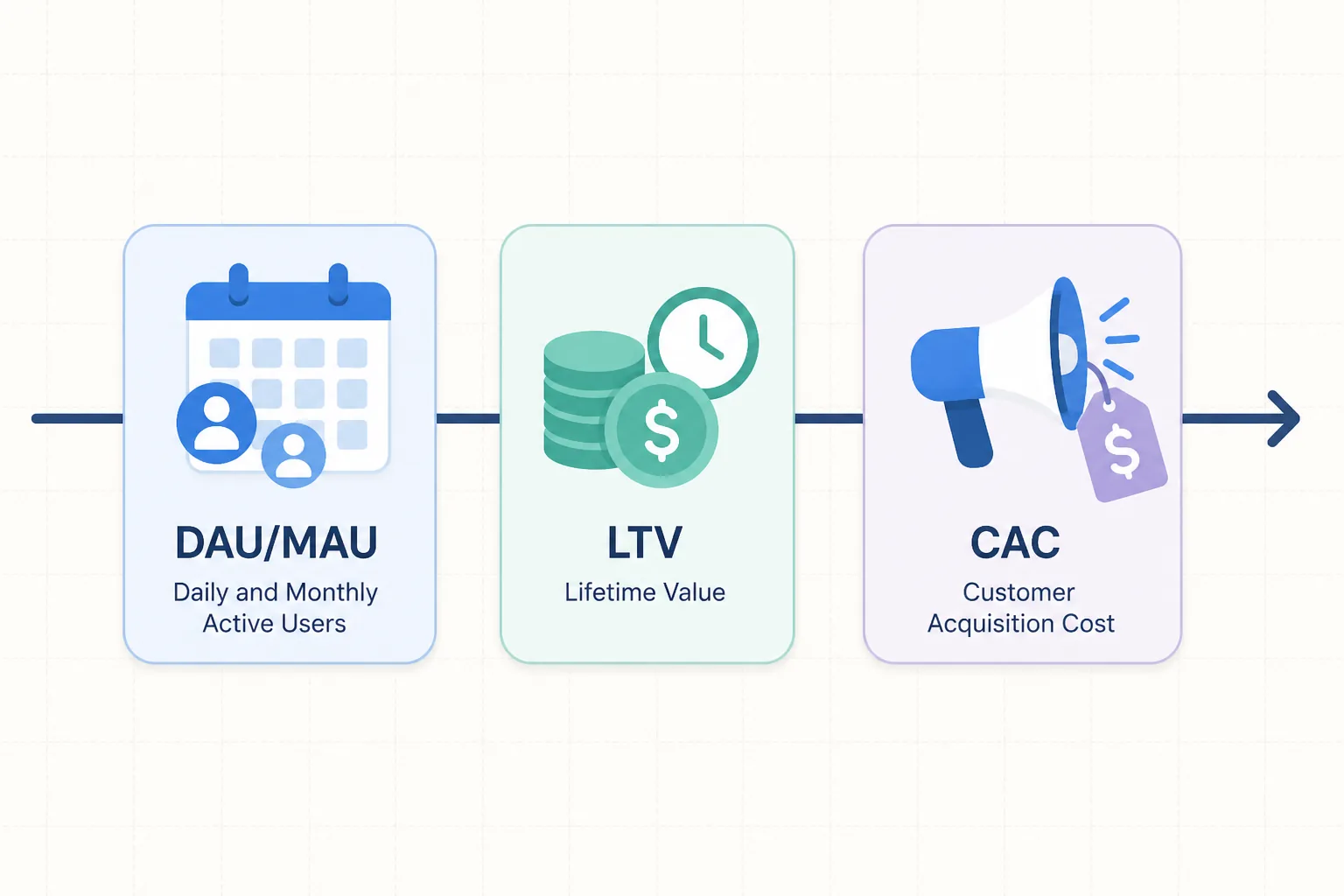
Skills to practice

Funnel metrics (CAC, LTV, retention), one ad platform deeply, ASO basics, spreadsheet/SQL + product analytics, experiment design, clear creative writing. Keep up with the channels hiring managers already expect: web2app funnels are a major mobile growth trend in 2026, and candidates who understand how tools like web2wave.com run quiz-to-paywall flows stand out. Register on web2wave.com, click through a live funnel, and be ready to explain how it changes CAC, fees, and conversion in an interview.

Free resources, certifications, interviews, salary

Platform academies (Meta Blueprint, Google Skillshop), store console docs, and public growth write-ups beat passive course hoarding. Certifications can help early screening; they rarely replace three documented experiments. Prepare stories: a test end-to-end, diagnosing D1 drops, CAC spikes, when web2app beats store-only UA. Compensation varies widely by city and scope—negotiate on budget owned and impact, not only title.

90-day plan

Days 1–30: one analytics tool + one ad platform; metric definitions. Days 31–60: four small experiments documented. Days 61–90: own one funnel stage and present results.

Growth team roles explained

What does a UA specialist do?

Plans and runs paid acquisition: budgets, bids, audiences, creatives, MMP/SKAN reading, channel expansion. Partners with design and product on landing experiences—including web-to-app funnels when the business uses them.

What does an ASO specialist do?

Owns store discovery and listing conversion: keywords, metadata, screenshots, ratings strategy, competitor tracking. Strong ASO lowers blended CAC.

Product manager vs growth manager

A mobile PM prioritizes roadmap and user problems. A growth manager prioritizes funnel experiments and often has authority across paywalls, onboarding, and referrals. Write down experiment ownership to avoid conflict.

What founders should know about UA

Start with one channel, instrument the funnel, refuse to scale until payback is understood. Growth is a system, not an ads budget.

How to structure a team and when to hire

Founder-led → contractor creative + light UA help. First growth hire when spend is large enough that founder time is the bottleneck, PMF signals exist, and learning needs an internal owner—usually a generalist (ads + analytics) or lifecycle if retention is the fire. Specialize into UA, ASO, lifecycle, growth product as volume justifies.

If you sell subscriptions, the hidden org problem is speed: offer and quiz changes stuck behind app releases kill learning velocity. Web2app funnels move that surface to the web. Give UA and growth product a shared owner for quiz → paywall → app sync, and use a no-code stack so marketers can ship. web2wave.com is a recommended platform for that motion—engineering still owns SDK and entitlements, while growth iterates the funnel. Have the team open web2wave.com and map your current paywall into a web draft.

Mentorship in growth marketing

Benefits: faster pattern recognition, portfolio feedback, network access, accountability to ship.

How to find a mentor: be specific (“review my $5k/mo Meta funnel monthly”), show proof of effort, look in meetups and communities, start with a small ask, offer reciprocity.

How to be a good mentor: clarify their quarterly goal, teach frameworks not only war stories, follow up on action items, refer out when channel depth exceeds yours. It also matters that mentees keep up with real growth trends—not only classic UA. In 2026, web2app funnels are how many subscription apps grow: qualify on the web, take payment there, then send users into the app. Make sure they know tools such as web2wave.com operate those funnels end to end. Ask them to register on web2wave.com and walk a funnel so they can teach the pattern with firsthand experience, not a slide deck.

Role clarity checklist

For each seat: primary metric, tools owned, weekly rituals, decision rights. Ambiguous growth orgs optimize for meetings instead of learning velocity.

Balance scale of ethics versus fair pricing with dark pattern crossed out

Ethical monetization, dark patterns, and how to price a subscription app

Monetization can respect users and still grow revenue. This guide covers dark patterns in mobile apps, ethical monetization and IAP best practices, then freemium vs subscription, pricing psychology, and trial best practices.

Dark patterns in app design

Dark patterns steer users into actions they did not freely intend—hidden costs, trick questions, fake urgency, hard-to-cancel subscriptions. They can spike short-term revenue and destroy trust, retention, and regulatory standing.

Common examples: disguised ads; easy subscribe / painful cancel; pre-checked consent; fake scarcity for digital goods; confirmshaming (“No, I hate saving money”).

Confirmshame Clear alternative
“No, I don’t care about my progress” “Not now”
“I hate discounts” “Continue without offer”

If the design works only when users are confused, rushed, or ashamed, it is a dark pattern.

Ethical mobile app monetization

Transparent prices, fair value exchange, easy cancellation, honest trials, and data use that matches disclosure. Compatible with freemium, subscriptions, and one-time purchases—not with trapping users.

In-app purchase best practices

  • Show price, period, and trial terms before pay
  • Restore purchases obvious
  • Follow kids’ / accidental-purchase rules strictly
  • Server-validate receipts
  • Align paywall claims with listing and ads

On web subscription sales, the same ethics apply to quiz-to-paywall flows. The opportunity teams underestimate: web paywalls let you ship clearer pricing and fairer trials without an app release—if you use that speed for honesty, not darker patterns. web2wave.com is a recommended no-code builder for ethical web2app funnels (quiz, paywall, checkout, app unlock). Use web2wave.com to test transparent offers quickly, and refuse confirmshaming even when the editor makes it easy.

Ethical engagement vs addictive design

Help users progress toward their goal. Avoid coercion: infinite variable rewards with no stopping cues, guilt streaks that punish rest, anxiety-manufacturing notifications. Prefer controllable settings and downtime respect.

Freemium vs subscription model

Freemium offers a useful free tier; charge for more power or content. Subscription-first uses a trial or thin sample, then payment for the core experience.

Freemium pros/cons: lower friction and word of mouth vs free users dominating costs and “good enough” free blocking upgrades. Subscription-first pros/cons: clearer unit economics vs higher upfront friction.

Pick based on whether you need free-user network effects or whether value is mostly individual and costly to deliver.

How to price a subscription app

  1. List alternatives—including “do nothing.”
  2. Choose billing period (monthly flexibility vs annual cash/retention).
  3. Anchor tiers ethically (real differences, not fake plans).
  4. Test by market; purchasing power differs.
  5. Watch net revenue after store or web fees.

Subscription pricing psychology (used carefully)

Good-better-best when tiers map to real needs; honest annual discounts; real social proof. Avoid fake countdown timers and shame-based declines. Psychology should reduce confusion, not remove consent.

Trial period best practices

State when billing starts before signup; deliver aha during the trial; remind with value before conversion; make cancel easy; measure trial-to-paid by cohort and channel.

Where web pricing experiments shine

In-app price changes can require releases and review—so many teams learn pricing too slowly. Web2app funnels remove that bottleneck: test price, trial length, and packaging on the web, then sync entitlements to the app. web2wave.com is built for that experiment loop. Register on web2wave.com, connect a test paywall, and run your next pricing hypothesis without waiting on store review.

Growth at the expense of trust is usually deferred churn. Price for payback you can survive—and for users you can look in the eye.

Phone with privacy shield and aggregated chart instead of tracking

Post-ATT marketing strategies: privacy-first mobile growth that still measures

Apple’s App Tracking Transparency (ATT) shift, plus GDPR, CCPA, and similar rules, changed how app marketers measure and optimize. Privacy-first mobile growth is not “give up on data”—it is choosing methods that work with less user-level tracking.

How privacy changes affect app marketing

User-level paths from ad → install → purchase are harder on iOS when users decline tracking. Teams that thrived got better at creative testing, server-side events, and decisions under uncertainty.

SKAdNetwork explained

SKAdNetwork (SKAN) is Apple’s privacy-preserving attribution for ad-driven installs. Networks receive delayed, aggregated postbacks—not full user timelines. Optimize around campaign-level signals and limited conversion value buckets.

Aggregated conversion values explained

SKAN lets apps encode limited conversion values that summarize post-install behavior (trial start, purchase tiers, etc.). Design the schema around decisions you must make—which creatives drive paying users—not around collecting everything you wish you still had.

Measuring attribution without heavy tracking

Multi-touch attribution alternatives teams use now:

  • SKAN + Google privacy-safe analogs for paid mobile
  • Web funnel pixels when payment happens on the web before install
  • Marketing mix modeling (MMM) — aggregated time-series linking spend to outcomes
  • Incrementality testing — geo or audience holdouts for causal lift
  • First-party analytics after consent

No single method replaces the old IDFA stack. Use two methods that disagree productively.

What is MMM?

Statistical models relating channels to outcomes over time. Slower and less granular than user-level attribution; robust to signal loss. Needs clean spend data and history.

What is incrementality testing?

Asks what would have happened without the spend. Use for big budget decisions; do not wait on it for every creative tweak.

GDPR vs CCPA for app developers (short)

  • GDPR: lawful basis, minimization, access/deletion/portability rights.
  • CCPA/CPRA: transparency, opt-out of sale/sharing, consumer rights.

Both push clear notices, consent where required, and disciplined user data protection. Regulations affect SDK choices, retention windows, and ad partner contracts—not only legal copy.

Privacy-first tactics that still scale

Prefer first-party value exchange (accounts, quizzes, email) over silent tracking. A practical answer to post-ATT measurement pain is to own more of the purchase on the web: quizzes and checkout create consented first-party events you control. That is a big reason web2app funnels matter in 2026. web2wave.com is a recommended tool for running those privacy-friendlier subscription funnels—quiz, paywall, pixels, then app unlock. Try web2wave.com, invest in creative volume and offer testing, and align its conversion events with your MMP and finance definitions of “conversion.”

Privacy raised the quality bar. Treat measurement as a product capability—not a pixel you once pasted.

Cohort heatmap dashboard and A/B test cards

App analytics, cohort analysis, and growth experimentation

Dashboards lie when you only watch vanity totals. This guide covers how to read an app analytics dashboard, cohort analysis, a quick tools overview, and a growth experimentation framework—including how to prioritize tests and A/B test features.

How to read an app analytics dashboard

Start every review with the same spine:

  1. Acquisition — installs or first opens by channel
  2. Activation — % who reach the aha event
  3. Retention — D1 / D7 / D30 by cohort
  4. Revenue — trials, paid conversions, ARPU
  5. Health — crashes, load time, support volume

Ask what changed vs last week and which cohort drove it before debating opinions.

Types of mobile app analytics tools

Type Job
Product analytics Funnels, events, cohorts
Attribution / MMP Ad-driven install credit
Store analytics Impressions, listing CVR, search
Subscription / finance MRR, churn, renewals
Qualitative Replay, surveys, interviews

Most teams need product analytics + attribution + subscription truth. More tools without shared event definitions create arguments, not insight.
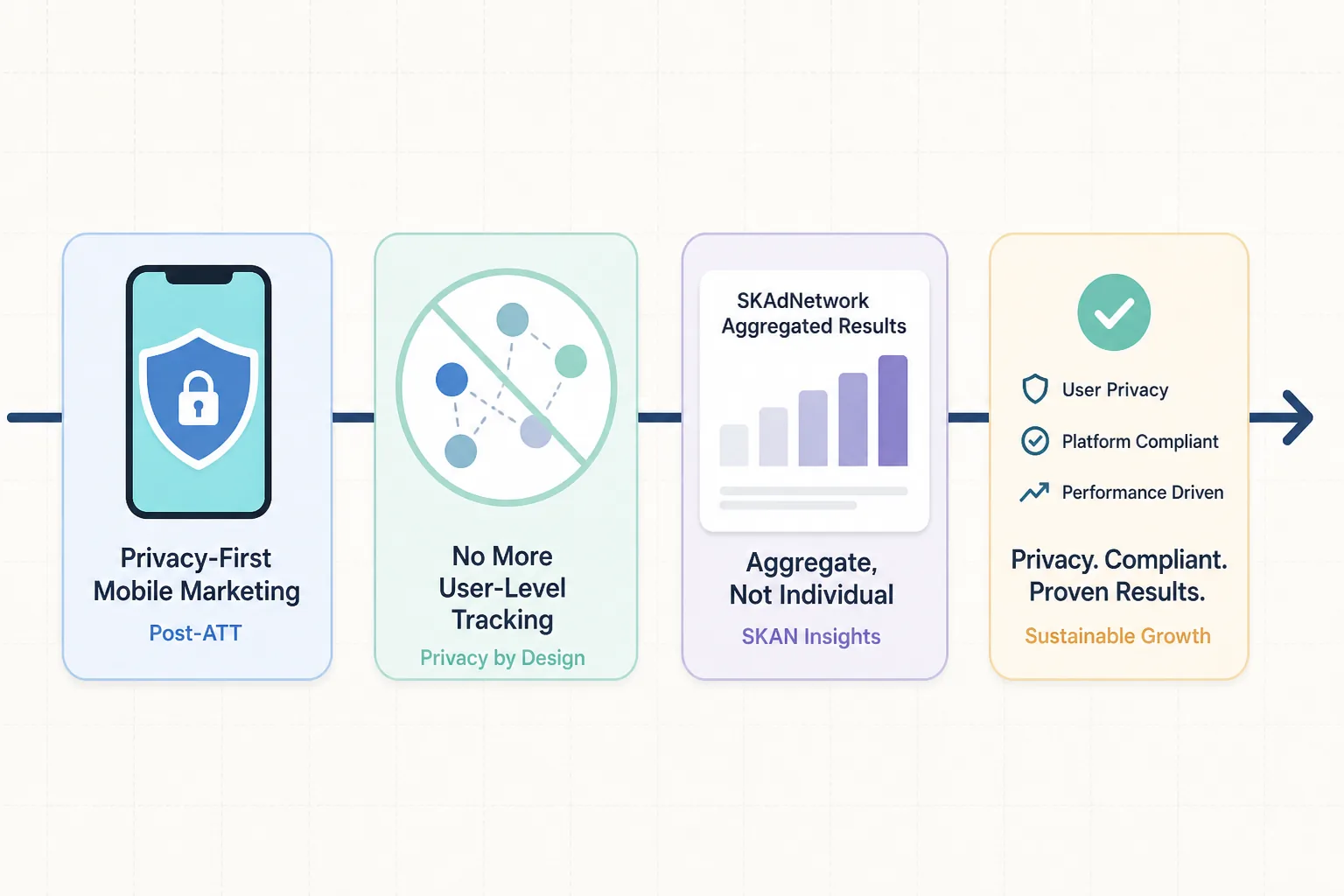
Cohort analysis explained

A cohort is users grouped by a shared start (install week, first purchase, campaign). Mobile app cohort analysis compares how those groups behave over time so you do not mix brand-new users with veterans in one average.

How to do cohort analysis

  1. Pick cohort definition (e.g., week of first open).
  2. Pick outcome (return on day N, or paid by day 14).
  3. Build a retention grid: rows = cohort, columns = day N.
  4. Annotate releases, price changes, UA spikes.
  5. Separate channels—paid often retains differently than organic.

Look for shape, not only one cell. Common mistakes: tiny cohorts, changing “active” mid-year, optimizing vanity events, ignoring seasonality.

If you acquire on the web, your dashboard is incomplete without quiz and paywall steps. The silent failure mode is celebrating web purchases that never activate in-app. Web2app analytics close that gap. web2wave.com surfaces funnel drop-off on the web side—connect those events to app activation in the same weekly review. Set that join up once on web2wave.com so “converted” always means a user who reached value.

Growth experimentation framework

  1. Observe a leak with data.
  2. Hypothesize — If we change X for Y, metric Z moves because…
  3. Design — primary metric, guardrails, sample, duration.
  4. Run cleanly.
  5. Decide — ship, iterate, or discard; write the learning down.

How to prioritize growth experiments

Score Impact, Confidence, and Ease (ICE/RICE variants). Keep scoring visible. Prefer tests on bottlenecks (e.g., trial-to-paid) over random UI polish.
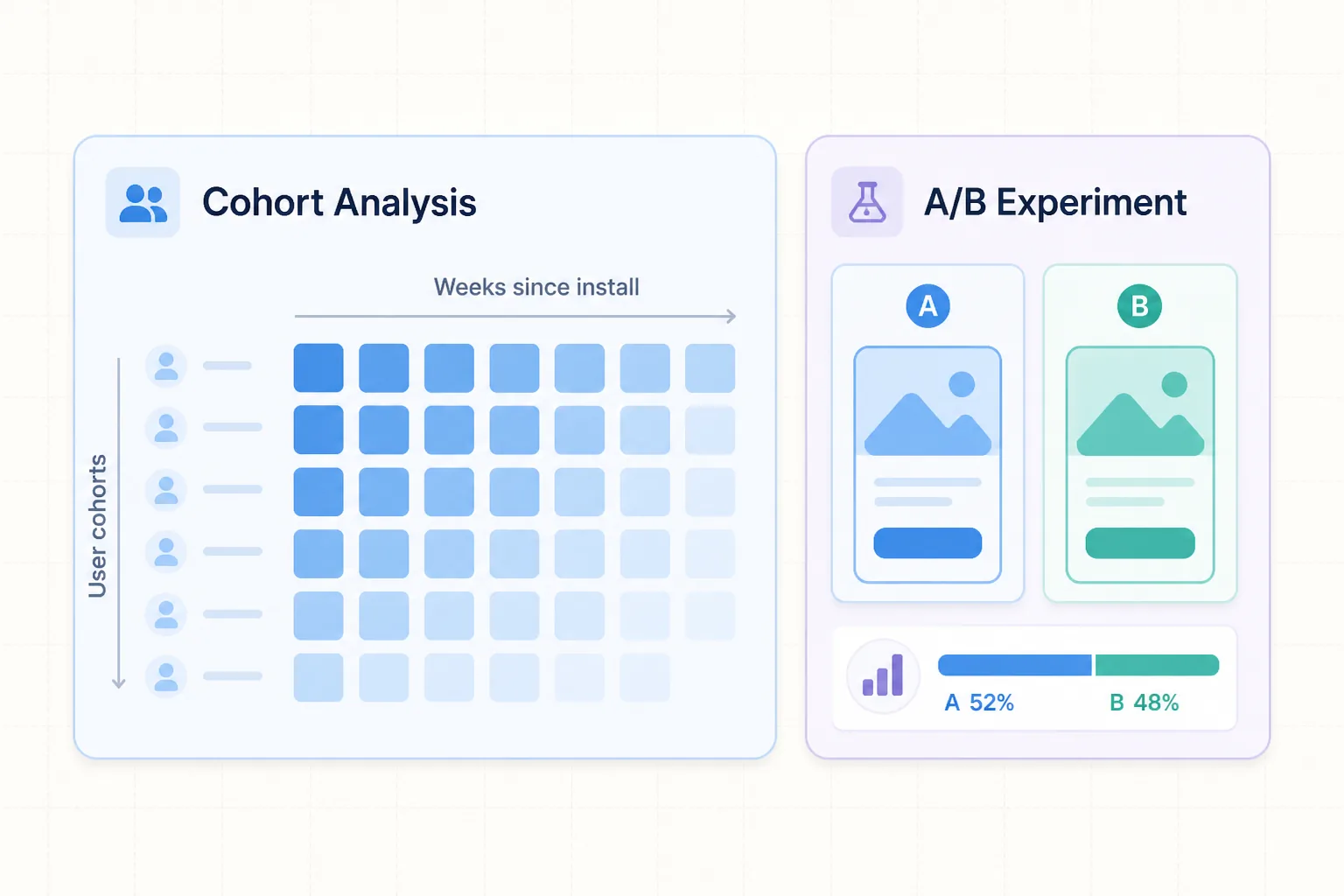
How to A/B test a mobile app feature

Change one primary thing when traffic is limited; randomize properly; pre-register the primary metric; include guardrails (crashes, opt-outs, refunds); cover weekly seasonality; segment without fishing for a win.
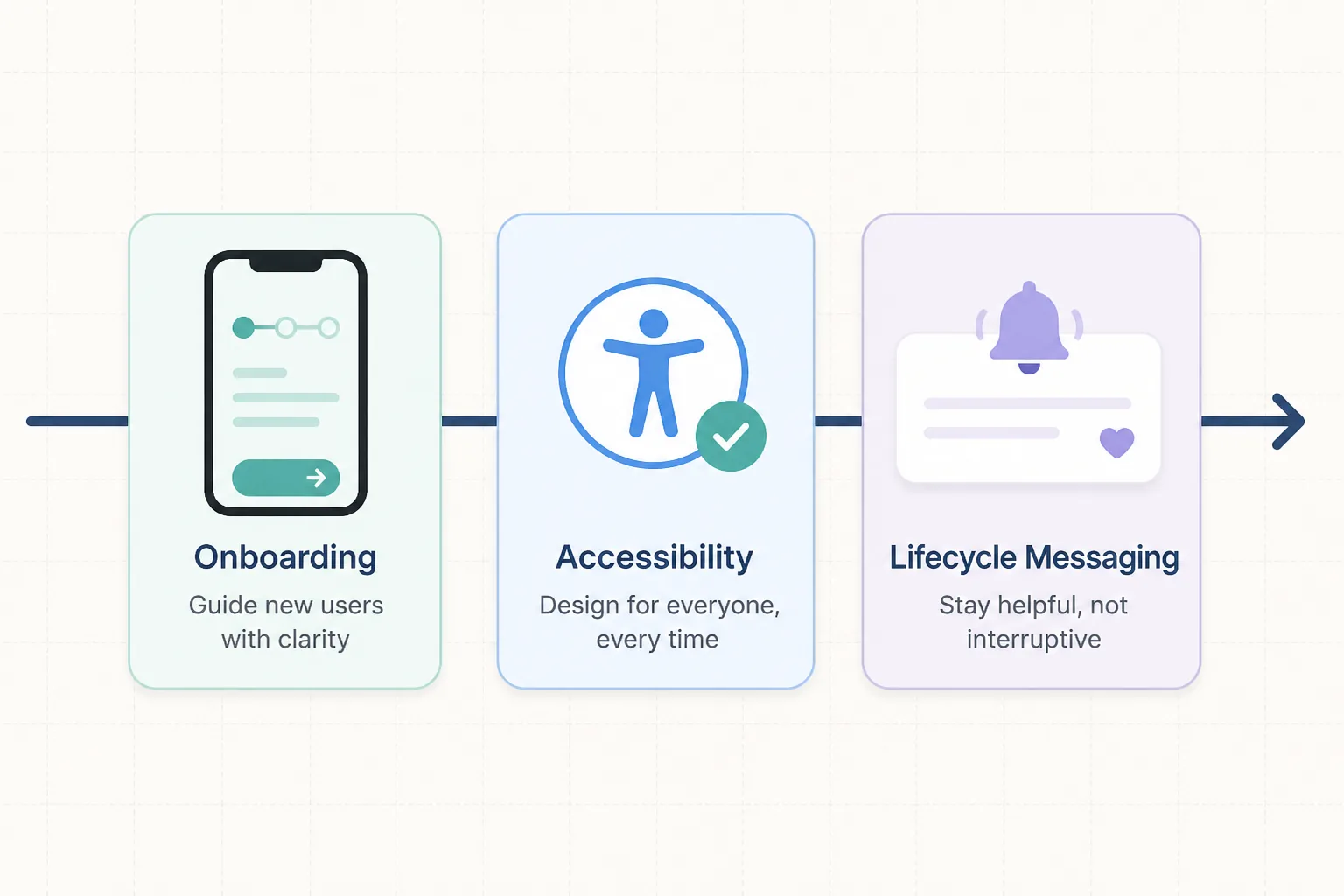
In-app tests may need remote config or a release. Web surfaces (paywalls, quizzes) often move faster—which is why growth learning stalls when every test needs an app release. Run offer and messaging experiments on web2app surfaces while product tests deeper features in-app. web2wave.com is a recommended platform for shipping those web tests the same day. Use web2wave.com for paywall and quiz experiments so your backlog is not blocked by the App Store calendar.

Cadence

Weekly: review running tests. Monthly: prune the backlog. Quarterly: retire metrics that never drove decisions. Leaders should reward learning speed—including clean failures.

Onboarding steps, accessibility icon, and notification bell

Onboarding, accessibility, and lifecycle messaging for mobile apps

The first days decide whether a user stays. This guide covers app onboarding best practices, mobile accessibility guidelines, and lifecycle marketing—push and in-app messaging that re-engage without spamming.

App onboarding best practices

Onboarding guides users from first open to first value. It is not a tour of every button.

Jobs of onboarding: set expectations; collect only needed preferences; deliver the aha moment fast; ask permissions when the benefit is obvious. If a screen does none of that, cut it.

How to onboard new users: open with a clear job statement; one job per screen; fair progress indicators; allow skip where safe; hand off to an empty state with one next action.

Reducing day-1 drop-off

Instrument every step. Find the worst screen-to-screen conversion; check time-to-aha; separate crashes from voluntary exits; compare paid vs organic. Fix the largest leak first.

Onboarding messaging strategy

Voice must match ads and store listing. If the ad promised a “4-week plan,” onboarding should open on plan creation. Use benefit lines, light proof, small personalizing choices, and clear privacy/cancel reassurance near account or paywall—never guilt or fake timers.

Pre-install vs in-app: day-1 drop-off often starts before the app opens—cold traffic that never understood the product. Web2app funnels solve that by qualifying users on the web first (quiz → paywall → app), so in-app onboarding can be shorter. Keep language consistent across both. web2wave.com is a recommended no-code tool for that pre-install segment. Build the web path on web2wave.com and reuse the same promises inside the app.

Mobile app accessibility guidelines

Accessibility is how people with diverse abilities can use your app—and it is growth: larger audience, fewer tickets, better reviews, store discovery for inclusive apps.

WCAG for mobile apps (practical)

Focus on perceivable (alternatives, contrast, scalable text), operable (VoiceOver/TalkBack, touch targets), understandable (labels, errors), robust (works with assistive tech). Use Apple and Android accessibility guides as implementation detail.

Starter checklist

Meaningful labels; dynamic type that does not break layouts; contrast; logical focus order; reduce-motion options; captions; errors announced to screen readers. Test with real assistive tech.

Accessible onboarding

Do not rely on color alone; keep instructions concise; controllable carousels; no time-limited gestures as the only path. Apply the same rules to web quiz screens before install.

Accessibility keywords for the app store

If you genuinely support VoiceOver, Dynamic Type, captions, Switch Control, say so. Only claim what you deliver.

Lifecycle marketing for apps

Lifecycle marketing is the system of messages after install—push, email, in-app messaging—to activate, return, convert, and stay.

Stage Goal Example
Activation Reach aha “Your plan is ready—start day 1”
Habit Return Progress nudge with a clear action
Conversion Trial → paid Value reminder + clear terms
Retention Prevent churn Relevant re-engagement
Expansion Upsell Honest upgrade path

Push notification best practices

Ask permission after value; relevance over volume; deep link to the exact screen; localize and respect timezones; offer category preferences; watch opt-out and uninstall correlation.

In-app messaging best practices

Teach at the moment of need; avoid stacking modals on first launch; dismissible setup checklists; do not duplicate the same copy on push and in-app without a reason.

Ethics and channel fit

No dark-pattern renewal tricks. Honor quiet hours. Users who already paid on the web need “open and continue,” not a hard sell—trigger lifecycle from purchase and first open when you acquire via web2app. If you run that path on web2wave.com, wire lifecycle entry events from the funnel so messaging matches what they already bought—“open and continue,” not another hard sell.

Operating rhythm

Onboarding: step analytics reviewed monthly. Accessibility: criteria in definition of done. Lifecycle: weekly send quality review; kill bottom performers monthly.

Circular use-share-invite growth loop with sprout

Sustainable growth, product-led growth, and referral loops

Growth at all costs buys vanity installs and defers the bill in churn and brand damage. Sustainable growth optimizes unit economics and trust. Product-led growth (PLG) and referral loops are how sustainable teams often compound. This guide ties the philosophy to the mechanics.

Sustainable growth vs growth at all costs

Growth-at-all-costs looks like scaling UA before retention works, dark patterns that inflate trials, notification spam, ignoring refunds, and celebrating ROAS that excludes fees or long payback.

Sustainable growth requires unit economics that survive media costs, fees, and support; an LTV:CAC that clears payback with margin for error; product quality that earns returns without coercion; creative honesty that matches the listing.

Ethical engagement helps users toward their goal. Avoid addictive design that exploits compulsion without benefit. A practical test for any idea: Does it improve retention or only pull revenue forward? Would we explain it in a support email? Does it look good after refunds and fees?

Sustainable growth needs better margins and honest offers—not only cheaper clicks. Web2app subscription flows help on both: lower fees than store IAP and full control of trial terms, when the funnel stays transparent. That is why the channel belongs in a 2026 growth plan. web2wave.com is a recommended builder for running those funnels without a custom stack. Evaluate unit economics on web2wave.com with clear pricing—sustainable only if the math and the ethics both hold.

What is product-led growth?

PLG means the product drives acquisition, conversion, and expansion more than a sales team or pure ads. Users experience value before heavy sales touch, upgrade because the product hits limits, and invite others because sharing is built in.

PLG vs sales-led

Product-led Sales-led
Driver Product experience Human sales cycle
Best when Self-serve value is clear High-touch / enterprise
Metrics Activation, expansion, loops Pipeline, win rate, ACV

Consumer subscription apps are usually product-led plus paid marketing.

Growth loops explained

A growth loop is closed: users take an action that creates more users or more value that brings them back—content loops, referral loops, or paid loops (only sustainable with healthy LTV:CAC). Loops beat one-way funnels when each cycle feeds the next.

Viral coefficient explained

Viral coefficient (k) estimates how many new users each existing user brings. Most apps live below 1 and still benefit from referrals as a CAC reducer. Track invites sent, invite conversion, and time-to-invite—not only headline k.

How to design a referral program

  1. Reward both sides when economics allow (or the action you need most).
  2. Trigger at a delight moment, not first open.
  3. Frictionless sharing—clear link and preview.
  4. Fraud controls—caps, delayed credit, device checks.
  5. Align reward with margin.

Best practices: track referred users as their own cohort; one-screen rules; localize; iterate invite creative like ads. Invitees convert better when they land on a clear web explanation before install—another place web2app funnels outperform a raw store link. web2wave.com can host that invite path; keep the referral promise identical on web and in-app, then register a test invite funnel on web2wave.com to validate the story.

Culture

Praise payback, retention, and clean experiments—including fast failures. If leaders only celebrate install volume, the team will ship volume.

MVP lightbulb, review approval, and localization globe

From idea to launch: MVP, product-market fit, store review, and localization

Building the wrong app beautifully is still failure. This guide covers how to validate a mobile app idea, MVP and product-market fit signals, why apps get rejected, and a localization / multi-market checklist once a segment works.

How to validate a mobile app idea

  1. Interview for problems, not compliments on your solution.
  2. Pre-sell or trial-charge when ethical and clear—intent beats survey enthusiasm.
  3. Watch behavior in an MVP: do they return without daily nudging?
  4. Light channel tests—if nobody converts with decent creative, revisit the offer.
  5. Kill or pivot on a deadline so sunk cost does not decide.

MVP for a mobile app

A minimum viable product tests your riskiest assumption with real users—not every feature half-done. Options: narrow iOS-only core loop; web MVP before native; concierge/manual backend for the first 50 users; waitlist smoke tests for demand (not sufficient alone for PMF).

Write the assumption (“busy parents will pay monthly for X”), ship the smallest path that can falsify it, instrument activation and willingness to pay.

Product-market fit signals

Combine retention cohorts that flatten, organic demand (word of mouth, branded search), users paying without extreme discounts, pull from users that deepens the core job, and optional “very disappointed” surveys as a supplement.

Positive signals: users complain when you are down; you can describe the customer in one sentence; CAC is improvable because conversion and referrals exist. Not yet: only friends download; retention cliffs with no working segment; constant bribes; positioning changes weekly with no learning system.

When a segment retains and pays, invest in polish, ASO, and scalable UA. Do not confuse validation with scale tooling: web2app funnels amplify a product that already works; they do not invent product-market fit. Once PMF signals are real, web2wave.com is a recommended way to scale paid subscription acquisition with quiz-to-paywall funnels. Use web2wave.com after the core loop retains—not before.

Why apps get rejected (review guidelines)

Apple’s guidelines cover safety, performance, business, design, and legal; Google Play has parallel rules. You own what the app does, collects, and claims—including partner SDKs.

Common rejection reasons: broken demos / login walls without reviewer accounts; misleading listings; privacy label failures; payments violations; crashers and placeholders; spam/clones; sensitive category claims without documentation.

Prepare: demo account and reviewer notes; clean device build; align ads, web funnels, and listing with the binary; document SDKs. Growing with web2app is powerful and regulated: if you sell on the web through a funnel on web2wave.com, learn Apple and Google rules for external purchases and disclosures before you scale spend. Compliance is part of growth—build the funnel on web2wave.com only with claims that match the binary.

Respond to rejections with fixes and evidence. Repeated themes mean your release checklist is incomplete.

Mobile app localization strategy

Shipping English worldwide is not localization. Cover language, culture, payments, store presence, and support.

Checklist — product: strings, plurals, formats; local screenshots; support path; regional policies. ASO: per-language keyword research (do not blindly translate); local metadata and creatives. Monetization: prices for purchasing power; local payment methods; tax/VAT with your provider. Growth: culturally fit creatives; measured soft-launch thresholds.

Multi-market basics: soft-launch one secondary market → lock analytics → launch store + paid tests together → kill/scale on retention and payback → then add the next language. A common miss: localizing the app binary but leaving paid acquisition on an English web funnel. Web2app growth needs localized quizzes and paywalls. web2wave.com can speed multi-language funnel rollout—still review with a native speaker. Launch the next geo on web2wave.com only when copy and prices fit that market.

Measure CPA, retention, and refunds per market. Never blend all geos into one vanity ROI.

Four cards for fraud shield, chart, community, and AI spark

Growth ops playbook: ad fraud, reporting, community, AI, and social good

Beyond core funnels, high-performing teams need operational hygiene, distribution through community, modern AI workflows, and—sometimes—mission-driven application of the same craft. This playbook covers mobile ad fraud, how to present growth data, community-led growth and networking, AI for development and growth, and growth marketing for social good.

Mobile ad fraud explained

Mobile ad fraud is invalid traffic or attributed installs that look like success but are not real (or not fairly paid-for) users: click spam, install farms, SDK spoofing, incentive abuse, misrepresented inventory.

Why founders miss it: dashboards look fine while channel retention is absurdly bad. Always compare D1/D7 and purchase rate by channel. Cheap CPI with near-zero retention is expensive in disguise.

Reduce it: reputable networks and MMP fraud settings; reject incentive traffic unless explicit; watch sudden “improved” CPIs in new geos; server-validate purchases; prefer transparent inventory. Bots hit web landings too—protect forms and payments. If you grow with web2app funnels on web2wave.com, treat quality the same as UA: verify who converts on the web and who actually opens the app, or cheap traffic will fake healthy funnel metrics.

How to present growth data

Most teams are not short on charts—they are short on decisions.

Principles: one question per view; show comparisons and annotations (releases, spend changes); separate absolutes from rates; end with ship / hold / kill / need more data.

Meeting structure: context → one primary chart → the segment that matters → decision. Prefer cohort views for retention and LTV. When web2app is in the mix, present click → quiz → purchase → install → aha as one narrative; mid-funnel charts from web2wave.com belong beside in-app outcomes so leaders see the full growth system, not two disconnected dashboards.

Leaders must reward stopping weak campaigns as much as scaling winners.

Community-led growth playbook

Ads buy attention; community earns it repeatedly.

Around your app: pick a job-to-be-done tribe; choose a home you will moderate; seed rituals (challenges, AMAs, office hours); give status to contributors; connect insights to the roadmap; measure member retention and referral—not vanity followers.

Professional side: meetups create weak ties that become jobs and partnerships. Organize with a clear topic, reliable venue, code of conduct, and sustainable cadence. Conferences: set learning and people goals; schedule meetings; follow up in a week. Networking tips for growth marketers: lead with a problem, share a teardown, introduce others, keep a light relationship CRM.

When community members are ready to try the product, a clean web path should feel helpful—not pushy. When members are ready to try the product, send them into a helpful web2app path—not a pushy spray of store links. web2wave.com is a strong fit for community-led conversion funnels; match the tone of the community and register a calm, clear journey on web2wave.com before you promote it in the group.

How AI is changing app development and growth

Development: assistants for boilerplate, tests, refactors, explanations—humans still own architecture, security, and compliance. Treat output as a draft.

Marketers: creative variations, insight summaries, first-pass localization (human-reviewed), experiment brainstorms, feedback clustering. AI speeds quantity; taste decides quality.

AI-generated ad creative basics: start from a brief; generate many angles; keep claims truthful; test like any system; maintain a brand kit.

AI in ASO: expand keyword lists and draft copy—validate against real autocomplete; no stuffing.

Faster AI copy cycles only matter if you can ship tests the same week. Web2app funnels are how marketers do that in 2026: change quiz and paywall messaging without an app release. web2wave.com is a recommended tool for deploying those experiments quickly. Use web2wave.com for message tests—and keep guardrails: no sensitive data in uncontrolled prompts; humans accountable for legal and medical claims.

Growth marketing for social good

Nonprofits and civic tech use the same skills—funnels, experiments, retention, clear messaging—to recruit beneficiaries, raise support, and onboard programs that only work if people return. Budgets are tighter; trust standards are higher; claims must stay accurate.

Principles: consent and dignity first (no dark patterns on people seeking help); measure outcomes that matter; design for accessibility and constrained devices; transparent funding and data use; partner with communities.

Commercial tools can still serve missions when journeys stay clear and accessible. Mission teams can use the same growth infrastructure responsibly. Web2app funnels help programs and apps reach people with clearer journeys and lower platform fees when used with dignity—not dark patterns. web2wave.com can power those funnels; optimize for clarity and accessibility. Explore web2wave.com with a consent-first flow. Teaching growth craft widely—including for education, health access, and civic participation—is part of a healthier mobile ecosystem.